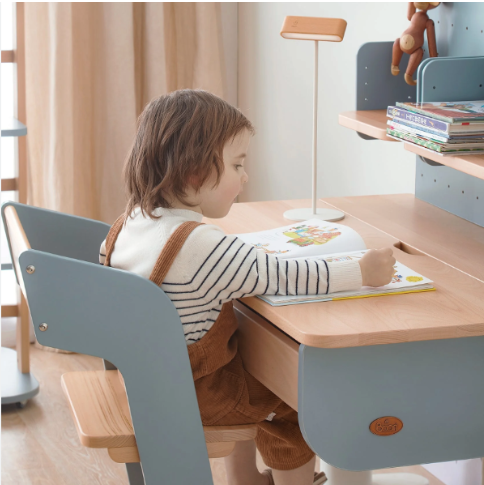
A kids study desk that gets used is not the same as a kids study desk that was purchased. The difference lies in whether the desk provides the right physical conditions for focused work, whether it is positioned correctly in the room, and whether it is set up in a way that makes sitting down to work the path of least resistance rather than an effortful transition from play mode. Many children’s study desks are purchased with the best intentions and used enthusiastically for the first few weeks before becoming a surface for storing things that do not belong anywhere else. Understanding why this happens, and what prevents it, is the practical starting point for choosing and setting up a kids study desk that continues to be used consistently throughout the school years.
Key Takeaways
- A kids study desk that gets used consistently provides the right physical environment for focused work: correct height, adequate surface area, good light, minimal visual distraction, and sufficient storage to keep the surface clear.
- Position matters as much as the desk itself. A desk in a dark corner, facing a distracting view, or too close to the bed creates conditions that work against focused study.
- The desk surface discipline, keeping only active work on the surface during study time and storing everything else in the desk drawers or on the desk shelf, is the maintenance habit that keeps the desk functional over years.
- Ergonomics directly affect study duration. A child in physical discomfort at the desk will find reasons to leave it. A child seated comfortably at the correct height will stay longer.
- A kids study desk should be added to the bedroom when homework becomes a regular requirement, typically at the start of Year 1 or Year 2, not waited for until the homework volume becomes overwhelming.
What Makes a Kids Study Desk Get Used
| Factor | What It Requires | What Happens Without It |
| Correct height | Elbows at 90 degrees when seated | Physical discomfort leads to avoidance |
| Adequate surface | Minimum 90 cm wide, 50 cm deep | Work surface too cramped; spills to bed or floor |
| Good lighting | Desk lamp on non-dominant side | Eye strain reduces session length |
| Storage | Drawer or shelf within reach | Surface clutter; desk becomes dumping ground |
| Correct position | Facing a wall or low-distraction view | Constant visual distraction from the room |
| Clear study signal | Desk is only used for work, not play | Child associates desk with optional activity |
Positioning the Kids Study Desk
Facing a Wall
A desk that faces a plain wall reduces visual distraction to the minimum during study time. The wall provides a visually quiet backdrop that keeps the child’s attention on the work in front of them rather than on the room activity happening behind them. A pinboard or a small corkboard on the wall in front of the desk for current school notes and reminders adds a functional surface without adding visual distraction.
Using Natural Light Without Facing the Window
Natural light is beneficial for study but a window directly in front of the child creates glare on paper and a constant source of visual distraction outside. Position the desk so natural light enters from the side, illuminating the work surface without the window being in the child’s direct line of sight during study. For right-handed children, light from the left side prevents hand shadow on the writing surface. For left-handed children, light from the right side.
Maintaining Distance From the Bed
A desk positioned immediately beside or facing the bed creates a visual and physical link between the study zone and the rest zone that makes the cognitive transition to study mode harder to achieve. Some separation between the desk and the bed, even in a small room, helps the child’s brain associate the desk with focused work rather than with the option to lie down and take a break.
For a well-designed kids study desk suited to Australian children’s bedrooms, visit the Boori collection.
Frequently Asked Questions
What age is appropriate for a kids study desk?
Year 1 or Year 2 of primary school, around age six or seven, is when a dedicated kids study desk becomes genuinely useful. At this stage, homework is arriving regularly, fine motor tasks such as writing and drawing benefit from a stable dedicated surface, and the cognitive habit of sitting at a desk to work begins to form. Adding the desk before the homework pressure peaks allows the habit to develop gradually rather than being established under stress.
How do I stop my child using the desk for everything except study?
Establish a clear function for the desk from the first day: it is a work surface for homework, reading, drawing, and school projects. It is not a play surface, a toy storage area, or a snack station. Maintain the surface discipline consistently, keeping only active work materials on the surface during study, and clearing the surface at the end of each session. The desk’s identity as a work space is built through consistent use and consistent surface management, not through instruction alone.
Should the kids study desk have a hutch or be a flat surface?
A hutch, the raised storage section above the desk surface, provides additional storage for books and supplies and is useful for children with a large volume of school materials. The disadvantage is that a hutch reduces the sense of openness above the desk surface and can feel enclosing for children who prefer an unobstructed workspace. A flat-surface desk with a separate bookshelf adjacent provides equivalent storage without the enclosing effect.
What is the minimum room size for a kids study desk?
A compact kids study desk of 90 centimetres wide and 50 centimetres deep, with the desk chair drawn out, requires a clear floor area of approximately 90 by 120 centimetres. In a small bedroom, this area is achievable by positioning the desk against a wall and ensuring the chair can be pushed fully under the desk when not in use. The key measurement is the clearance needed to pull the chair out and sit comfortably, which is approximately 70 centimetres from desk front to any obstacle behind the chair.
Final Thoughts
A kids study desk that gets used consistently is one that provides the right physical environment for focused work, is positioned to minimise distraction, is maintained with surface discipline, and is introduced at the point in the child’s school career when a dedicated workspace becomes genuinely necessary. The physical setup of the desk space is within the parent’s control in a way that the child’s motivation to do homework is not. Setting up the physical environment correctly is the most direct investment available in the child’s study habits.
Write and Win: Participate in Creative writing Contest & International Essay Contest and win fabulous prizes.
About the Author