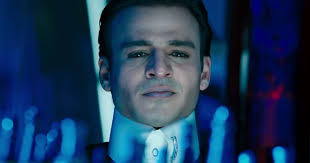
Characters exist briefly in stories, only to disappear when the tale ends. There are, however, a few who persist and live in our memory, simply because they offer something beyond pure entertainment. They act as archetypes reflecting man’s fears, fantasies, flaws and ambitions. One of the most memorable characters, Kaal, played by Vivek Oberoi in the Indian science-fiction film Krrish 3, does just this. At first sight, Kaal is just a clichéd supervillian, a genius who manipulates mutants and an adversary to Krrish, but beyond the fancy labs, special effects and extravagant sets, lies a character with an intense emotional and philosophical side.
Kaal is much more than just another hero-villain relationship. He represents mankind’s ultimate fear of the weakness that defines us. His existence is based around the pain, isolation, physically disabled nature, and lust for higher human form he constantly lives through. In contrast to those who desire wealth or simple revenge, Kaal craves the perfect evolution. It is through the use of science and mutation, and a pure disregard of human frailty that he wishes to develop a superior human race and destroy any remaining weakness.
His dreams are therefore not only those of a great film villain, but of mankind’s longing for perfection and absolute control and power, in a potentially devastating way.
The Rise of Kaal and the Advent of Indian Superhero Cinema.
Kaal made his appearance in Krrish 3, released in 2013. This movie was the most popular movie of India’s superhero cinema, and Rakesh Roshan was the creator behind this success. At a point of time when the Hollywood films were at their peak, having globally famous characters such as Batman, Spider-Man, and Iron Man as part of their large-scale superhero film industries, the Indian movie industry was trying to step out of its shell and begin to explore the scope of large-scale superhero stories. This was how Kaal became a striking example of Bollywood’s one of the most daring science-fiction antagonists.
The character was striking and unique because it blended two distinct elements, a classic comic-book style based on global influences, and profound emotion which could be seen as the outcome of an ingrained Indian mode of storytelling. He wasn’t evil for the sole purpose of mass destruction and a desire to cause widespread harm. Instead, his motives and origins stemmed from deep emotional distress and loneliness.
Interesting Fact 1:
Vivek Oberoi spent a lot of time and effort observing how physically impaired people on wheelchairs carried out their daily activities so that Kaal’s character could be seen to move in a realistic fashion, rather than one that looked completely artificial.
This made Kaal’s character deeply moving on a human level.
Interesting Fact 2
Kaal’s laboratory was made using a mixture of high-tech science fiction elements and dark Gothic images to depict science and loneliness in equal measures.
This gave it the artistic touch, to convey the protagonist as a genius who is at odds with humanity itself.
A Mind Imprisoned in a Fragile Body
Kaal’s condition is undoubtedly a major element of his character. From his constant reliance on machines to his inability to get up from a wheelchair, he remains imprisoned in his own frail body. His weakness begins to turn into sheer emotional violence.
Many societies revere physical power while mocking or lamenting weakness. Kaal is forced to confront this reality. In his defiance to overcome his helplessness, he resolves to defeat it with science. Although his body grows frail, his mind develops into something truly monstrous.
Kaal’s wheelchair is much more than an object; it’s a testament to a spirit determined to revolt against limitation itself.
It is not Krrish against whom Kaal fights. It is his own sense of powerlessness he seeks to conquer.
This is perhaps what makes him a psychologically fascinating figure. Inwardly, his greatest fear is not of his enemies but of being weak in a world that idolizes strength.
History is a litany of instances where insecurity breeds obsession with power. So many people who yearn for supremacy are desperately trying to overcome shame, neglect, or terror. Kaal captures this aspect of human reality perfectly, his obsession for supremacy born from inner scars rather than sheer sadism.
His way of coping with pain is not through reconciliation but through an attempt to completely eliminate it.
This attempt to eliminate weakness from his life marks the dawn of his downfall.
The Psychological tragedy of Kaal
Where most film villains are out to grab power, money or vengeance, Kaal’s greatest enemy is weakness. Every single one of Kaal’s actions stems from a fear of feeling weak.
This makes Kaal unique and gives the viewer a deeply psychological dilemma— Kaal does not simply want to destroy humans, he wishes to improve upon them. By playing god with his genetic experiments and mutation Kaal wishes to build stronger species without the weaknesses inherent to humans. This desire on Kaal’s part shows the persistent thought process of some people that perfection is a created commodity that we are just lacking.
The Tragedy of Kaal’s life is that by ridding himself of human weakness, Kaal slowly loses his human nature.
By mastering his science he masters neither emotions nor his own personal balance. He gains followers, yet never friends. He built his power but not his peace.
These are the contradictions that make him memorable.
The greater tragedy of Kaal’s life is that at first we feel sorry for Kaal because of the trauma that he has endured; who can fail to empathise with his lonely, helpless state? However instead of channeling his pain to induce empathy in others, Kaal uses it to inculcate bitterness in himself. The pain that he feels creates contempt within him. Loneliness creates the need for domination.
In this aspect, Kaal serves as an analogy for the lasting effects of untreated wounds.
The Symbolism of the Mutants
Kaal’s mutants are not just monsters for the screen. They reflect the dangerous temptation humanity has of interfering unnecessarily with nature.
Historically, progress in science has been used to create both marvels and devastations. Human intellect created life saving medicines but also created weapons capable of immense harm. Kaal is torn between these conflicts. Kaal thinks that if we are scientifically capable, we don’t need moral permissions. For him:
“If something can be created, it should be created.”
The implications of this thought can be widely seen in the rapid advancements in AI, biotechnology and genetic engineering in today’s world.
Interesting Fact 3
Many commentators have seen similarities between Kaal and worldwide comic-book villains like Magneto and Doctor Doom. However, Kaal remains uniquely Indian because of the fact that his drive is less for political domination, and more for a way to combat suffering and loneliness.
So Kaal’s mutants are a symbol not of scientific achievement but of man’s God complex. They are a vision of humanity’s mad attempt to become omnipotent and have control over evolution rather than submit to it. He believed that human beings are made up of fragile quality materials and they need enhancement for a purpose. Yet history has a way of showing us that the moment man plays with God’s creations without thinking of the consequences, disaster is inevitable.
Kaal and Modern Society’s Perfectionism
Another reason Kaal is globally relatable is that his psychology represents the reality of modern society. People in modern society have to project perfection at all times through their bodies, careers, lifestyles, and success. Social media feeds the image rather than reality and society shuns vulnerability behind perfectly curated personas. We are conditioned to be ashamed of failure. In fact, it could be said that the very civilization we have created is telling us all to be more like Kaal—hating weakness and pursuing perfection relentlessly. This is precisely what makes the story incredibly philosophical. Kaal represents an extreme of what is already happening. He poses a terrifying question of what happens when the need to become stronger trumps humanity.
Loneliness- The core of his character
Perhaps Kaal’s deepest sadness comes in the form of loneliness. He possesses a supreme mind and unparalleled technology; however, he lacks truly authentic human interaction. His empire is built on fear, not love. He commands his subjects, but he cannot be moved by them. This truth resonates: power can elicit the will to obey, not necessarily the desire to belong. This loneliness, in effect, is what makes Kaal not so much evil as it is tragic. The ultimate reason the reader/viewer empathizes with Kaal, beyond the exterior bravado, lies in the notion that behind the driven ambition is an aching, broken man who deeply fears powerlessness, dependence, and ultimately… being forgotten. Kaal is the ultimate irony; he builds an empire, creating an army of mutants, but no meaningful human connection. This hollowness is present even after his rise to power. Though his labs might be gleaming temples of technology, on an emotional level, they represent prisons, with the ultimate jailer being Kaal, slowly shutting out humanity for his love of his own ingenuity. This probably is also why the audience continues to love him, even to this day. Beneath the villain exists a lonely soul attempting to conquer his own pain with power.
The Philosophical battle between Krrish and Kaal
It’s not only Krrish versus Kaal on the physical front. This is actually a fight between two ideas. Krrish sees power as a way to help humanity despite its flaws. Kaal sees weaknesses that should be eliminated completely. The battle between these two beliefs makes the story emotionally significant and thematically profound. Krrish loves humanity with understanding. Kaal despises it due to its inadequacies. This struggle can be compared to many mythologies and literary tales of the past. Uncommon Fact 4: Many researchers and reviewers feel that Kaal’s mental journey is comparable to Ravana, intelligent yet power-hungry beings with intellect destroyed by egotism. Like Ravana, Kaal is a highly intelligent individual who is also extremely imbalanced emotionally and driven to his downfall by a desire to be superior. In a similar vein, he is like Frankenstein’s creator, as in both stories, science has tried to overcome the laws of nature.
Science without Morality: A dangerous weapon
One of the greatest ideas tied with Kaal is the notion that science without morality is the greatest power that can be created. Humans have been advancing since the advent of knowledge. But, knowledge alone does not equate to intelligence, and this power can easily be misconstrued. Kaal epitomizes this disparity between science and morality. He sees human lives as experiment and not individuals who can feel. As such compassion is second to success. This mirrors historical situations like the Holocaust where scientific progress disregarded human feelings and lives.
Interesting Fact 5
The irony of Kaal’s story is not missed by critics; despite his desire for ultimate supremacy, he was a slave to machines for his whole existence. This irony adds to Kaal’s downfall. He, who yearned to escape weakness could not escape from dependence; and thus became a classic symbol of the notion that if science overpasses morality, humanity becomes the experiment.
Vivek Oberoi’s Performance and Character Impact
Vivek Oberoi’s performance was instrumental in making the villain Kaal a memorable role. He brought in an element of restraint and psychological tension rather than a typical loud, two-dimensional villain. His placid demeanor hides a depth of bitterness underneath confidence. Even his silence turns threatening, so Vivek Oberoi succeeded in transforming Kaal into an antagonist with more layers through controlled performance rather than aggression.
Interesting Fact 6
The prosthetics and visual effects required to realize the character of Kaal took several hours for each shot during filming, making it one of the most time consuming villains to play for mainstream Bollywood sci-fi movies.
Many viewers believe that Vivek Oberoi took a lot of risks in this role, as it required playing the conflicting characters of:
• vulnerability
• cruelty
• intelligence
• and pain
at the same time.
Kaal’s Universal Significance
What matters about Kaal is that his tale, at its core, addresses the fears shared by the entire mankind. Every single human feels vulnerability at one time or another, whether it is weakness of the body, heart-break or isolation, loss of self-confidence or fear of defeat. It is in Kaal’s refusal to embrace his vulnerability that his demise begins. He neither seeks emotional recuperation, nor understanding, only control and dominance. In rejecting human nature for supremacy, he turns pain into destruction. Kaal is memorable across cultures because he is a paradox that each one of us battles with – tenderness vs domination, acceptance vs fixation.
Conclusion: the Tragedy of Being More Than Human
Kaal is not remembered for his advanced tech or his army of mutants but rather for being the embodiment of humanity’s oldest fear— The fear of weakness. His entire life story is a tragic march from agony to obsession. He craved the abolition of pain, limits, and dependencies, but while attempting to transcend humanity he gradually forfeits everything that makes humanity worth surviving in the first place. He acquired power but no peace. He acquired followers but no friends. He acquired control but not contentment. Perhaps Kaal’s greatest punishment was not defeat but the very fact that he finally managed to defeat fear, science and power, but failed to defeat his own loneliness. Ultimately, that is the worst possible outcome of all.
Beyond a mere superhero nemesis Kaal transcends itself as a villain; he embodies our greatest fantasies, our deepest fears. He represents us all in the way he reminds us that not all strengths need to be eliminated; sometimes weakness is essential because it is what permits love, kindness, empathy, and humanity. Maybe that is why Kaal’s image lingers long even after the final frame is projected. Because within the supervillain was simply a lonely man frightened of his own continued frailty in a world that praises invincibility.
By: Meghna Gupta
Write and Win: Participate in Creative writing Contest & International Essay Contest and win fabulous prizes.
About the Author