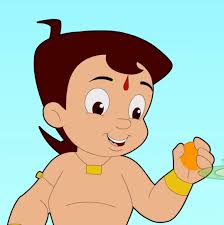
Failing to realize the great potential of Indian folklore, the Indian television screens were filled with Western and Japanese imported cartoons like Tom and Jerry, Pokémon, and Doraemon for decades. But all that changed with the arrival of Chhota Bheem. Crafted by Rajiv Chilaka and animation studio Green Gold, Chhota Bheem premiered on Pogo TV on April 6, 2008. Chhota Bheem is more than just an Indian animation icon, it is India’s champion. Before Chhota Bheem, Indian cartoons were a distant memory. Dating back to the 1960s, the likes of Shaktaman, Jadugar, and Little Krishna were as distant as they could get! By on-boarding this rich narrative belonging to the Indian subcontinent, Chhota Bheem helped shape the future of animation in India. Chhota Bheem started as a simple cartoon series and has grown into a multi-billion rupee franchise consisting of feature films, merchandise, comic conventions, and even a live-action movie.
1. Unique Selling Propositions (USPs)The success of Chhota Bheem can be credited to a set of meticulously plotted Unique Selling Propositions (USPs). Unlike earlier Indian animated shows that were strict adaptations of religious texts (such as Hanuman or Ramayan), Chhota Bheem was deliberately disconnected from religious text. Although the character Chhota Bheem was inspired by the legendary Bheem from the epic Mahabharata who was physically super strong, he was not portrayed as a mythological god or demigod. Instead, Chhota Bheem was a ‘god’ like human boy, a nine-year-old boy in the fictional, non-historical kingdom of Dholakpur. This conscious decision gave Bheem the human-child touch and allowed him to do superhuman things. Audiences could enjoy his exploits while also being able to relate to him as a peer rather than worshipping him as a god.Every legendary superhero has a magical source of power—Superman has solar radiation, Popeye has spinach, and Asterix has the magic potion. For Chhota Bheem, it was the humble, sweet laddoo baked by Tun-Tun Mausi. Whenever Bheem was faced with an unusually difficult challenge or a powerful enemy, eating a laddoo would instantly increase his strength. Magic is a powerful narrative tool that is easily memorable and deeply grounded in our culture. It offers a tangible connection to an item that children see every day and significantly increases the popularity of confectionery sales and promotions. Every episode of Chhota Bheem is a modern-day fable. It offers important values such as teamwork, respect for elders, gender equality, environmental mindfulness and community service in high-stakes, action-packed adventures. Chhota Bheem does not use his strength to dominate or bully others; he uses it only to protect the unprotected and to contain crises and restore order in Dholakpur.
2. In Search of the Significance of Ensemble CastDeep Dive into the Ensemble CastThe Balanced Ensemble CastThe series is uniquely structured around a distinct dynamic between its characters, mirroring a typical Indian rural or semi-urban peer group. Each character represents a specific trait that helps children learn about social harmony and group dynamics. Bheem is the brave, intelligent, and fair protagonist who leads his friends with compassion. Chutki is the responsible, intelligent girl next door who often serves as the voice of reason. Raju is the fiercely loyal four-year-old toddler who aspires to be a great warrior, proving that age is no barrier to courage. Jaggu, a talking monkey, brings a touch of magical realism as an indispensable scout who can communicate with other forest animals. Kaliya Pehalwan is the local bully who is older, bigger, and deeply jealous of Bheem’s popularity. Though he often schemes to embarrass Bheem, he is not entirely evil and frequently joins forces with Bheem when the village is threatened.Kalia is always followed by Dholu and Bholu, identical twin brothers who provide excellent slapstick humor by blindly repeating his words or accidentally exposing his silly plans. The royal circle includes Princess Indumati, the kind and gentle daughter of King Indraverma, who frequently seeks Bheem’s help to resolve royal dilemmas. King Indraverma himself is the benevolent ruler of Dholakpur. While he is the ultimate authority in the kingdom, he deeply respects Bheem’s intellect and valor, frequently relying on a nine-year-old boy to defend his throne against powerful enemies. This balanced ensemble cast ensures that every child watching can find a character they closely identify with while learning about cooperation and mutual respect.
3. What makes Chhota Bheem so popular? The enduring appeal of Chhota Bheem lies in the strategic merger of relatability, localisation and incisive emotional insight. From the mud-thatched houses dotted across the arid land to the open fields or mango orchards, the charm of festivals such as Holi, Diwali or Dussehra, the trouble-laden life of a village boy, or the occasional appearance of a demon or sorcerer seems both quaint and familiar to the child. Daily incidents such as village sports competitions, chasing local robbers or saving the village cows only make it more realistic. One of the major pillars of Chhota Bheem’s massive popularity was Green Gold Animation’s hyper-localisation strategy. The show was first dubbed in Hindi before being translated into almost all major regional languages such as Telugu, Tamil, Kannada, Malayalam and Bengali.
Another aspect that added to Chhota Bheem’s explosive popularity was its cross-generational appeal. The show was a family entertainer in every sense possible, with parents by default pushing their children to watch and enjoy the show. The reason being, parents lapped up the funny but clean initiatives, the moral values and the social values that the show promotes. They also love the impeccable character traits of Chhota Bheem – his courteousness, obedience of King Indraverma, and a desire to help the neighbouring farmers. When parents see Chhota Bheem on TV, they also see their son – kind, polite, obedient and helpful with a strong sense of loyalty towards elders but who also fights for justice and pays respect to the environment and animals!
Early franchise, history and franchise expansion
Rajiv Chilaka’s endeavour of pitching India’s homegrown, culture-rich animation to the TV industry that was flooded with foreign content, resulting in Green Gold Animation producing India’s biggest cartoon series, Chhota Bheem, with the character ruling the roost on Pogo channel and making it India’s no.1 children’s channel for consecutive years in 2000s. Chhota Bheem took to television as a rapid-release television movie model in over 60 made-for-tv and theatrical animation movies. The series took Bheem and his friends out of Dholakpur to save the world, history, global and mythology have been touched; the latest offering of Chhota Bheem’s theatrical release Chhota Bheem &Krishna series crossover films, Chhota Bheem: Kung Fu Dhamaka in advanced 3D CGI format; the 2012 theatrical release Chhota Bheem and the Curse of Damyaan; Chhota Bheem and the City of Krishna in 2019.
The brand’s success in television led to a partnership with global streaming platforms, resulting in several spin-off series like Mighty Little Bheem on Netflix in 2019, a non-verbal, preschool-targeted slapstick series, which became a massive global hit as one of the most-watched preschool shows of the world; Super Bheem, the sci-fi superhero version; Arjun – Prince of Bali, the story of Bheem’s royal ally; the live-action adaptation Chhota Bheem and the Curse of Damyaan, released in theaters on May 31, 2024, directed by the creator Rajiv Chilaka and starring Bollywood stars like Anupam Kher, Makarand Deshpande and child actor Yagya Bhasin who essayed Bheem with a back-drop of state-of-art visual effects in a grand live action setting – marking a new milestone in Indian children’s cinema.
Chhota Bheem took India’s animation industry to new heights, but it’s the impact on media monetisation that’s truly historic. The brand spawned a monster licensing business, with Green Gold Animation opening Green Gold Stores across the country to sell merchandise like Chhota Bheem school bags, water bottles, and apparel as well as board games, bicycles, and more. The character’s popularity took the Indian products to global heights with major brands like Kellogg’s, Unilever and Britannia riding on chhota Bheem’s popularity to position their products in the market. Chhota Bheem was the first proof that an Indian animation character can have the same pulling power as Disney or Warner Bros. assets. Prior to Chhota Bheem the animation business in India was viewed as just the outsourcing destination for the big guys in the west. Chhota Bheem created a huge domestic market and a monster licensing and merchandising business that’s still growing. The domestic animation market has seen an explosion since Chhota Bheem, with a plethora of homegrown IPs.
Frequently Asked Questions (FAQs)Who is Chhota Bheem? Chhota Bheem (known as Baby Bheem in English) is a brave, intelligent, and strong child. He is 9 years of age old.Is Chhota Bheem a real-life character? No. Chhota Bheem is an animated Indian television series, created by Rajiv Chilaka.Green Gold Animation owns all the rights of Bheem’s image, story, episodes, characters, name, and Dholakpur kingdom.Why does Chhota Bheem eat laddoos for power? Eating laddoos (sweets) serve as a narrative power-up device in Chhota Bheem’s adventures.In Chhota Bheem’s story, Bheem eats a laddoo from his aunt, Tun-Tun Mausi, to regain his energy and power.Who are Chhota Bheem’s main enemies? Chhota Bheem’s strongest enemies are Dholu and Bholu, twin brothers of the most hated bully in the village, Kalia Pehalwan.Kalia Pehalwan is often accompanied by Dholu and Bholu and will do anything to win over Bheem’s popularity. Additionally, Chhota Bheem has more global enemies like, Kirmada (Sorcerer) and Damyaan (Demon king).What is the “Chin Tapak Dam Dam” trend on social media? “Chin Tapak Dam Dam” is a phrase famously uttered by the antagonist Takshak from Chhota Bheem. In mid-2024, the trend went viral across social media platforms, including Instagram and TikTok.
In Conclusion
For over two decades now, Chhota Bheem has held a special place in children’s hearts. In a tour de force, using the nostalgic power of its animation techniques and the combined appeal of its storylines and characters, Chhota Bheem transformed its weekend cartoons into a cultural sensation. It single-handedly revolutionised India’s homegrown animation industry and confirmed, the world over, that localisation truly has a universal appeal.
As India’s favourite animated superhero continues to innovate through fresh mediums like a live-action release in 2024 and a series of feature films through India’s premier streaming platforms, Chhota Bheem continues to be the quintessential cultural expression of the Indian heart.
By: Anindita Singh
Write and Win: Participate in Creative writing Contest & International Essay Contest and win fabulous prizes.
About the Author