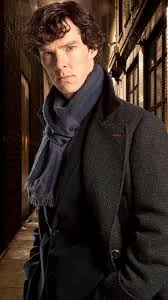
Sherlock Holmes is celebrated as the world’s greatest scientist of crimes, yet his most brilliant victories rely on a tool the scientific community explicitly forbids which is brilliant, intuitive guesswork. Sir Arthur Conan Doyle’s most brilliant creation was not merely Sherlock Holmes, the world’s most renowned fictional detective, but the detailed narrative illusion required to make such a genius believable. The brilliant Sherlock Holmes we all are aware and so fond of doesn’t actually exists in fact he’s a carefully staged myth and a masterfully crafted character of Sir Arthur Conan Doyle.
Sherlock Holmes is a multifaceted individual with multiple talents who was devoted to a career of a private detective. He has showed his sharp analysis over countless cases leaning on his perceptions and regulations of honor. He has enabled the very individuals who have justifiably devoted themselves to criminality to evade sentence. There are numerous cases when life was at stake and he was oblivious to human feelings. He was gripped by riddles and mysteries noticing nothing on his path except them.
Sir Arthur Conan Doyle copied the peculiarities of his character from a real person Dr Joseph Bell who was a Scottish surgeon and professor from the 19th century, who served as the primary inspiration of Sherlock Holmes. He took inspiration from Dr Joseph Bell because before Sherlock Holmes, fictional detectives were able to solve their cases because the author manipulated the plot to give them answers, they stumbled upon irrelevant and wild coincidences or had the criminals confess out of nowhere which made the stories predictable and quite boring for which the readers lost interest on the stories. Sir Arthur Conan Doyle found this incredibly lazy and wanted a detective who relied on the scientific system of case solving. Dr Bell provided the perfect example of how the scientific system worked. Dr Bell treated the symptom as a clue and the disease as a mystery, he noticed even the minute callouses and stains of his patients. Doyle took inspiration from him and applied it to the detective world.
Sherlock Holmes is not just a famous character, according to the Guinness World Records he is the most portrayed literary human character in the fictional world. As mentioned before most of the detective figures before Sherlock Holmes solved mysteries using luck and coincidence but Holmes changed everything by treating crime as science. He looked at the minute details which are often neglected by us like mud splatters, bicycle tire tracks and analysed them deeply. Doyle was a doctor by profession before he stepped into the world of literature and he based Holmes on his medical university professor who treated the cases of his patients like a mystery. Holmes gave the world its very first taste of modern forensic science in the field literature which makes him truly outstanding.
Sir Arthur knew the power of perspective. If the stories were to be written from Holmes’s perspective, then they would have been incredibly boring because they would know the answers and plots instantly and moreover no one wants to hear someone talk about their own life. Sir Arthur created another character who was Dr John Watson who is very intelligent but very normal and became the narrator of the stories. He reacts to Holmes with the same awe and confusion that the reader does.
Sherlock Holmes had some of the best visual marketing in history that made him recognizable even today. The famous deerstalker hat and curved pipe became his trademarks and were popularized by the Sidney Paget for The Strand Magazine. This distinct look made Holmes recognizable across the globe.
The masterpiece “The Adventure of Sherlock Holmes” have inspired not only film directors but also many writers. Well known writers like Dorothy B. Hughes, A. A. Milne, Neil Gaiman and Anthony Burgess have taken inspirations from the character of Sherlock Holmes. In the year 1954 a re-imagined collection of stories on Sherlock Holmes was published by John D. Carr who is a well-known American author of mystery stories. The collection was created with cooperation with Adrian who was the son of Sir Arthur Conan Doyle and contained 12 famous stories. Another work closely related to Sherlock Holmes is The House of Silk which is an eminent novel published by Anthony Horowitz in the year 2011. This novel was approved by the estate of Conan Doyle and was presented as the continuation of “The Adventure of Sherlock Holmes”. This book tells the story of the new case of Sherlock Holmes and Dr Watson. The case is named “The Flat Cape” case and it covers the story of the protagonist Edmund Carstairs who was an art dealer and his destroyed paintings. This story is the first person narrative from Dr Watson and according to the plot this story was written only after Holmes death. The novel was warmly accepted by the critics and was shortly followed by a sequel Moriarty in the year 2014.
There are many such novels and books which have their original main character somehow connected to Sherlock Holmes and are greatly inspired by the legacy of Arthur Conan Doyle.
What truly separates Sherlock Holmes from the endless sea of fictional detectives is not his outstanding intellectual skills but his messy and brilliant contradictions. He abides by the scientific system of case solving and not some pure fictional methods. He does not catch the criminals out of a moral duty to save the people but he is quite literally a data addict, he analyses the data to a microscopic level to get his clues and conclusions. He is often considered the master of “Negative space” deduction, unlike the standard detectives who hunt for what is there but Sherlock Holmes hunt for what did not happen. He had extraordinary observation skills which made him stand out in the sea of fictional detectives.
People often have a lot of myths and queries regarding Holmes. One of the well-known myths among the young readers is that Holmes was a real person made of flesh and bones in the human world but as we have already known that he is actually a masterfully designed detective character of Sir Arthur Conan Doyle. One more query of the readers is that since Holmes is such a brilliant character was anyone ever able to outsmart him, and the answer is yes, but only a handful of people were able to outsmart him who contained outstanding minds. One such example of an equally brilliant character who could outsmart Sherlock Holmes is Irene Adler, a character from the story “A Scandal in Bohemia”. She is able to see through his disguises and beat him at his own game and escape London. He is profoundly impressed by her intellect that he keeps her photograph on his desk and refers to her respectfully as “The Woman”. There are still a lot of myths and conspiracies spiralling around Sherlock Holmes which showed how humanly he was portrayed in the stories.
Filmmakers have spent over a hundred years constantly reinventing Sherlock Holmes, proving that society’s hunger for a brilliant mind capable of untangling chaos is entirely timeless.
There are a lot of iconic eras of Sherlock Holmes on screen, such like The Definitive Classic where for many Basil Rathbone is Sherlock Holmes. He starred in 14 films. The era from 1939 to 1946 came to be known as the Basil Rathbone Era, this era cemented the visual shorthand we still use that is the deerstalker hat and the curved pipe. Another iconic screen adaptation would be The “Holmesvision”, the BBC’s Sherlock redefined how we see him on the screen. They used flashing text on the screen to show exactly what Sherlock is noticing. It was a revolutionary way to show the process of thinking, rather than just the result.
What makes Sherlock Holmes completely irreplaceable in the field of fiction is that he didn’t just enter a genre he defined it. The detectives can be replaced but the archetype can never be replaced. Before Holmes the fictional detectives usually operated alone which was quite boring since the genius had no one to share his thoughts with. Doyle introduced Dr Watson who became Holmes ‘s sidekick. Watson was like the readers in the form of a protagonist of the stories, he was ordinary, amazed and curious. Before Holmes most of the detective stories had no plots or were mostly solved by luck and sudden confessions. Sherlock Holmes solved the cases by a scientific system of case solving which not only made the stories interesting but kept the readers guessing.
Ultimately, Sherlock Holmes remains immortal because he satisfies a deep, collective human need which is the desire for certainty in a chaotic world. Arthur Conan Doyle not only gifted a pristine superhero to literature but a brilliant, law-abiding citizen who lived in a fictional world and treated human tragedies like puzzles. He proved that even the most terrifying, seemingly supernatural nightmares can be dismantled by logic and human reasoning. Holmes does something far greater than just catch a villain but he proved that dark can always be decoded.
By: Gariyashi Thakuria
Write and Win: Participate in Creative writing Contest & International Essay Contest and win fabulous prizes.
About the Author