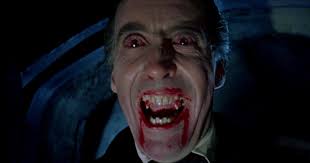
There were many vampire myths that had circulated through Europe long before Dracula was published. Monsters from the peasant class who wandered around Siberian graveyards and infected people in Transylvania with disease. But in today’s definition of vampires, they have a black cape, dilapidated castles, hypnotic eyes, and sexual enticement with an air of danger. When people picture a vampire, aware or not, they are picturing Dracula.
This is not a coincidence. It is what is left from one of the changes in the history of horror movies. This is when Bram Stoker took all the stories and ideas about vampires and made them into one person that we still remember today. Dracula did not make up the idea of vampires… Bram Stoker made the vampire that people are still scared of.
The vampire before Dracula was vastly different from what people think of now. Do away with the cape and the castle… The mythical vampires were grotesque and disgusting; reanimated corpses that spread across their pungent smell. They were plagued menaces, rising to infect the living, embodying one of the most inherent human fears: the dead refusing to stay dead.
The stories about vampires from Eastern Europe were over the place. Some vampires where mindless husks well others were masters of deceit Vampires were either repelled by garlic or indifferent to it. Some vampires were visible in mirrors while some would perish when exposed to sunlight. There existed the vrykolakas of Bulgaria, the strigoi of Romania, and the vampir of Serbia. All these were associated with vampires but they were not vampires. They were not the same thing. There was no “one way” to think about vampires.
Even the vampires in books like John Polidoris Lord Ruthven in The Vampyre and Joseph Sheridan Le Fanus Carmilla were not very well known everywhere. Brilliant, yes, but known? Not really. They did not paint one clear image of what a vampire is.
Vampires before Dracula were folklore. Vampires after Dracula became an icon recognized all around the world.
Dracula was not created out of thin air. Bram Stoker conducted extensive research on the history of Eastern Europe, vampire folklore, and travel writings.
Dracula wasn’t conceived in a vacuum. Bram Stoker researched thoroughly about Eastern European history, their vampire folklore, travel writings. What he created, from all these old myths, was something new that amalgamated all the story into a single form.
The expectation from a monster is simple- gore, grotesque, violent. However, Stoker did away with it all by creating a vampire which was not an undead monster at all, terrifyingly, he was a gentleman.
Indeed, in Dracula the vampire was described as an intelligent nobleman living secluded in his castle located in the outskirts of Europe, in Transylvania.
Another factor which helped make the story realistic was the unique style in which it was told. Unlike other novels, Bram Stoker chose to write Dracula in such a way that there was no one narrator but rather diaries, letters, telegrams, newspaper clippings, ship’s logbook records, and phonograph recordings were utilized. The use of this kind of narration ensured that one was reading authentic documents collected after experiencing terror. It was not necessary that horror should have happened right away because it was going to happen gradually as people witnessed strange events and began to understand the horror surrounding them.
The other factor that helped in making the story realistic was the uniqueness of its narration style. Rather than taking a narrator, Bram Stoker chose to tell the story of Dracula through journals, letters, telegrams, newspaper cuttings, logs from ships, and voice recordings on phonographs. The effect this created was that one felt he or she was reading real accounts following an experience with something horrific. There was no need for instant drama since the horror would develop slowly as different characters experienced strange happenings and began comprehending the danger that was surrounding them.
There were many conventions that Bram Stoker introduced in Dracula that became associated with vampires thereafter. Examples include the isolated castle, the capability to transform into bats and wolves, hypnosis, repulsion towards crosses and holy things, and inability to enter the premises of a house unless invited. Some of these had been present even earlier in folklores but Stoker succeeded in combining all of them in one vampire. Stoker died in 1912 thinking the Count had been securely committed to the printed page. He was mistaken.
F.W. Murnau’s Nosferatu (1922) was an unauthorized adaptation of Stoker’s novel. Which lead to Stoker’s widow to sue. The courts ordered all copies destroyed (fortunately, some managed to survive). But the image Murnau created with his Max Schreck – with his rodent ears and shape of a plague carrier – provided Dracula with a vocabulary the written word could not fully capture: the long shadow creeping up the stairs, the domed head rising above a coffin. The vampire was now an image, not just a story.
However, everything changed with the depiction of Bela Lugosi in Dracula produced by Universal Studios in 1931. Bela Lugosi’s performance was absolutely innovative; it made the monster appear as quite a charming character. The Hungarian accent, the pause between the words, the cape and the eyes – all of that made Bela Lugosi. Bela Lugosi was not showing Dracula as a monster but a very confident man. People who had never read the novel suddenly found faces to their fears.
However, cinema did more than appropriate Dracula. It also magnified him, simplified him, and, above all, disseminated him. The Hammer Horror movies of the 1950s to the 1970s (featuring an impossibly tall and sultry Dracula played by Christopher Lee) introduced elements of sexuality to the figure of the aristocratic threat. By the close of the twentieth century, Dracula had been replicated so often that he had become invisible.
Here is the true measure of Stoker’s accomplishment: With Dracula, vampires became reproducible. They could be merchandised, serialized, reimagined by each generation, included in any genre from romance to horror to comedy to young adult fiction to video games. Dracula was in essence the industrialization of the vampire.
The Draculan archetype can be understood from its influence over all other vampire novels that have been written after it by way of imitation, idealization, deconstruction, or even rebellion against it: Dracula (1897); Interview with the Vampire, Nosferatu (1922 & 1979); Hammer Horror; Twilight; The Vampire Diaries; What We Do in the Shadows – this list goes on and on.
Lestat is the Dracula of Anne Rice’s novel – the Dracula that has lost his evil but not his existential angst. Edward Cullen is the Dracula of Stephenie Meyer’s novel – the Dracula that has lost his menace but not his youthfulness. Vampire hunters in Blade are left with no choice but to fight the vampires created by the mythological architectural framework laid out in Bram Stoker’s Dracula. What We Do in the Shadows, the spoof film, might be funny, but only because we know about the Dracula archetype.
There is simply no way around imitating, idealizing, modifying, or rebelling against the Dracula archetype for any other vampire novel written in contemporary times. No fifth way exists.
But Dracula did something deeper too.
Before Dracula, vampires caused horror. They were walking dead, things to be killed and burned, incarnations of plague and terror. The right reaction to such creatures was not obsession but exorcism. No one wanted to be a vampire in folklore terms. No one thought of them as glamorous.
But after Dracula, everything changed. Vampires became figures that people could admire, dispute and identify with. The vampire’s immortality was not just frightening but enviable. His dominance over other people while terrifying was also, somehow, exciting. His loneliness, the monster who never ages, who cannot love without killing, who sees centuries go by yet stays the same, ended up inspiring something worse than terror: pity.
By opening up a new world, Stoker created a Pandora’s box that could not be closed. With Louis de Pointe du Lac, weeping over the victims he was forced to kill. With Edward Cullen, tortured by his own thirst. And even with Dracula himself, as a broken immortal cursed with immortality. In revisionist interpretations and film versions, the vampire became a symbol of everything: addiction, desire, fear of immigrants and contamination, mourning, homosexuality, seduction and destruction of power.
Why Dracula won’t Die
The reason why Dracula lives on has nothing to do with him being the scariest vampire ever created; he isn’t even by contemporary standards. Dracula lives on because he is one of the most adaptable fictional characters created by anyone. The archetype that Stoker created has the ability to incorporate all possible cultural fears, and mirror them back to us.
Count Dracula has been portrayed as a monster, lover, tyrant, philosopher, and even a jokester. He has been depicted in every possible medium on the planet in various registers. He will be created and recreated again. But, regardless of what changes about his characterization, the Dracula we see will still bear the imprint of Stoker’s original architecture: the castle, the charisma, the appetite, the night.
This is the true legacy of what Bram Stoker accomplished. It wasn’t just Dracula’s fear factor that made him immortal but the way he forever changed the image of a vampire in human imagination. The folkloric vampire that has been frightening European villages for centuries is merely a footnote today. The Transylvanian aristocrat is everywhere.
He will always be.
Frequently Asked Questions
Q-Was Dracula based on a real person?
A- Stoker borrows the name and the location of Transylvania from Vlad III of Wallachia. He was infamous for executing his enemies by impalement. He was NOT a vampire, did not drink blood and well really did not resemble the count.
Q- Did vampires exist in folklore before Dracula?
A- Yes! Vampires have existed in Eastern European folklore for centuries before Dracula but they were depicted as bloated carcasses- the buried that do not stay buried, rising from the ground to spread disease to the living.
Q- Which vampire traits actually came from Dracula?
A-Many ‘standard vampire traits’ were actually created by Stoker such as castles, the aristocratic bearing, the ability to transform into bats and wolves; the inability to enter without invitation, aversion to crucifixes and garlics, having hypnotic control over victims and sleeping in a coffin with native soil.
By: Misha Srivastava
Write and Win: Participate in Creative writing Contest & International Essay Contest and win fabulous prizes.
About the Author