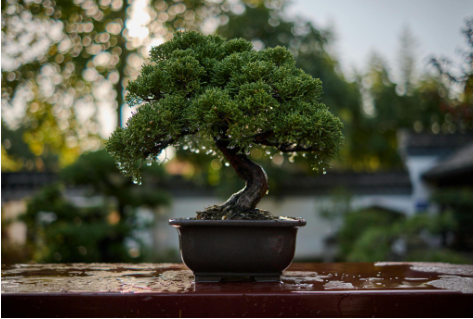
There’s a reason bonsai trees have held people’s attention for centuries. They carry a quiet kind of magic. A single tree, carefully shaped and thoughtfully placed, can transform an ordinary corner of your home into something that genuinely stops people in their tracks. It’s not just about having a plant in the room. It’s about creating a presence, a mood, a moment of stillness in the middle of everyday life.
If you’ve been thinking about bringing one home but aren’t sure where to start, you’re in the right place. Styling bonsai plants as living art is more approachable than it looks. It’s really just a matter of understanding a few key principles and letting the tree guide the rest.
Understand your tree before you style it
Every bonsai has a personality. Some trees lean naturally toward the light, others have trunks that twist in interesting directions, and some have branches that spread wide like they’re reaching for something. Before you do anything else, spend a few days simply observing your tree. Rotate it. Look at it from different angles. Notice which side feels more interesting, which branches feel dominant, and where the natural flow of the tree seems to want to go. Good bonsai styling always begins with listening, not doing. The more you understand the tree’s character before you touch it, the better your styling decisions will be later.
Choose the right pot for the right tree
The pot is not just a container. It’s part of the composition. A heavy, rough-barked tree with a thick trunk will look best in an earthy, unglazed pot that matches its rugged character. A more delicate, fine-leafed tree calls for something smoother and more refined. As a general rule of thumb, the length of the pot should be roughly two-thirds the height of the tree. This proportion creates a visual balance that feels natural without being too rigid. Also consider depth. Shallow pots make the tree look more dramatic and exposed, while deeper pots give a sense of rootedness and stability. There’s no single right answer, but the pot and the tree should always feel like they belong together.
Place it like it’s the main character
One of the most common mistakes people make with bonsai is treating it like any other houseplant and tucking it into a corner or crowding it with other things. A bonsai deserves space. Place it somewhere with good natural light, ideally near a window that gets bright but indirect sun for most of the day. Put it on a low stand or a simple wooden platform so it sits at a height where you can appreciate its structure properly. Give it breathing room around it. The empty space around a bonsai is part of the display. When you strip away the clutter, the tree speaks for itself, and that’s when it truly becomes art.
Work with wire to shape over time
The best plants to style with wire are those with flexible, young branches that haven’t hardened yet. Copper or aluminium wire wrapped carefully around a branch can coax it into a new position over weeks or months. Always wrap at a 45-degree angle and work from the base of the branch outward. The key word here is patience. Bonsai shaping happens slowly, and that’s a feature, not a flaw. Check the wire regularly to make sure it isn’t cutting into the bark as the branch grows, and remove it once the branch has set in its new direction. With time and care, you can guide a tree into shapes that look completely natural, as if they grew that way on their own.
Prune with intention, not instinct
Pruning is where a lot of beginners get anxious, but it’s also one of the most satisfying parts of bonsai care. The goal isn’t to make the tree look tidy. It’s to define its silhouette and open up its structure. Remove branches that cross over each other, grow straight downward, or crowd the canopy in a way that blocks light and airflow. Use clean, sharp tools and make decisive cuts. Concave cutters are worth investing in because they leave wounds that heal flush with the bark over time. After every pruning session, step back and look at the tree as a whole. You’re not just removing branches. You’re revealing the tree that was always inside.
Use negative space as part of the design
In bonsai, what you leave out matters just as much as what you keep. The gaps between branches, the open areas in the canopy, the space beneath the tree and above the pot, all of this is intentional. Negative space creates rhythm. It gives the eye somewhere to rest and somewhere to travel. When a bonsai is too full and dense, it loses its elegance and starts to look heavy. When the space is balanced thoughtfully, the tree feels light, alive, and dynamic. This is one of the concepts that takes the longest to get comfortable with, but once you start seeing it, you can’t unsee it.
Let it evolve with the seasons
One of the most beautiful things about bonsai as a form of living art is that it’s never finished. It grows. It changes with the seasons. A tree that looks one way in summer will look completely different in winter when the leaves fall and the branch structure is exposed. Embrace this. Adjust your styling and placement as the tree moves through its natural cycles. Move it closer to the window when the light gets weaker. Prune lightly in spring when new growth begins. This ongoing relationship between you and your tree is really the heart of what makes bonsai so special as an art form.
Ready to bring one home?
Whether you’re starting this journey for yourself or looking for a gift that’s truly unlike anything else, FNP’s plant collection is a beautiful place to begin. From compact indoor varieties perfect for apartments to more established trees with real character, there’s a bonsai here for every kind of home. Each one arrives carefully packaged and ready to find its place. All you have to do is decide where it belongs.
Write and Win: Participate in Creative writing Contest & International Essay Contest and win fabulous prizes.
About the Author