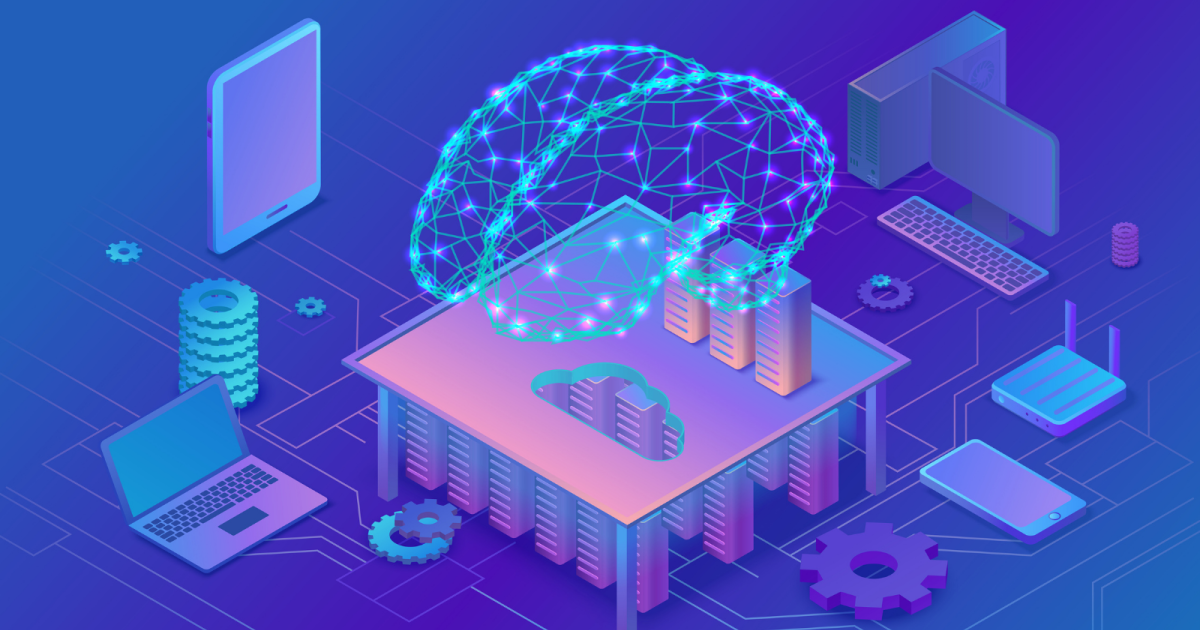
There is a particular kind of exhaustion that has no clean name yet, the fatigue of being always available, always notified, always on. It is not physical tiredness, nor is it the ordinary stress of a demanding job. It is something subtler: the slow erosion of presence, the sense that even in a quiet room, one is never quite alone. Millions of people now live inside this feeling, and most of them do not know there is a profession emerging that exists specifically to address it. We are living through an unprecedented restructuring of human labour. Artificial intelligence is not merely automating tasks ,it is reordering the entire architecture of what constitutes skilled work. Across industries, algorithms are absorbing the analytical, the repetitive, the predictable. Lawyers who once spent weeks reviewing contracts now watch software do it in minutes. Radiologists who trained for a decade to read scans work alongside neural networks that never tire, never blink. Accountants, translators, customer service agents ,entire categories of knowledge work are being reabsorbed into machine intelligence at a pace that would have seemed science fiction twenty years ago.
And yet, something is pushing back. As the digital world grows more total and more consuming, a quiet counter movement is gathering force. People are beginning to hire guides not to navigate the internet, but to navigate away from it. This is the emergence of the TechLife Balance professional, and it may well be one of the most important new careers of the twenty first century.
The Problem That Productivity Cannot Solve
To understand why this career is emerging, it helps to understand the scale of what technology has done to daily life in less than two decades. The average person now touches their phone over two thousand times a day. Sleep scientists report that blue light exposure from screens is pushing back circadian rhythms globally. Psychiatrists note a sharp rise in what they cautiously call “continuous partial attention” a state in which humans are never fully engaged with anything because they are always half attending to a device. Children growing up today have never known a world without social media’s architecture of comparison and performance.
The productivity movement tried to solve this with more technology: apps to block apps, timers to limit timers, dashboards to monitor dashboard usage. It offered optimisation as the cure for a disease that optimisation had partly caused. What it missed is that the relationship between human beings and their digital tools is not primarily a logistical problem. It is a psychological, social, and deeply personal one.
“The most human skill in an automated age is knowing when to put the machine down.”
This is where the Tech Life Balance professional enters. Unlike a productivity coach, they are not primarily concerned with getting more done. Unlike a therapist, they are not treating a clinical disorder. They occupy a new space ,part counsellor, part strategist, part anthropologist ,helping individuals, families, and organisations redesign their relationship with technology so that it serves human flourishing rather than undermining it.
What the Work Actually Looks Like
The career currently exists in several forms, and it is still evolving its own shape. At the individual level, practitioners work one on one with clients ,often high performing professionals who feel that something essential is slipping away from them. They conduct what might be called a digital audit: mapping when, why, and how a client uses technology, and tracing the emotional and relational consequences. They then co design what practitioners in the field sometimes call a “technology diet” ,not abstinence, but intentionality. When will notifications be allowed? What hours belong entirely to the offline world? Which digital tools are genuinely serving the client, and which have quietly colonised time and attention without consent?
At the organisational level, companies are beginning to hire these professionals to redesign workplace cultures where the expectation of instant response has become toxic. Research from Microsoft and Harvard Business School has separately found that employees who are protected from after hours digital contact report significantly higher job satisfaction and lower burnout rates ,with no measurable decline in performance. The Tech Life Balance professional helps organisations implement and sustain these protections, navigating the cultural resistance that often meets them.
In schools and universities, the work takes the form of digital literacy programs that go beyond cybersecurity and fake news into the deeper territory of attention, identity, and emotional regulation in online spaces. With adolescent mental health reaching crisis levels in many countries ,a trend researchers have strongly correlated with social media use ,educators are searching urgently for practitioners who understand both the technology and the psychology well enough to intervene meaningfully.
The Skills That No Algorithm Can Replace
What makes this profession genuinely resilient in the age of AI is precisely what makes it difficult: it is irreducibly human in its requirements. A machine can tell someone how long they spent on Instagram. It cannot sit with them in the discomfort of why they reach for their phone at 2 a.m. when the house is quiet. It cannot read the particular way a teenager’s posture changes when their phone is mentioned in a conversation. It cannot navigate the delicate politics of a family that has wildly different relationships with technology, or the ego of a senior executive who needs to hear that his always on habits are demoralising his team.
The practitioner in this field draws on an unusual combination of competencies. They need psychological literacy ,an understanding of how habits form, how anxiety operates, how identity and self worth become entangled with digital performance. They need sociological awareness ,the capacity to read how technology is reshaping relationships, community, and culture at scale. They need technological fluency ,enough understanding of how platforms are designed to explain why infinite scroll and notification systems are not accidents but deliberate engineering choices with measurable effects on human behaviour. And they need the irreplaceable human gifts of empathy, patience, and narrative: the ability to help someone tell a new story about their own life.
“We do not need people who know how to use the machines. We need people who know why to put them down.”
It is worth noting that this combination of competencies is not exotic. Across the world, people who have trained in counselling, social work, education, public health, communications, or philosophy already possess significant portions of it. The emerging profession is, in a sense, a new synthesis of old wisdoms applied to a new condition. This makes it accessible to many who might otherwise feel that the AI age has rendered their education obsolete. It has not. It has created a new and urgent context in which deeply human skills are more necessary than ever.
A Career With Moral Weight
There is something else that distinguishes this profession, something that matters beyond questions of job security or salary: it carries genuine moral weight in the present moment. The designers and engineers who built the platforms we now navigate did not, for the most part, intend to cause harm. But the evidence accumulating from psychology, neuroscience, and epidemiology is now impossible to dismiss. The attention economy ,the business model that treats human focus as a resource to be extracted and sold ,has imposed real costs on individuals and on societies. Rising rates of anxiety and depression, the collapse of sustained attention in young people, the polarisation of political discourse, the loneliness epidemic: these are not separate crises. They are, in significant part, a single crisis, shaped by the way digital technology has been designed and deployed.
The Tech Life Balance professional works, in a quiet but real way, against these forces. Every person they help reclaim their attention is a small act of resistance against an economy that profits from distraction. Every organisation they help build humane digital cultures is a counterweight to the norm of relentless availability. Every young person they equip with the capacity to use technology with awareness rather than addiction is a child better prepared to inhabit a world that will otherwise consume their inner life before they have had the chance to fully form it.
This is not small work. It is the work of repair, and every age that creates new wounds eventually generates the healers those wounds require.
The Future of the Profession
The field is still young enough that its formal infrastructure is only beginning to take shape. A handful of universities now offer modules in digital well being within psychology and education programmes. Professional associations are emerging ,cautiously, with the characteristic awkwardness of new disciplines finding their edges. In some countries, governments are beginning to legislate around digital working hours and children’s screen exposure, creating institutional demand for trained practitioners to help implement these policies in practice.
What is coming into focus, however, is a vocation that will only grow in relevance. The AI systems currently reshaping the labour market are not going to slow down. If anything, the cognitive and emotional pressure on human beings will intensify as the boundary between digital and physical life continues to dissolve ,with wearable technology, augmented reality, and increasingly intimate AI companions pushing that boundary further every year. The need for people who can help other people remain grounded, present, and intentional in the face of this will not diminish. It will deepen.
In this sense, the Tech Life Balance professional is not merely responding to a passing cultural moment. They are positioning themselves at the intersection of the two great forces of our era: the unstoppable advance of artificial intelligence, and the equally unstoppable human need for meaning, connection, and a life that feels, in some essential way, like one’s own.
Conclusion: The Most Human Career
We tend to imagine that the jobs of the future will be technical ,coders, data scientists, AI trainers, robotics engineers. And many of them will be. But the deeper truth of the AI age is that it will also create a profound hunger for the irreducibly human: for presence, for listening, for the capacity to sit with another person in their confusion and help them find their way through it. The Tech Life Balance professional answers that hunger directly.
In a world where machines are becoming more capable of thinking, the career that may matter most is one dedicated to helping humans remember how to feel ,how to be bored without reaching for a screen, how to be alone without the panic of disconnection, how to be present with the people they love in the same room without the ghost of a notification pulling their attention elsewhere. These are not trivial skills. They are the conditions of a life worth living.
The AI age has not made human beings obsolete. It has, perhaps for the first time, made the depth and quality of human inner life an urgent professional concern. That is the strange gift hidden inside this disruption, and those who build careers around it will not only find meaningful work ,they will do work that genuinely matters, in a time that needs it badly.
By: Shivaanya S
Write and Win: Participate in Creative writing Contest & International Essay Contest and win fabulous prizes.
About the Author