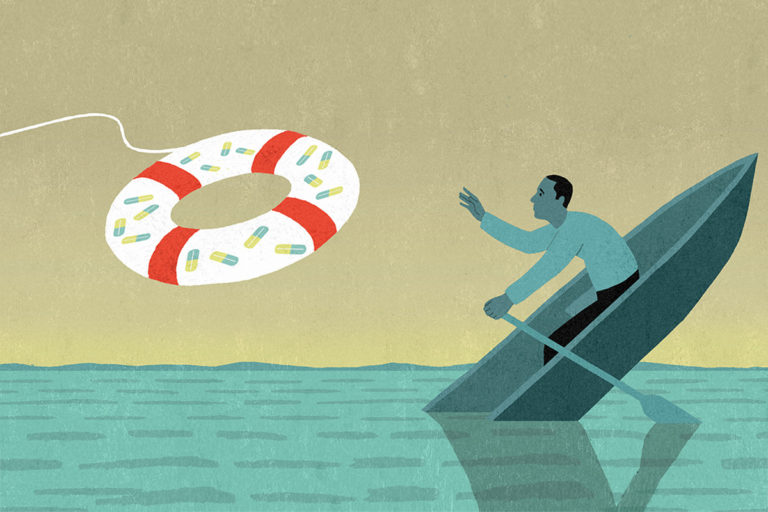
The rapid ascent of Artificial Intelligence (AI) has sparked a global conversation that oscillates between utopian excitement and existential dread. For the modern professional, the narrative often centers on “automation anxiety”—the fear that algorithms and robotics will render traditional roles obsolete. However, a closer examination of the AI Age reveals a more nuanced reality: while AI excels at pattern recognition, data processing, and repetitive logic, it remains fundamentally limited in areas requiring high-level empathy, moral judgment, and “thick” human context. The future of work is not necessarily a battle against machines, but a strategic pivot toward roles that complement them. As AI takes over the “cognitive heavy lifting,” new career frontiers are emerging. These alternate career options are not merely fallbacks; they are the essential pillars of a society that must learn to manage, ethicalize, and coexist with intelligent systems.
The most critical of these emerging paths is the Guardians of Ethics, specifically AI Ethics Officers and Policy Advisors. As AI systems begin to influence everything from bank loan approvals to judicial sentencing, the demand for these roles has moved from the realm of science fiction to corporate necessity. This career path is ideal for those with backgrounds in philosophy, law, or social sciences. AI is only as unbiased as the data it is fed, and without human intervention, algorithms can unintentionally perpetuate systemic racism, gender bias, and economic inequality. An Ethics Officer’s role is to audit algorithms, identifying “black box” logic that leads to discriminatory outcomes, while establishing governance frameworks that ensure AI development aligns with human rights and corporate social responsibility. This role requires a unique blend of technical literacy and moral reasoning—a combination that machines cannot self-generate. Because AI lacks a moral compass, the human element becomes the ultimate safeguard, ensuring that efficiency never comes at the cost of equity.
Beyond ethics, the most significant friction point in the AI age is the “implementation gap.” Companies often purchase sophisticated AI tools but fail to integrate them into the daily workflows of their human staff. This has birthed the AI-Human Integration Specialist. These professionals act as organizational translators. They understand the capabilities of software but specialize in the psychology of the workforce. Their goal is to design “Centaur” workflows—systems where the human and the AI perform as a single, more efficient unit. In healthcare, this means helping doctors use AI diagnostic tools as an enriching second opinion rather than a threat to their medical intuition. In education, it involves assisting teachers in using AI for personalized lesson planning while maintaining the critical emotional mentorship students need. The Integration Specialist ensures that technology serves the human experience rather than complicating it, making them indispensable in an increasingly automated corporate landscape.
The rise of Generative AI has also led many to believe that creativity is dead. On the contrary, creativity is simply evolving from execution to curation, giving rise to the New Creatives: Prompt Engineers and Digital Curators. Prompt Engineering is the art of talking to machines. It requires an immense command of language, history, and art theory to coax the best results out of a model. Furthermore, as the world becomes flooded with AI-generated content, the value of the Human Curator will skyrocket. When anyone can generate a thousand images in an hour, the professional who can select, refine, and provide a “human soul” to a digital collection becomes the ultimate gatekeeper of taste and authenticity. This shift moves the value of the artist from the “doing” to the “thinking.” The ability to envision a concept and guide a machine to realize it requires a level of intentionality that an algorithm, which merely predicts the next likely pixel or word, cannot possess.
Paradoxically, the more digital our lives become, the higher the premium on physical, high-empathy services. This leads to a massive growth in “High-Touch” alternate careers, particularly in Geriatric Care and Emotional Wellness. As the global population ages, the need for elder care is surging. While a robot might be able to monitor vitals or deliver food, it cannot provide the emotional companionship or the nuanced understanding of a patient’s life story. Careers in Occupational Therapy, Grief Counseling, and Elder Advocacy are arguably more “future-proof” than many desk-based analytical jobs. Similarly, we are seeing a resurgence in skilled artisans and the “Slow Movement.” In an age of mass-produced, AI-optimized goods, the value of the hand-made increases. Master carpentry, bespoke tailoring, and small-batch agriculture satisfy a deep human craving for authenticity and physical connection to the world—things a digital entity cannot replicate. These roles celebrate the “flaws” and unique touches of human craftsmanship that AI optimization seeks to erase.
Another expanding field is that of the Data Storyteller. We are currently drowning in data but starving for meaning. AI can find a needle in a haystack, but it cannot tell you why the needle matters. This has created a massive opening for professionals who are part data scientist, part journalist, and part graphic designer. Their job is to take the cold outputs of an AI analysis and turn them into a narrative that can drive human action. Whether it’s convincing a board of directors to change a climate policy or helping a community understand local economic shifts, the ability to weave a compelling “Why” around the “What” is a quintessential human skill. Data storytellers bridge the gap between machine logic and human emotion, ensuring that the insights gained from AI lead to tangible, understood progress.
Furthermore, as AI optimizes industrial processes, the massive energy consumption of data centers and the environmental impact of technology become critical issues. This gives rise to Environmental and Planetary Stewards, such as Green Tech Consultants and Ecological Restorationists. These alternate paths focus on the intersection of technology and biology. How do we use AI to track reforestation while ensuring the technology itself isn’t destroying the planet? Careers in Sustainable Tech Design and Precision Conservation allow professionals to use high-tech tools to serve the most “low-tech” and vital resource we have: the Earth. This role requires a holistic understanding of systems that AI, which often operates in silos, struggles to grasp.
The shift to the AI age requires a fundamental change in how we view our resumes. In the 20th century, a career was defined by “What I can do.” In the AI age, a career is defined by “How I think, how I feel, and how I adapt.” This requires a new “Skill Stack” focused on metacognition, critical thinking, and interpersonal intelligence. Metacognition allows a professional to understand how they learn, enabling them to pivot roles every few years as technology shifts. Critical thinking ensures they remain the “skeptic in the room” when an AI suggests a course of action that might be logically sound but socially disastrous. Interpersonal intelligence allows them to navigate complex human emotions that machines can only mimic, never truly feel.
This evolution also impacts the educational sector, where the role of the educator is shifting toward “Learning Architect.” Instead of teaching rote memorization—a task AI has already mastered—educators must teach students how to ask better questions. The “Alternate Career” for a teacher in the AI age is someone who facilitates curiosity, resilience, and ethical reasoning. The classroom becomes a laboratory for human-AI collaboration, preparing the next generation to use technology as a tool for expansion rather than a crutch.
In the realm of law and governance, we see the rise of Algorithmic Forensic Experts. When an automated vehicle crashes or an AI-driven trading bot causes a market flash-crash, these experts are called in to untangle the web of code and determine liability. This requires a deep understanding of both legal precedents and neural networks. It is a career that sits at the cutting edge of justice, ensuring that as we delegate more power to machines, we do not lose our system of accountability.
Ultimately, the age of AI is not the end of work; it is the end of drudgery. By automating the repetitive, the dangerous, and the purely logical, AI is forcing humanity back toward its most unique traits: empathy, ethics, creative vision, and physical craftsmanship. The transition will not be without its challenges, as many traditional roles will indeed disappear. However, for those willing to lean into their “human-only” skills, the landscape is richer than ever. Whether one chooses to become an AI Ethics Officer, a Master Gardener, or a Data Storyteller, the “alternate” paths of today will become the “essential” paths of tomorrow. The professionals who thrive will be those who stop competing with AI on its home turf—speed and scale—and start excelling on their own: depth and meaning. The future belongs to the “Human+”: the professional who uses the machine to amplify their humanity, not replace it. As we move deeper into this century, our greatest career asset will not be our technical proficiency, but our ability to remain stubbornly, creatively, and empathetically human.ensuring that as we delegate more power to machines, we do not lose our system of accountability.These roles celebrate the “flaws” and unique touches of human craftsmanship that AI optimization seeks to erase.
By: Dita Kartika Nur Wulansari
Write and Win: Participate in Creative writing Contest & International Essay Contest and win fabulous prizes.
About the Author