A pattern emerges in almost every industrial revolution: new technology reshapes who gets hired and who gets left behind. For example, during the First Industrial Revolution, mechanized factories began replacing artisans who had made goods by hand. Jobs based on individual skill started giving way to jobs built around machines and production speed. At the same time, however, factory-based wage labor grew, offsetting and rather expanding the labor market in a whole new industry. Even though a lot of people pushed back against machines, worried they would lose their jobs, the reality turned out differently. More goods were being produced, and that growth opened up the market economy in ways people had not expected. In the end, many of those same people found themselves with more work, more products to buy, and more opportunities than before.
The Second Industrial Revolution wasn’t all that different. Jobs started getting more specialized, and mass production really took off. Of course, plenty of people had doubts, arguing that the introduction of new factories would wreak havoc in the job market. They figured that making things on such a massive scale would drag down quality and do more harm than good. But what happened was that breaking the manufacturing process into smaller, focused tasks meant more finished goods could be made, and over time, the market found its footing. We are currently living in the Third Industrial Revolution, which is marked by the introduction of the Internet, moving many economies away from manual industrial work and toward technological and information-based work. We already know what happened in this process, as we live in an age of prosperity unlike any we have ever known. The Fourth Industrial Revolution is on its way, marked by AIs and “cyber-physical systems,” which is just another cool way of saying algorithmic programs will run the manufacturing process. The naysayers worry that these changes will result in the loss of millions of white-collar jobs, which are happening in increments as big tech companies have been laying off workers and have stopped hiring as many employees as before. But as we have witnessed many times before, some jobs will disappear, while new ones will emerge. The big question is, which ones?
One thing seems pretty clear: some forms of technological work may eventually start to decline as AI becomes more advanced. History tends to repeat itself. In many cases, the jobs that grew during one revolution became the jobs most vulnerable during the next. If this pattern continues, some of today’s tech jobs may be replaced or reshaped by industries built around AI. Since the Third Industrial Revolution provided more white-collar jobs, especially in the IT industry, it is safe to expect these jobs will be replaced sometime soon. Other jobs that are most susceptible to replacement are the data-heavy, repetitive jobs, such as office clerks and receptionists. However, at the same time, new roles will continue to grow, including jobs like cloud computing specialists, data scientists, AI researchers, and people who manage or improve AI systems. As seen in other industrial revolutions, the jobs that supplement the revolution will grow dramatically, offsetting the job losses that come from the revolution. In other words, those who improve the systems behind artificial intelligence should expect the largest labor demand.
Identifying alternative career paths becomes a lot more practical when the forces behind this current revolution are better understood. AI technology has been growing at a speed that has surprised even some of the experts working on it. There is a growing consensus that these systems could eventually perform certain cognitive tasks with a competence that rivals trained professionals. Major research labs and corporations have committed enormous resources to pushing that boundary even further, and the results over the past few years speak for themselves. Movie industries are looking to streamline their businesses by opting to use generative models, and many large corporations have already been deploying AI agents to replace customer service teams.
The uncomfortable takeaway is that holding a degree may no longer function as the reliable safety net it has been for decades. When organizations realize that an AI platform can manage significant portions of that same output at a fraction of the cost and in a fraction of the time, hiring decisions start to reflect that reality. Education is far from irrelevant, but its value going forward may hinge less on the credential itself and more on the distinct, difficult-to-automate capabilities that come along with it.
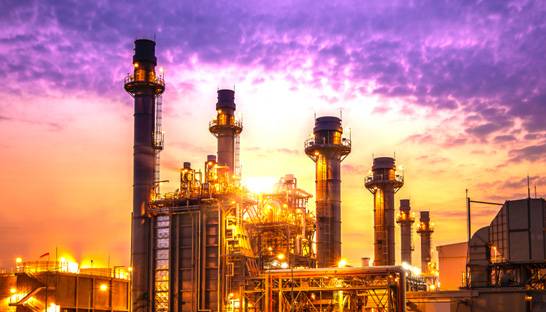
Automation gets a lot of attention, but hardly anyone stops to think about what is physically holding it all up. It does not just exist on its own. Behind every search result, every recommendation, every response from a chatbot, there is a real building sitting somewhere with rows of machines inside that need power, cooling, and people checking on them regularly. Those buildings do not build themselves. The wiring does not install itself. The temperatures do not stay safe on their own. And when a piece of equipment goes down at two in the morning, there is no app for that. A person has to show up and deal with it.
The amount of construction and expansion happening right now in this space is hard to overstate. Major companies are pouring serious money into new facilities just to keep up with how fast demand is growing. Every single one of those projects needs bodies on site long before anything gets switched on. Electricians, construction workers, people who specialize in cooling and ventilation, and engineers drawing up plans and solving problems as they come up. And finishing the building is really just the beginning. After that comes the long-term work of keeping it all running smoothly. That means technicians watching over equipment day and night, security professionals guarding both the physical location and everything stored inside it, and networking specialists making sure nothing slows down or drops off.
The reason this stands out as a career direction is the sheer variety of ways someone could fit into it. Yes, some positions are going to ask for a formal background in something like engineering or computer science. But a lot of others are perfectly suited for people coming out of trade schools, certification programs, or just years of working with their hands. And honestly, some of the roles that matter most in these environments have less to do with what is on a resume and more to do with how someone handles pressure, how fast they can think on their feet, and whether the people around them can count on them when things go sideways. Not every shift in the economy opens the door that wide.
Still, data centers also create serious challenges. As more of these facilities go up, they are eating up more land, and many of them are ending up close to where people live. Data centers generate heat, run loud cooling systems around the clock, and consume enormous amounts of electricity from the grid. People living nearby have started pushing back, raising questions about noise, energy use, and what it all means for the character of their neighborhoods. Some of those concerns still require further research to fully understand, and not every complaint carries the same weight. But the bigger point is hard to argue with. The physical backbone of all this new technology comes with real tradeoffs that affect real communities. The interesting part, though, is that in a market economy, such friction tends to generate its own momentum. If these facilities are causing environmental headaches and neighborhood tension, there will be a growing need for people who can figure out how to make them cleaner, quieter, and less disruptive. That is not just wishful thinking. That is how markets tend to respond when enough pressure builds up around a problem.
And that is exactly why anyone still sitting in a classroom right now should be paying attention to more than just the flashy side of this technology. The problems it drags along with it matter just as much. That has been true of every major technological shift in history. Things get knocked off balance. Old ways of doing things stop working. But in that chaos, gaps open up, and those gaps have a habit of turning into entire career paths that nobody saw coming. There is also another angle worth thinking about. Nothing about this moment says people have to sit on the sidelines and wait for someone to hand them a job. These same tools that are reshaping industries are available to pretty much anyone willing to learn how to use them. Someone sitting on a good idea for a business does not need to go out and hire a full team anymore, just to get the thing off the ground. Drafting, research, design, organizing, all of that can be done faster now and without burning through a pile of money to make it happen. So rather than treating this whole shift like something to be afraid of, it might be smarter to look at it as something that has made it a lot more realistic for a regular person to go out and actually build something on their own terms.
The fear around all of this is nothing new either. People who made their living off horse-drawn transportation fought the arrival of the automobile. Workers in earlier industrial revolutions saw machines creeping into their shops and feared the worst. And honestly, in the short term, a lot of that fear turned out to be justified. Transitions like these are messy. People do lose jobs. Communities do get disrupted. But looking at the full arc of those same revolutions, what followed the pain was almost always expansion. New industries formed. New kinds of work appeared. Standards of living, over time, went up. That does not mean everything works out perfectly or that no one gets hurt along the way. But it does suggest that adaptation is possible when people have access to the right training, the right information, and the willingness to look at things differently.
So what does the job market actually look like once the dust settles? If the pattern from past revolutions holds, probably a lot more people will strike out on their own. Running small, scrappy operations that five years ago would have needed a whole office full of employees. Freelancers and solo founders are putting out work that holds up against what big companies produce, because the tools available now make that possible in a way it never was before. That is one side of it. The other side is the hands-on work. Somebody still has to build the buildings. Somebody still has to keep the power running. Somebody still has to swap out broken parts, watch the security feeds, and make sure the whole operation does not fall apart overnight. That demand is not going away. If anything, it is picking up speed. And then there is a whole category of work that nobody can even describe yet. Jobs that will grow out of problems people are only just starting to notice. How to make all of this more sustainable. How to make it safer. How to deal with consequences that have not fully played out. Those roles do not have titles or job postings right now, but they will. Every revolution has produced work that the previous generation could not have imagined, and there is no reason to think this time will be any different. None of this technology, no matter how impressive it gets, runs without people behind it. The real question is not whether there will be enough work to go around. It is whether the people coming up right now are watching closely enough to see where it is going before everyone else does.
By: Hyoyeon Lee
Write and Win: Participate in Creative writing Contest & International Essay Contest and win fabulous prizes.
About the Author