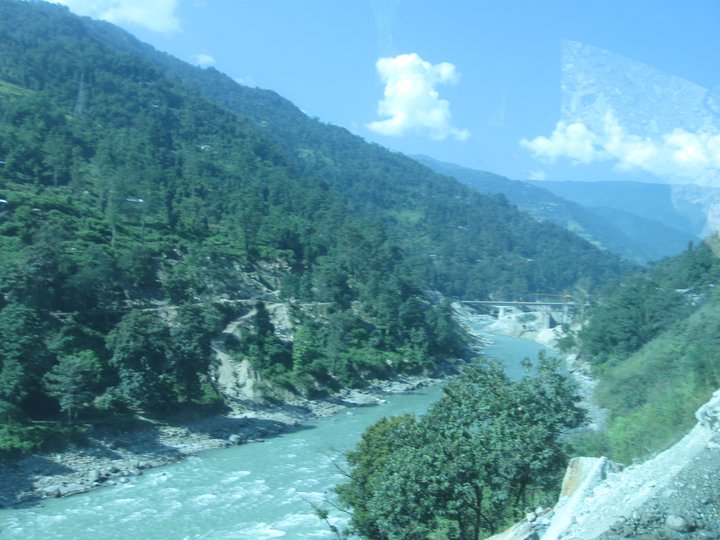
History is not something that’s far away from us. It is not like a picture that we keep safe in a frame. History is always. Changing, like the air that we breathe every day. When I was a child I used to think about how a nation can have different stories. There are stories of people who suffered stories of people who wanted to change things and stories of people who did things. I realized that a nations history is not something that we read about in books. It is something that we can feel every day in our lives. A river is like history. It changes all the time. It can be calm and peaceful. It can be rough and violent. A river reminds us that we are part of something than ourselves. It brings the past into the present. It helps us to understand where we come from.
William Faulkner said, “The past is never truly gone. It’s not even past.” This is true for every nation. The past is always with us shaping who we are today.
I. Dawn: The Origins of Storytelling
People existed before nations. People traveled before there were borders. In the beginning people did not write down their history. They told stories through songs, pictures. Talking to each other. These stories were like a library for them a way to pass down knowledge and traditions from one generation to the next.
Every group of people asks the questions: Who are we? Where did we come from? What will happen to us? People used to tell stories about gods, nature and things that they did not understand. These stories helped to create a nation to give people a sense of identity and purpose.
Rabindranath Tagore said, “The roots beneath the earth claim no rewards for making the branches fruitful.” This means that the beginning of a nation is not always visible. It is what holds the nation together.
II. The Rise: The Creation of Authority
As time went on small groups of people became organized. They created leaders and kingdoms. This was a time when nations were expanding, building walls and having kings. Power started to change history to shape the course of events. I learned that leaders make history. Ordinary people keep it alive. The power of people is what really makes a nation strong.
III. The Awakening: The Redefining of Identity
After a time a nation starts to think about what’s important. A nation asks: What do we believe in? What kind of society do we want to be? This is a time of change a time when people start to question their assumptions and challenge the status quo.
Art, literature and culture are important during this time. They help people to express themselves to resist things that they do not like and to create a sense of identity. Poems become like voices, not words. Songs become like movements, not music. I love reading poetry because it has the power to say things that people cannot always say out loud.
Maya Angelou said, “You may kill me with your hatefulness…. Still like air I’ll rise.” A nation can rise too because of its people. When people come together they can achieve things.
IV. The Current Pulse: A Meeting Point for History and Prospects
The world is changing fast. Every new idea is based on ideas. Every decision that we make is based on what we learned from the past. The future needs us to change to adapt to circumstances. If we forget our history we can get lost. If we stick to it much we might not move forward. We need to find a balance between remembering the past and embracing the future.
V. The Quiet Sections: Voices That Need to Be Heard
Not all stories are in textbooks. There are voices that are not heard, like women, small towns and ordinary people who changed history. When I was in school I used to wonder how many stories were missing. I realized that history is not always complete that there are voices that need to be heard.
There is a saying that “Every story will glorify the hunter until the lion learns to write.” This means that history is often written from the perspective of the powerful and that the voices of the marginalized need to be heard.
VI. The Future: An Unwritten Chapter
History is still being made. People are adding to their nations history every day. This made me think about my role about what I can do to make a difference. Will I help to build something. Will I tear it down? Will I. Will I remember?
These questions will shape the future because the choices that we make today will determine the course of events tomorrow.
VII. The Memory of Places: Landscapes That Speak
Sometimes history does not speak through words all. It lives in places in the landscapes that surround us. I have often felt that certain locations carry a kind of silence that’s not empty but full. Old buildings, forgotten roads, temples, rivers, a simple field. Each one seems to hold something within it something that we can feel but not always explain.
A broken wall may not tell you its story directly. It has seen things. It has witnessed footsteps, conversations, celebrations and perhaps even moments of fear. In a way it remembers.
There have been moments when I stood in a place and wondered. Who stood here before me? What were they thinking? What were they hoping for?. Suddenly history did not feel distant anymore. It felt close because I realized that I was connected to all the people who had come before me.
VIII. The Language of Generations: Words That Carry Time
Another place where history quietly survives is in language. Words are not just tools for communication they are carriers of memory. The way we speak the phrases we use the stories we tell. Many of these are inherited from our ancestors. We do not always realize it. When we speak we are also echoing voices from the past.
I have noticed how certain sayings or expressions come from generations. Sometimes we repeat them without thinking. They carry meanings that have been shaped by time and experience.
Even changes in language reflect changes in society. New words appear, old ones fade and meanings shift.. In that process history continues to evolve because language is a living thing that changes over time.
IX. The Weight of Memory: What We Choose to Remember
While thinking about history one question often stays with me: Do we remember everything? The answer I think, is no. Every nation chooses what to highlight and what to leave behind. Some stories are celebrated, repeated and preserved while others slowly fade away.
Sometimes this happens naturally. Sometimes it happens intentionally. This selective memory shapes how we see ourselves as a nation. It raises an important responsibility. If we only remember the victories and forget the mistakes we lose the chance to learn. At the time if we focus only on the struggles we may forget how far we have come.
Balance matters here too because a mature understanding of history is not about glorifying or criticizing blindly. It is about accepting, with honesty the good, the difficult and everything in between.
X. The Role of the Individual: Small Actions, Lasting Impact
For a time I believed that history was shaped only by great leaders or major events.. Now I think differently. History is also shaped by people, people whose names may never appear in books but whose actions still matter.
A teacher inspiring students a worker doing their duty with sincerity a citizen choosing honesty over convenience. These may seem like things but when multiplied across millions of people they begin to shape the character of a nation.
It made me reflect on something Maybe contributing to history does not require something extraordinary. Maybe it begins with doing things with responsibility and awareness.
XI. Change: Accepting the Flow
If history is like a river then change is inevitable. Nothing remains the same. At times change feels uncomfortable because traditions evolve, systems. New ideas challenge old beliefs.
It can feel like something is being lost. Perhaps change is not always about loss. Sometimes it is about growth because the river does not stop flowing because the path changes. It adapts it finds directions while still carrying what it once held.
In the way a nation must learn to adapt without losing its essence. That balance is not easy. It is necessary because change is a part of life and history is always moving.
XII. The River is Still Flowing
We are part of the river of history. We pass on what we learned from the past to the future. A nation is defined by its journey, its challenges, its growth and its people. And this is the thing: We are not just learning about the past we are making it.
Nelson Mandela said, “History will judge us by the difference we make in the lives of others.” The true power of a nations history is, in its people, not its size or power. So the river keeps flowing creating identities carrying memories and moving into the future.
By: Pooja.B
Write and Win: Participate in Creative writing Contest & International Essay Contest and win fabulous prizes.
About the Author