Burakkatha is a regional entertaining performance narrative which is highly structured in some native places of Andhra Pradesh and Telangana. It can be classified as an oral story telling tradition of India, it is not only for entertainment but also as a visionary and cultural transmission. The term derived from 2 two Telugu language words, burra which refers to a stringed instrument made of baked clay pot. And katha means story. Ultimately it is a triadic performance system one story teller leads and hosts the narrative arc while other 2 two co performers provide him support as rhythm, comedic aspect and socio political commentary which represent the analytical function with fun.
Origin and Background
Burrakatha evolved from Jangam Katha, it is a devotional storytelling style art practiced by the itinerant Shiva-worshipping Jangam community people during the Kakatiya dynasty (12th–14th century). Originally Burrakatha initially used to propagate religious texts and messages, the art form transmitted into a fundamental, secular transformation during the mid-20th century.
This art form gained structural importance in1943 during the Telangana Rebellion and the Bengal Famine incidents. Major organizations like the Praja Natya Mandali (the Andhra wing of the Indian People’s Theatre Association) have recognized the unique communication and cultural significance that differs from the local style. They excluded exclusive religious matters, refitted the trending social and political narratives like colonial matters, etc, and then renamed it Burrakatha. Notable music pioneers like Sunkara Satyanarayana and Sheikh Nazar designed the art form, shifting the focus from mythological legends to local political figures.
Evolution and improvements
The 3 three main elements of burrakatha:
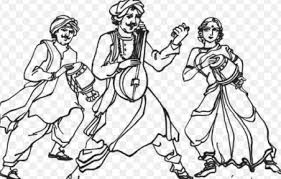
The Kathakudu (Main Storyteller): He is the main candidate with a traditional attire and the turban which is known as burra in telugu, holding on his shoulder. He leads the main narrative by singing, dancing and commenting on a specific theme holding the audience’s focus at him.
The Rajkiya (Political/Socio-Economic Commentator): He Stands to the right of our main performer kathakudu. Holding a small drum (dakki) in his hands, his actual roles highlight the essential events and directing it toward the political or economical issues and benefits.
The Hasyagadu (The Humorist): he stands to the left of the kathakudu. He also plays the drum, the dakki but held his performance through satire and comedic intervention, acting like a surrogate for the average citizen’s doubts, frustrations, and practical realities.
Social and Political Utility
Burrakatha is naturally a powerful weapon for mass communication rather than just a passive art style performance. Its main utility lies in its capability where it can translate hard political or social realities into simple local language registers for illiterate and rural demographic people.
The historical development and alignment can be seen through distinct phases:
Pre-1940s: It was practiced purely as a devotional style called Jangam Katha.
1943 major change: A huge shift was contributed by the Praja Natya Mandali organization.
1940s–1950s: It had become a strong anti-colonial and anti-feudal tool to fight against oppression and cruelty.
Post-Independence: It changed into a vehicle for national literacy and public health campaigns.
During the Indian Independence movement and the Nizam resistance incidents in Hyderabad, this art form was heavily deployed to mobilize the rural peasantry against cruel oppression. After getting independence, the Government of India and various local state administrations institutionalized Burrakatha. They used it like an important information delivery system for national development initiatives, including:
Family planning literacy among rural families.
Agricultural technology updates for farmers.
Eradication of bad social evils like child marriage and untouchability.
Public health and mass immunization drives.
Drivers of Contemporary Value
Despite the huge availability of modern digital entertainment and mass media nowadays, Burrakatha still keeps its unique position due to 3 three core factors:
Hyper-Local Customization: Unlike modern television or internet media which are centralized, a Burrakatha performance can be instantly changed on the live stage itself. The performers include local dialects, current political topics, and localized grievances of the people.
The Satirical Safety Valve: The interactive performance between the Rajkiya and the Hasyagadu lets the local communities process difficult governance failures, high inflation, or corruption. They do this through a safe, culturally accepted comedy medium.
Identity and Heritage Preservation: For all the Telugu-speaking people, Burrakatha represents a direct, unbroken line to old historical resistance and native language expression. It acts as a main anchor for regional identity.
The actual presentation of Burrakatha follows a highly synchronized setup on the stage. While the main storyteller walks back and forth while singing, the other 2 two co-performers maintain a steady rhythm, creating a dynamic visual that captures the audience’s attention completely.
The performance mechanics depend heavily on these elements:
The Costume and Attire: Bright traditional clothes, flower garlands, and heavy turbans that give a royal look to the artists.
The Instruments: The stringed burra brass-plated pot instrument, along with the two small dakki drums, and brass anklets (andela) worn by the lead singer.
The Tempo Control: The pitch increases and decreases based on the intensity of the scene, moving from silent drama to high-volume shouting during battle stories.
Major Historical Narratives
Historically, the scripts used in Burrakatha performances shifted according to the immediate needs of the society. The pioneers modified old legends to fit local heroes, making the stories highly relatable for the common village people.
The most popular stories that changed the mindset of the public include:
Alluri Sitarama Raju Katha: The heroic story of the tribal leader who fought against British forest laws in the Rampa rebellion.
Palanati Yuddham: An ancient regional battle story used to teach about unity and the bad effects of internal betrayal.
Bobbili Yuddham: A narrative showcasing ultimate bravery and sacrifice against foreign invaders.
Suka Jivitam: Modern stories added later to explain the benefits of good health and simple living.
Modern Challenges and Survival
In the current scenario, this folk art faces tough competition from modern electronic media. The younger generation is moving toward cities, which creates a gap in learning the traditional art form from old masters.
However, the survival of Burrakatha is supported by regional cultural departments and local festivals where these artists are specially invited to perform. It remains a living tradition because it can change its words instantly to comment on today’s current affairs and politics.
Geographical Performance Hubs
The actual live performance setups of Burrakatha happen primarily across the specific rural and semi-urban landscapes of Andhra Pradesh and Telangana. The geographical distribution divided the art style into three distinct regional variations:
The Coastal Andhra Region: Troupes perform heavily in rural village squares across Guntur, Krishna, and East and West Godavari districts. Historically, Guntur acted as the main structural birthplace for the modern secularized style developed in 1942. Here, it was traditionally called Jangam Katha.
The Rayalaseema Region: In the dry districts of YSR Kadapa, Kurnool, and Anantapur, the performance is widely known as Tandana Katha or Suddulu. Troupes travel across temple courtyards and localized village fairs during important festivals like Dussehra and Sankranti.
The Telangana Region: The art form happens intensely across Warangal, Khammam, and Nalgonda districts, as well as old rural sectors of Hyderabad. In these specific native places, it is often called Tamboorakatha or Saradakatha, directly connected to the local subaltern communities.
Socio-Political Impact and Reach
The actual social impact of Burrakatha during the mid-20th century was extremely widespread, transforming it into a highly feared instrument of mass awakening.
Anti-Feudal and Anti-Colonial Mobilization: During the peak revolutionary years of 1946 to 1951, Burrakatha served as the primary media tool for the Telangana Armed Struggle. Troupes organized by the Praja Natya Mandali traveled secretly from village to village to perform radical scripts like Kastajeevi (The Labourer). These shows exposed the brutal illegal extractions done by local landlords and the Nizam’s administration. Because it used simple colloquial Telugu and rhythmic beats, it successfully made illiterate peasants understand their democratic rights, leading directly to mass peasant participation in land seizures.
Imperial Bans and Resistance: The direct political impact was so powerful that the British colonial authorities explicitly banned Burrakatha performances across the Madras Presidency during the 1920s to 1940s. Similarly, the Nizam of Hyderabad prohibited it within his domain because the performances were actively inciting the rural public to revolt against the ruling elite.
Post-Independence Mindset Shifts: After 1947, its mass reach was co-opted by state administrations for rural development. It successfully broke deep-rooted social taboos by educating millions of rural families on family planning, public health vaccinations, and the absolute eradication of child marriage and untouchability across south India.
Conclusion: Cultural Imperative
Ultimately, Burrakatha stands as a perfect masterclass in cultural adaptation. It survived throughout history by successfully making a major transition from an old medieval devotional medium into a revolutionary political vehicle, and lastly into a modern public-awareness tool. Its high cultural importance lies in this exact flexible nature; it proves that traditional folk arts do not need to remain frozen in past history to survive. As long as it keeps its 3 three triadic structure of storytelling, satire, and deep social relevance, Burrakatha will remain an essential asset to India’s intangible cultural heritage.
By: sk umar
Write and Win: Participate in Creative writing Contest & International Essay Contest and win fabulous prizes.
About the Author