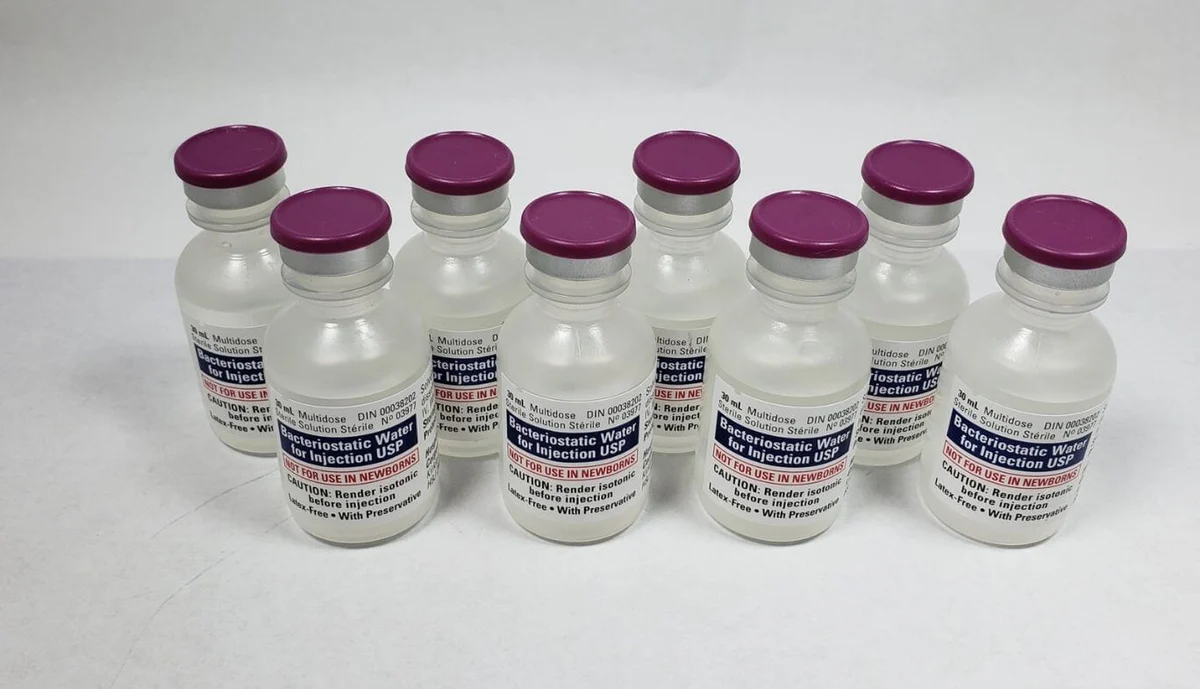
In any laboratory that handles lyophilized compounds, the reconstitution solvent matters just as much as the compound itself. A diluent that introduces contamination or alters stability can compromise an entire research batch. That is why so many Canadian researchers turn to a single, dependable choice when preparing their solutions.
The most widely used diluent for this purpose is bacteriostatic water, a sterile solution containing a small amount of preservative that suppresses bacterial growth. Understanding how it works, when to use it, and how to store it correctly can make a meaningful difference in the reliability of your results. The numbers and answers below break down what the research community most often wants to know.
What exactly is bacteriostatic water?
Bacteriostatic water is sterile water that contains 0.9% benzyl alcohol as a preservative. The benzyl alcohol does not kill bacteria outright. Instead, it prevents bacteria from multiplying, which is where the term “bacteriostatic” originates. This property allows the same vial to be accessed multiple times over a period of days or weeks without immediate spoilage.
By contrast, ordinary sterile water contains no preservative at all and is generally intended for single use. The preservative is the defining feature that sets bacteriostatic water apart from other diluents on the lab bench.
Why do researchers prefer it over plain sterile water?
The short answer comes down to one figure: 28 days. That is the standard window during which a sealed, properly stored vial of bacteriostatic water can be used after the first puncture. Plain sterile water offers no such buffer once opened.
For lab work involving lyophilized peptides and proteins, this multi-use property is practical and economical. A single 10 mL vial can support numerous reconstitutions across an extended research timeline. Roughly 9 out of 10 reconstitution protocols that call for a multi-dose diluent specify a bacteriostatic option for precisely this reason.
How is bacteriostatic water used in reconstitution?
Reconstitution is the process of returning a freeze-dried compound to liquid form. The general approach follows a few consistent steps:
Wipe the rubber stopper of both vials with an alcohol swab.
Draw the desired volume of diluent into a sterile syringe.
Inject the water slowly against the inner wall of the vial, rather than directly onto the powder.
Allow the compound to dissolve on its own, swirling gently if needed.
Avoid shaking the vial vigorously. Aggressive agitation can damage delicate molecular structures. A slow, gentle technique protects the integrity of the compound and supports consistent concentration across the solution.
What concentration of benzyl alcohol is considered standard?
The industry benchmark sits at 0.9% benzyl alcohol by volume. This concentration has been the established norm for decades because it strikes a balance: high enough to inhibit microbial growth, low enough to remain compatible with a wide range of compounds.
This 0.9% figure is worth memorizing. It appears consistently across reconstitution literature and is the level researchers should expect from any reputable supplier.
How long does it stay viable after opening?
The widely cited stability window is 28 days from the first needle puncture, provided the vial is stored correctly. After this period, the preservative’s protective effect can no longer be assumed reliable, and the vial should be discarded.
This 4-week guideline gives the diluent a clear advantage over single-use alternatives. It also explains why bacteriostatic water remains a staple item in laboratories that run extended studies rather than one-off experiments.
What are the correct storage conditions?
Storage requirements are straightforward but important:
Keep vials at controlled room temperature, generally between 15°C and 30°C.
Store away from direct sunlight and excessive heat.
Keep the vial sealed until first use.
Once opened, note the date and discard after 28 days.
Temperature stability protects the preservative and the water itself. A vial kept within the recommended range maintains its bacteriostatic properties throughout its usable life.
How does purity affect research outcomes?
Purity is not a marketing buzzword in a research setting. It is a measurable variable that influences experimental reproducibility. Contaminants introduced through a low-grade diluent can skew results, degrade sensitive compounds, and waste valuable materials.
At The Peptide Labs, quality control relies on High-Performance Liquid Chromatography (HPLC) and Mass Spectrometry (MS) to verify product identity and purity. The Peptide Labs maintains peptide purity standards consistently exceeding 99%, supported by an in-house analytical lab that checks every batch before it ships.
What size vials are typically available?
The most common format is the 10 mL vial, which suits the majority of standard reconstitution needs. This size offers a practical balance: enough volume for repeated use within the 28-day window, without leaving large quantities unused once the clock starts ticking.
A 10 mL vial of bacteriostatic water from The Peptide Labs is priced at $10.00, making it one of the more accessible essentials a research lab can stock.
What mistakes should researchers avoid?
A few recurring errors can undermine otherwise careful work:
Reusing past the 28-day mark. The preservative is not permanent, and expired vials risk contamination.
Shaking too hard during reconstitution. This can fragment sensitive molecules and reduce yield.
Confusing diluent types. Bacteriostatic water and plain sterile water are not interchangeable for multi-use applications.
Skipping the alcohol swab. A quick wipe of the stopper takes seconds and prevents avoidable contamination.
Eliminating these four habits accounts for a significant share of preventable reconstitution failures in research environments.
Where can Canadian researchers source it reliably?
Sourcing matters because not all suppliers maintain the same standards. The Peptide Labs is a Canadian supplier that ships research-grade compounds nationwide, with same-day dispatch on orders placed before 1 p.m. PST and free shipping on orders over $150.
All products from The Peptide Labs are intended strictly for laboratory research purposes. They are not for human consumption, medical use, or veterinary use, and are sold exclusively to qualified researchers and laboratories.
Final thoughts on choosing the right diluent
Reliable research begins with reliable materials. A high-quality diluent protects the compounds you work with, extends the usable life of each vial, and supports results you can trust and repeat. The data points worth remembering are simple: 0.9% benzyl alcohol, a 28-day post-puncture window, room-temperature storage, and verified purity above 99%.
Researchers who keep these standards front of mind set themselves up for cleaner, more consistent outcomes. To stock a dependable, lab-verified diluent for your next project, explore the bacteriostatic water options available through The Peptide Labs and pair them with the high-purity compounds your research demands.
Write and Win: Participate in Creative writing Contest & International Essay Contest and win fabulous prizes.
About the Author