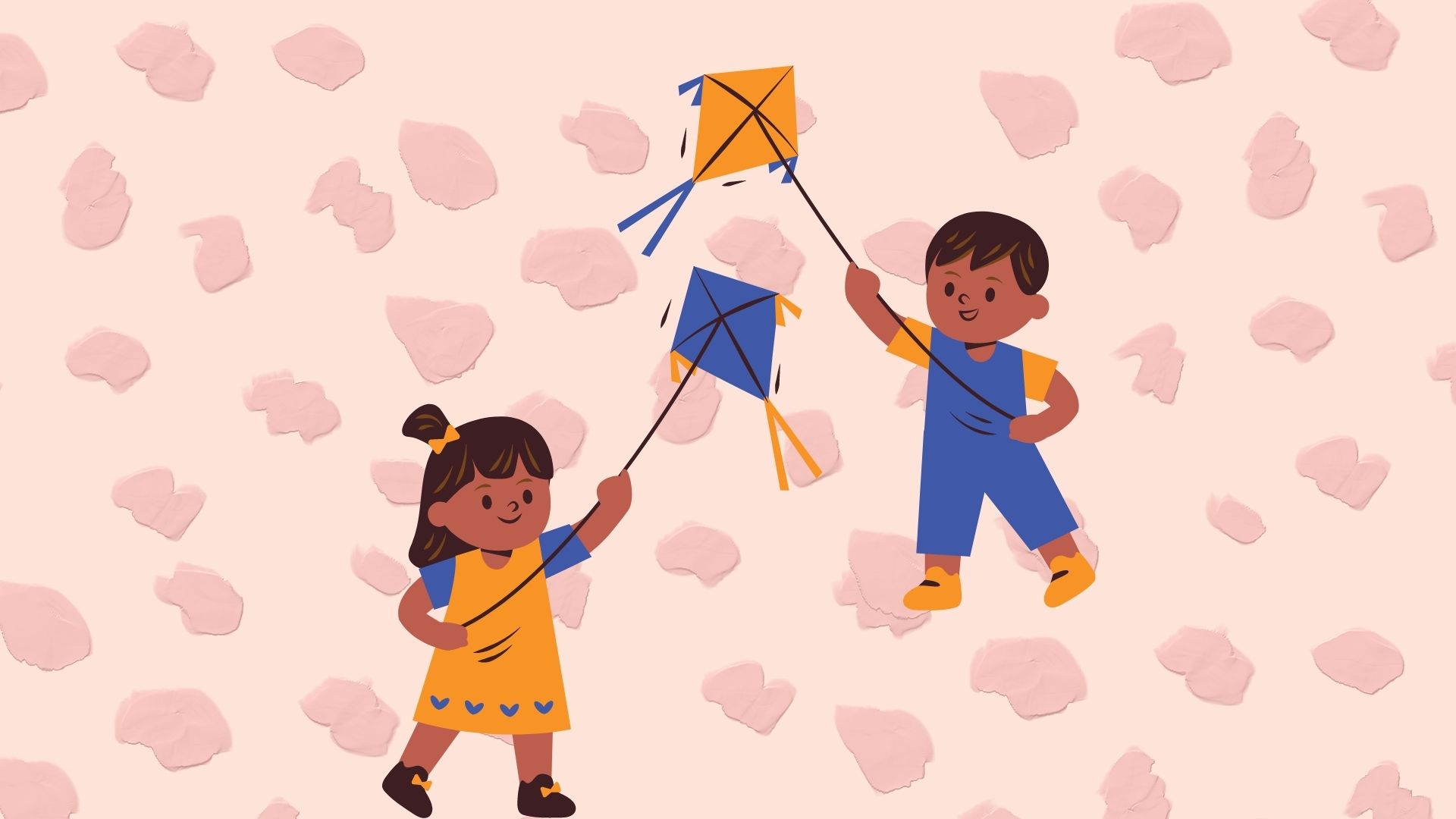
A festival with no religious and national boundaries, a festival that turns the empty boring sky to an appealing one with colourful kites all over, which seems like a blessing to watch with activity happening at every roof you see, Yes you guessed it right – I am talking about Basant. With its roots in Punjab, Basant is celebrated by Muslims, Hindus, Sikhs, and others in the region. The festival not only excites people but also serves as an economic benefit for the Government.
It is not restricted to Indian or Pakistani parts of Punjab, rather is celebrated in Punjab as a whole. “Basant Panchnami” also known as “Saraswati Puja”, is a cultural festival, which is celebrated in February marking the start of spring season in the region. It symbolizes the beauty of spring, by spreading the vibrant colours all over the region. Although, recently it has started being observed in whole Pakistan, it started in Punjab’s historic capital Lahore. The Walled City originated this festival with people from all over the world coming to the City of Knowledge to celebrate this festival. Over the years, the festival has grown into one of the largest and most anticipated cultural celebrations in Punjab.
Interestingly, nowadays what seems like a “Kite Fair” did not even start with kite flying, relatively it was observed on the 5th day of Magh highlighting the start of Spring, where people wore Yellow clothes, specifically men wearing Yellow Turbans while women wearing Yellow Duppatas and Saris. Before the partition of the subcontinent, everyone sang Basant songs with kite flying common but at a very small scale. The festival was at its peak – but suddenly partition changed everything.
As stated by Lahore Nama in 2009: “The festival has lost its true colours and instead became a game of death”. This statement was passed in the context of the “Kite Flying Epidemic” as after partition the original traditions of Basant were thrown into the Blackhole and the carnival was restricted to just kite flying. When this happened, Basant for some’s happiness started causing many deaths because the people who were flying kites were illiterate and were using harsh strings which were even made of chemicals making travel very dangerous for motorcyclists. The traditions which were lost after partition were singing Basant songs, wearing yellow clothes, and Hindus, Muslims, and Sikhs all coming together keeping their differences aside.
Beyond kite flying and celebrations, Basant has historically served as the symbol of Punjab’s culture, showing how Punjabis respect each other even with having religious differences. During Basant, everyone gathered on the rooftop without caring about differences, where families spent time with each other rather than being busy on social media. The Yellow colour that was associated with the festival represented happiness, hope, and the blooming season. In multiple ways, Basant was not merely an event but a reflection of Punjab’s cultural richness. Traditional Punjabi food, music, poetry and folk culture was an important part of the event. The cultural significance of the event shows why the festival had a special place in the heart of Punjabis even through the years it served suspension.
Although, after partition this fiesta started getting involved in multiple controversies but it still had a very special place in people’s hearts. Pakistan’s Cricket World Cup winning captain and Former Prime Minister Imran Ahmed Khan Niazi also loved kite flying in Basant days as stated by Salahuddin, who’s known Imran since his Oxford days, as mentioned in an Al Jazeera report. Moreover, Residents of “Androon Lahore” (Inner City) also loved this festival and called it a dynamic festival, cited in the same report.
Economically, it benefited the government significantly, raising up to 220 million in its early days back in 2004, which makes up around Rs. 5.7 Billion money in today’s economy, as stated by Pakistan Today. In its early years, the controversies it faced were a religious controversy, as it was being promoted in an Islamic country while it had roots in the Hindu spring festival. It also caused rooftop accidents, as rooftops started being crowded and people started falling. Furthermore, people started firing guns into the air to celebrate, which led to several injuries and even deaths. Metallic kite springs also caused severe damage to infrastructure, as it came into contact with electrical infrastructure. In addition to that, Commercialization also increased, as competition intensified making the festival overly commercialized with sponsors and stalls everywhere.
The above mentioned controversies gradually started intensifying until authorities started imposing harsh restrictions, likewise Basant’s craze also grew massively but it causing deaths because of “chemical dor” (harsh strings), and other controversies led to the ultimate decision by the Government of Punjab which, BANNED Basant, at the end of 2007. This announcement had major effects, one of the significant ones was removing the economic boost that Basant gave.
Although the official announcement of banning it came 10 years later under Chief Minister Muhammad Shebaz Sharif to the initial timeline of 2007 where it was mutually understood that Basant is banned, and it wasn’t held again even until 2017 where Shebaz Sharif clearly announced the BAN. It deprived the newer generations of ever seeing this beautiful festival, and the words that were heard before “pecha, dor, bo kaata, woh kaata, pattang, gudi” and others were never heard after this tragic announcement. The members of Generation Alpha never ever witnessed Basant and only heard stories of it by their parents or elder relatives until 2026.
Surprisingly, in the second half of 2025, rumours started growing of maybe another Basant where it was already 17 years since the last event. Excitement started to grow among people for Basant where some thought it could finally happen again while others thought the same would happen as to what happened in 2017. The forgotten festival was finally revived by the Punjab Government under Chief Minister Maryam Nawaz who thought that Pakistan, already is in an economic crisis so this might be the best time for the comeback of Basant.
The date was set, it was 6th February, announced very early in the later 2025 lifting the ban from Basant and applying new guidelines to address the earlier controversies due to which it was banned. It had several guidelines like only registered kites could be used for kite flying to reduce the accidents that happened due to harsh strings, songs on rooftops were not allowed to reduce noise, and many more. Then, Basant 2026, finally took place. The biggest Basant ever lit Lahore up, where people came from different cities of Pakistan, and overseas Pakistanis came from different countries to celebrate it once again. Public enthusiasm was immense as it generated nearly Rs. 4-6 Billion in Economic activity.
The same old originality came back, as the fabulous spring looked like a gift to watch. Everyone came on to their roofs and the old “pecha baazi” (competitions to cut each other’s kite) was back in the modern city. The revival of a vintage festival into a modern city felt perfect – from hotels, restaurants, and transport services seeing extra activity to local markets being full of customers. Basant was already at its peak but then social media stepped in, and the coverage of Basant went worldwide. This happened for the first time, as social media was fully developed, so this time everyone was posting and tweeting about Basant which ultimately benefited the government and the country. The image of Pakistan also looked great, as the first time everybody felt the way Punjabi’s feel in Basant. However when everything looked good, this Basant also started facing problems. From CM Punjab stopping the 2nd and 3rd days of Basant to people not following the guidelines – it felt like a rollercoaster of a ride. Even after facing these problems, Basant 2026 was a success as stated by the Chief Minister on 9th February. In addition to that, everyone enjoyed it, reliving the old memories, and contributing to the economy of the country significantly.
In conclusion, Basant is not just a festival of kites – it’s a symbol of Punjab’s cultural heritage that brings the whole Punjab together. From the older ones who have been witnessing Basant since their early childhood to the younger ones who have witnessed the carnival for the first time – It is loved by all. From wearing yellow clothes and singing songs, to flying kites – It is the road that connects history to the modern world. Although, after getting banned people thought that the journey of Basant was over, but after its recent revival it seems like it’s just the beginning.
Looking ahead, the Punjab Government aims to expand the festival to other cities with the “Safe Basant” model being enhanced. Moreover, the government dismissed the rumours of another Basant in 2026 to keep its originality. Learning from past mistakes, they are not overdoing it and not overly commercializing it. They seek the Basant 2027 to be more organized, making the future fiesta larger. These developments have renewed hope among Lahoris that Basant will continue to flourish safely and responsibly for generations to come . To summarize, Basant, despite facing numerous controversies and getting suspended to being revived recently, it still remains the signature festival of the Walled City.
By: Ayaan Ahmad Kaleem
Write and Win: Participate in Creative writing Contest & International Essay Contest and win fabulous prizes.
About the Author