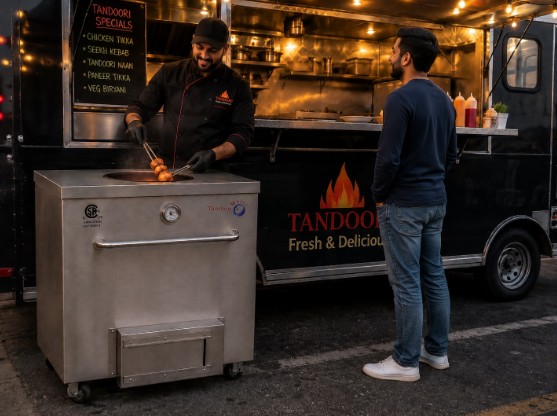
Indian and Middle Eastern cuisine is gaining popularity in North America with an increasing number of individuals being interested in regional breads, grilled meats, kebabs and heavily flavored food. Growth can bring opportunities but restaurant owners must deal with the challenge of replicating the taste, service and food quality of their restaurants in multiple locations. This is one area where tandoor ovens can assist operators; they are an effective solution to combine the ancient clay cooking method with high heat efficiency. They are very hot, which will help to prepare foods more quickly, and the clay-lined chamber will allow for a smoky flavor, charred texture and recognizable finish for true tandoor cooking.
Creating a Strong Culinary Identity
When customers know what’s unique about a restaurant, they’re more likely to take the plunge and become regulars. The taste of Tandoor cooking is clear with the charred vegetables, charred paneer, blistered naan and kebabs.
Indian restaurants can utilize the oven for chicken tikka, seekh kebab and garlic naan. Similar to lamb, chicken, flatbreads and vegetable platters can be prepared in the Middle Eastern operators’ high-heat style. The preparation method becomes a part of the brand story and provides customers with an opportunity to remember the restaurant.
The identity can be useful when new branches must create an experience that customers are familiar with.
Expanding the Menu From One Station
The Tandoor can be used for multiple signature dishes. It can carry multiple different menus without the need for anyone to manage each one of them.
Restaurants can use it for:
- Naan, roti and stuffed flatbreads
- Chicken, lamb, fish and minced-meat kebabs
- Paneer, mushrooms and seasonal vegetables
- Mixed grills and family-style platters
- Catering trays and takeaway combinations
This flexibility ensures that operators can offer vegetarian, family and customer-grilled options. Changing the marinades or side dishes for the season can be a way to make a change in the same station area for chefs.
Improving Speed During Peak Service
A lot of restaurants rely on hectic lunches and evening meals, delivery orders and weekend catering. After the right temperature has been achieved, a tandoor can heat food rapidly, which allows the kitchen to meet the demand for increased orders.
Speed only becomes useful when preparation is organized. Ingredients should be marinated, portioned and placed on skewers before service. Bread dough, garnishes and serving dishes should also be positioned close to the station.
A clear workflow allows the cook to focus on heat, timing and doneness. This can reduce delays and help the kitchen serve more customers without preparing food too far in advance.
Choosing Equipment for Repeatable Production
A commercial kitchen tandoor oven can support repeatable production when its size and fuel type match the menu, layout and expected volume. Using similar equipment across several branches may also simplify training, maintenance and replacement-part management.
Managers should compare capacity, dimensions, fuel requirements, certification and access to technical support before purchasing. The largest model is not always the best choice. Equipment should fit the production plan while allowing room for growth.
Standardizing Quality Across Locations
A single restaurant may rely heavily on one experienced tandoor chef. That becomes risky when the business expands. New locations need procedures that trained employees can follow reliably.
Restaurants can standardize:
- Marinade quantities and resting periods
- Portion sizes and skewer weights
- Preheating and operating procedures
- Bread preparation methods
- Visual checks for doneness
- Cleaning and shutdown routines
A commercial tandoor oven for restaurants should support this consistency by providing sufficient capacity and predictable performance during busy service. Documented recipes and practical training can reduce variation between chefs, shifts and locations.
Growing Through Catering and Delivery
Tandoor menus work well for catering because breads, kebabs and mixed platters can be organized into simple packages. Restaurants can create corporate lunches, wedding menus, family bundles and vegetarian combinations using ingredients already prepared for regular service.
Delivery also creates opportunities, but each dish should be tested before appearing online. Breads may soften when steam remains trapped, while meat can dry if held too long. Ventilated packaging, separately packed sauces and carefully selected items can help protect quality.
Family bundles may also increase order value while remaining efficient for the kitchen to assemble.
Planning for Future Demand
Owners should choose equipment according to future production rather than current sales alone. Capacity, fuel type, ventilation, kitchen dimensions and approval requirements can all affect whether the oven supports expansion.
A suburban restaurant may need a different setup from a compact city location. Operators should estimate normal demand, weekend peaks and catering volume before purchasing. Installation requirements should also be confirmed with qualified professionals because rules vary across North America.
Comparing Single-Site and Multi-Branch Investment
A first tandoor purchase and a multi-branch rollout call for different priorities. New sites benefit from standardizing on one supplier and model range early, since shared specs make it easier to transfer trained staff, match replacement parts and negotiate consistent service agreements. Fast-growing chains should plan for new kitchens to increase full throughput over several weeks before opening, not assume day-one capacity. Franchise agreements add another layer; brand manuals often dictate oven capacity, fuel type and prep timing to keep dishes consistent across places. Building that into the franchise pack early avoids disputes later if a specific example isn’t available in a given market.
Conclusion
Indian and Middle Eastern restaurants are scaling through a blend of flexible, high-heat production and a strong menu sense, with the tandoor oven, the first of which is being utilized. From breads to proteins, to vegetables, to catering packages and even delivery bundles, one station can handle it all without compromising on the expected flavor.
Equipment alone does not create successful expansion. Restaurants still need trained staff, documented recipes, organized preparation and quality control. When these systems are in place, tandoor cooking can provide a practical foundation for sustainable growth across multiple locations.
Write and Win: Participate in Creative writing Contest & International Essay Contest and win fabulous prizes.
About the Author