
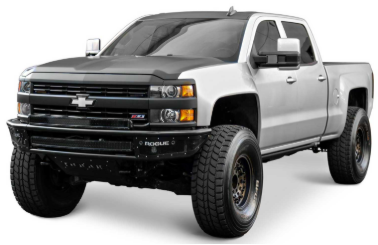
A new part can look like an easy Saturday project until the instructions mention programming, specialty tools, or a connection hidden behind half the engine bay. For a 2020-2025 Silverado or Sierra HD with the L5P Duramax, deciding who installs an upgrade deserves as much thought as choosing the part.
The useful distinction isn’t between owners who can turn a wrench and owners who can’t. It’s between a job you can complete, check, and troubleshoot with your equipment and one that needs resources you don’t have. A straightforward intake installation and high-pressure fuel-system work belong in very different conversations.
Here’s how to make that decision before the truck is apart.
Judge the complete job, not the product photo
Start with the manufacturer’s installation instructions for the exact part. Read through the final checks, not just the removal and installation steps. A product described as a bolt-on may still require careful sensor handling, awkward access, or a follow-up procedure.
For each project, answer four questions:
- Can you reach the work area safely with your available equipment?
- Do you understand every required step and specification?
- Can you perform any required programming or diagnostic checks?
- Can you recognize an unsuccessful installation before returning the truck to service?
An uncertain answer doesn’t automatically rule out DIY. It identifies something to resolve before ordering. Missing a socket is different from lacking the equipment to diagnose a problem afterward.
Be especially cautious when a seller’s short description and the installation manual suggest different levels of difficulty. The manual is a better planning document than a photograph of the finished truck.
Where driveway installations can make sense
An accessible intake assembly with documented fitment can be a reasonable project for an owner comfortable with fasteners, clamps, and electrical connectors. That doesn’t make every intake installation identical. Sensor mounting, clearances, and instructions still matter.
Some exhaust sections may also be manageable at home, provided they retain all required emissions equipment and meet applicable requirements. Access, corrosion, and the size of the components can make an otherwise straightforward job difficult. An installation that calls for cutting or welding is a different commitment from one assembled with accessible clamps.
Monitoring equipment varies just as much. A compatible plug-in display is not the same project as installing a gauge that requires a new sensor, wiring, or modification to a component. Judge the actual kit rather than putting all gauges in the easy category.
These examples share a useful feature: the owner can understand the entire job before beginning. DIY makes the most sense when the work stays within familiar skills and the final checks are clear.
Treat fuel-system work and major disassembly differently
High-pressure fuel-system work brings risks that are absent from an ordinary external bolt-on. Cleanliness, correct procedures, and appropriate equipment matter. Reading an online walkthrough isn’t a substitute for training and model-specific service information.
Injector and pump projects can also involve requirements beyond replacing hardware. Before committing, establish whether the exact repair requires programming, calibration information, or specialized diagnostic checks. A shop should be able to explain which procedures apply and include them in its scope of work.
Turbocharger work deserves the same closer look. Access, sealing surfaces, related lines, and the amount of disassembly can turn a compact part into a substantial project. The installation requirements vary by product; not every replacement needs the same supporting changes.
Professional help is sensible when a mistake could affect an expensive assembly or when the truck cannot be checked properly afterward. The important question is whether you can finish the whole job, not whether you can remove the old part.
Separate calibration from mechanical installation
Buying hardware doesn’t establish that the truck needs an engine or transmission calibration. That depends on the component, its intended use, and the manufacturer’s requirements. Avoid treating a tune as an automatic companion to every purchase.
If calibration is part of the plan, it needs its own assessment. Confirm compatibility with the exact truck, the support provided, any required equipment, and the documentation addressing emissions compliance. Keeping emissions hardware installed doesn’t by itself establish that a software change is compliant.
Also ask who reviews problems after installation. A downloadable file is not the same service as having someone evaluate unexpected shift behavior or a warning light. Know what support is included before relying on it.
Owners comfortable installing hardware may still prefer a specialist to handle calibration and diagnostics. That is a division of work, not an admission that the mechanical installation was beyond them.
Price the tools and workspace honestly
The DIY comparison starts with more than parts versus labor. Add any required tools, service information, consumables, shipping, and safe access equipment. Include a place where the truck can remain apart if the project takes longer than expected.
A tool you will use repeatedly can be a worthwhile purchase. An expensive tool needed once may change the calculation. Borrowing or renting can help, but only if the equipment is appropriate and available when needed.
Workspace also affects the decision. A level garage with good lighting and room to store removed components is different from a shared driveway exposed to weather. Don’t count on ground clearance alone to provide safe access underneath an HD truck.
Then put a value on your time. Enjoying a weekend project is a legitimate reason to do it yourself. Losing the only vehicle available for Monday’s work is a legitimate reason to pay a shop.
Build the parts list before choosing an installer
Make a complete list using the installation instructions and fitment documentation. Record the main part number, required supporting components, included hardware, and anything that must be purchased separately. Note any exclusions that apply to the truck’s configuration.
When comparing 2020-2025 Duramax upgrades, use the available options to build that shortlist, then confirm each product’s compatibility with the manufacturer. A broad model-year category is a starting point, not proof that every item suits every truck within it.
Bring the list to a shop before purchasing parts for professional installation. Some shops accept customer-supplied components; others have restrictions. Ask how that choice affects labor coverage, returns, and responsibility if the part is incorrect.
For products sold with a core charge, read the return conditions and deadline. Establish who handles the old component and shipping. Those details belong in the budget, not in a last-minute conversation after installation.
Use a hybrid approach with clear handoffs
A mixed plan often suits owners who enjoy garage work but don’t want to buy specialized diagnostic equipment. You might install a compatible external component yourself and have a specialist handle a separate project involving major disassembly or programming.
The handoff needs to be agreed upon first. Ask whether the shop is comfortable inspecting owner-installed hardware and what it charges for that work. Don’t assume a technician will take responsibility for an earlier installation without examining it.
Keep a record of what you changed, including part numbers, installation dates, and any symptoms that followed. Photos taken during your own work can help explain routing or connections later, but they don’t replace the manufacturer’s checks.
Avoid splitting one tightly connected job between people without a clear plan. If hardware, software, and final verification depend on each other, establish who coordinates them before either party starts.
Compare shop estimates by scope, not the total alone
A useful estimate explains what the shop will do and what it will supply. Two totals aren’t comparable if one includes fluids, supporting hardware, and diagnostic time while the other covers installation labor only.
Ask a prospective shop:
- What experience does it have with your model year and the proposed component?
- Which parts, supplies, and final checks are included?
- How will it handle unexpected corrosion or damaged hardware?
- Will it seek approval before additional work?
- What coverage applies separately to parts and labor?
- Who handles problems that appear after pickup?
A written invoice documents the work; it doesn’t automatically make the shop responsible for every later failure. Read the actual terms rather than assuming professional installation guarantees an outcome.
Scheduling matters too. Ask about realistic turnaround and parts availability. A low estimate is less attractive if the truck will miss a towing trip or several workdays you hadn’t planned for.
Keep emissions and warranty questions separate
Neither DIY nor professional installation removes the need for compliant parts. The EPA explains that federal law prohibits tampering with emissions controls and manufacturing, selling, or installing defeat devices. A shop’s willingness to perform work doesn’t prove it is lawful.
For a road-going truck, request documentation relevant to the exact part and application. An off-road label isn’t a substitute for that documentation. Local inspection and noise requirements may also affect the choices available.
Warranty is a separate issue. FTC consumer guidance explains that aftermarket parts or independent service alone don’t void the vehicle’s warranty. Coverage for damage caused by a defective part or improper installation may be denied. These are general U.S. principles, not a determination about an individual claim.
Keep receipts and service records regardless of who does the work. Professional installation creates a record, but it doesn’t make modification-related damage automatically covered.
Set a stopping point before starting
Decide in advance which discoveries would make you pause: unclear instructions, damaged connectors, unexpected disassembly, or a required procedure your equipment can’t perform. Stopping at that point is better than improvising to meet a deadline.
After installation, complete the manufacturer’s checks and address leaks, warning lights, or abnormal behavior before normal use. If diagnosis is outside your skills, get help rather than adding another modification to compensate.
The best DIY project is one you can finish and verify without rushing. The best shop job is one whose scope, cost, and responsibilities are clear. Choosing between them part by part lets you enjoy working on the Duramax without making every upgrade a test of persistence.
Write and Win: Participate in Creative writing Contest & International Essay Contest and win fabulous prizes.
About the Author