
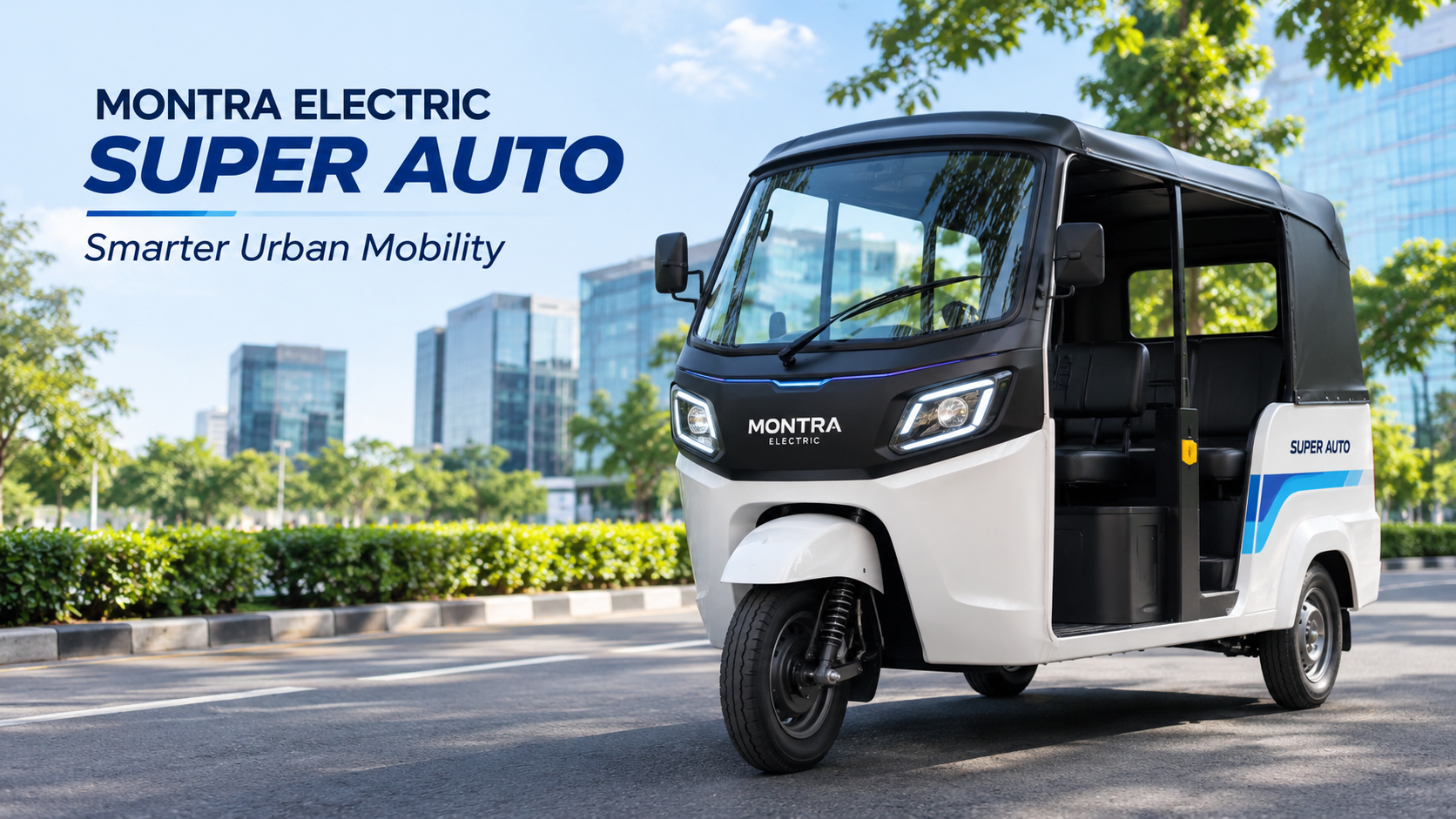
India’s three-wheelers are rarely described as businesses, but that is exactly what most of them are. Behind every auto rickshaw is a driver running a small enterprise with one asset, daily revenue, fuel bills, maintenance costs and, often, a loan to repay. When that asset switches from an engine to an electric motor, the economics of the business change with it, and that is the real story behind the rapid growth of electric three-wheelers in Indian cities.
The three wheeler as a working business in Indian cities
The three wheeler is one of the most important commercial vehicles in urban India. It carries commuters to work, students to college and shoppers to markets, on routes and at hours that fixed public transport cannot serve. For the person driving it, it is a livelihood, and success is measured not by the vehicle’s specifications but by what is left at the end of the day after fuel and upkeep.
That makes the segment unusually sensitive to running costs. A few rupees saved per kilometre, multiplied across a full day of trips, adds up to a meaningful difference in monthly income. Downtime matters just as much, because a day spent at the workshop is a day without earnings. This is why drivers and fleet owners have historically been cautious about new technology, and why the case for electric three-wheelers has to be made in rupees rather than in specifications.
Urban conditions have also changed the calculation. Fuel prices fluctuate, CNG stations in many cities have long queues at peak hours and city authorities are paying closer attention to vehicle emissions. Each of these pressures pushes the economics further towards electric.
Earnings, running costs and uptime: what drivers and fleet owners compare
The first comparison is running cost. An electric three wheeler replaces a daily fuel bill with a much smaller electricity bill. Montra Electric says electric three-wheelers typically cost 40 to 60 percent less to operate than CNG vehicles, and it compares the Rs 300 to 400 a CNG auto typically spends on fuel each day with Rs 20 to 30 for a full charge of its Super Auto.
Maintenance is the second. An electric drivetrain has no engine oil, no spark plugs and no complex engine servicing, so routine upkeep comes down mainly to tyres, brakes and electrical checks. Fewer parts to wear out also means fewer unplanned stops, which protects the number of working days in a month.
The third is range and charging, because a vehicle that runs out of charge before the shift ends costs the driver fares. Most city routes involve predictable daily distances, which suits a vehicle that charges overnight and runs through the day. Purchase price and financing complete the picture. Electric three-wheelers usually cost more upfront, but loans from banks and NBFCs and EMI schemes through dealers are widely available, and the lower running cost helps cover the instalment.
Where electric three wheelers such as the Montra Electric Super Auto fit
Montra Electric’s Super Auto shows how far electric passenger three-wheelers have come. Its 10.2+ kWh battery delivers an on-road true range of 125+ km on a single charge, against a certified range of 239 km, and a full charge takes about four hours, so a driver can charge at home overnight and start each day with a full battery. With 60 Nm of peak torque, 32 percent gradeability and a top speed of 55 km/h, it has the pickup needed for stop-start city traffic and steep roads.
The economics are the core of its appeal. Montra Electric puts the Super Auto’s running cost at around 53 paise per kilometre and says choosing it can save a driver almost a lakh of rupees a year. The vehicle starts at an ex-showroom price of Rs 3,97,000*, and the battery is covered by a standard warranty of 5 years or 1.75 lakh km, with an optional extended warranty of up to 6 years or 2.25 lakh km.
It is also built around the driver’s working day. The Super Auto seats the driver and three passengers, with a high driver backrest, extra head and leg room, a fully digital instrument cluster, multiple drive modes, hill hold assist and a cabin light. A 100 percent metal body is designed for daily commercial use, and a boot with a tailgate opening gives passengers room for their bags. Montra Electric supports its three-wheelers with an exclusive service network, AMC plans and roadside assistance.
Electric three-wheelers will not replace every CNG and petrol auto overnight, and drivers with very long or unpredictable daily distances will still weigh their options carefully. But for the large majority who run familiar city routes and park at home each night, the numbers increasingly point in one direction. The three-wheeler has always been a small business on wheels, and electric power is making it a more profitable one.
Frequently asked questions
Is an electric three wheeler cheaper to run than a CNG auto?
Yes. Montra Electric says electric three-wheelers typically cost 40 to 60 percent less to operate than CNG vehicles, and maintenance costs are lower too, because there is no engine oil, no spark plugs and no complex engine servicing.
How long does it take to charge an electric three wheeler?
It depends on the battery and charger. The Montra Electric Super Auto takes about four hours to charge fully with its standard off-board charger, so it can be charged overnight at home.
What warranty do electric three wheelers come with?
Coverage varies by manufacturer. Montra Electric offers a standard battery warranty of 5 years or 1.75 lakh km on the Super Auto, with an optional extended warranty of up to 6 years or 2.25 lakh km.
*Ex-showroom price, as listed by Montra Electric. Prices may vary by city and variant.
Write and Win: Participate in Creative writing Contest & International Essay Contest and win fabulous prizes.
About the Author