
Progressive overload is a gradual increase in training demands, often achieved by adding weight while maintaining controlled technique.
For home glute and leg workouts, Olympic plates make these increases measurable across squats, deadlifts, hip thrusts, and compatible machines. A useful set provides manageable increments without filling loading sleeves.
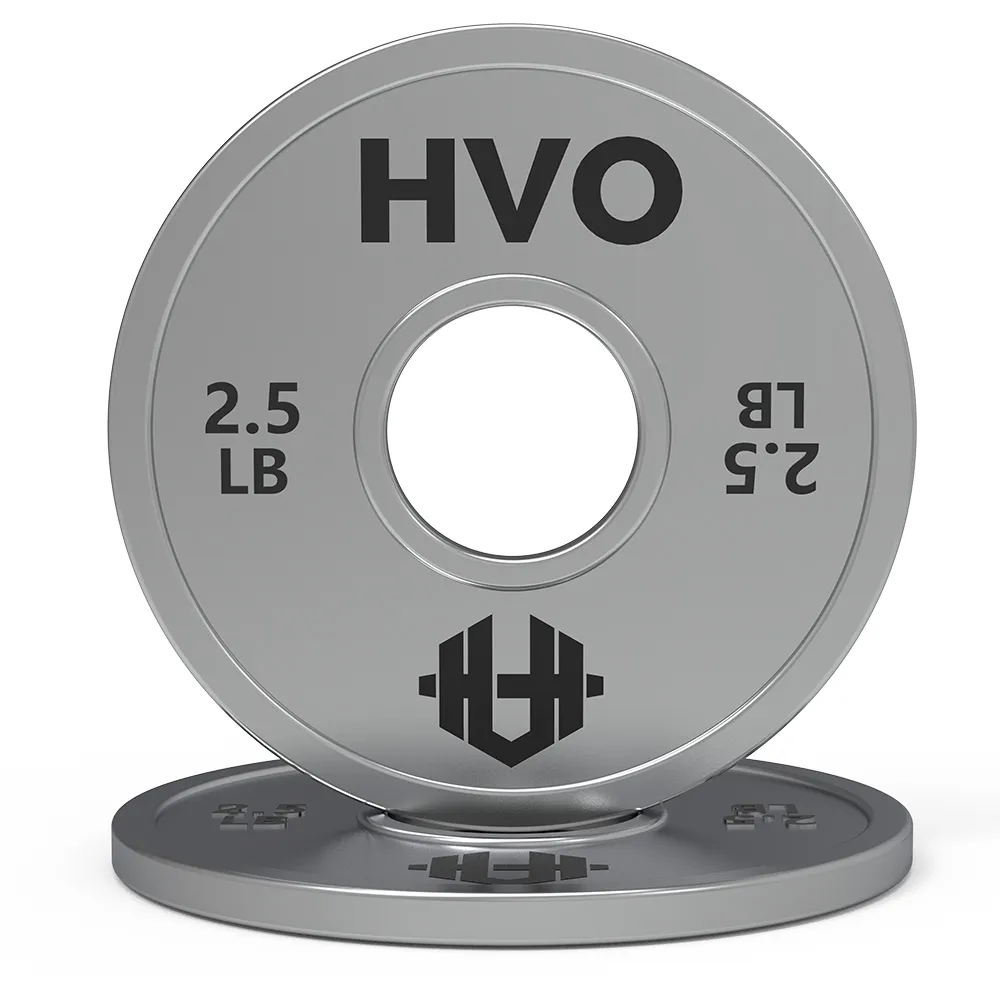
HVO Fitness, as an example, offers Olympic Hand Grip Plates for this style of training, with a slim metal profile, weight markings, and handling openings on larger sizes. These features help when plates move between barbells and lower-body machines. Before choosing a set, plate type and machine compatibility come first.
Check Equipment Fit and Loading Space
Confirm Sleeve Compatibility
Before choosing Olympic weight plates, check whether they fit your existing barbells and plate-loaded machines.
- Sleeve diameter: Olympic plates have a nominal 2-inch center opening. Confirm whether each machine accepts this format directly or requires an adapter.
- Collars: Leave enough space to secure plates using the equipment manufacturer’s recommended method.
- Loading arrangement: Follow instructions for single- or dual-horn machines, including balanced loading requirements.
Some home strength machines accept both standard and Olympic plates through removable sleeves. Check the exact configuration before purchasing.
Measure Plate Thickness and Load Limits
Two plates with the same marked weight may occupy different amounts of sleeve space. This matters on compact hip thrust and leg machines, where loading horns can be shorter than barbell sleeves.
Before choosing a plate size:
- Measure the usable loading length, including space for collars.
- Check the thickness of the plates you plan to use.
- Confirm that the total load stays within the machine’s rated capacity.
Slim metal plates occupy less sleeve space than thicker alternatives, allowing more plates to fit on compatible barbells and machines. This is useful for progressive strength training, especially when loading space is limited. However, the total weight must remain within the equipment’s rated capacity.
Choose Weight Plates for Long-Term Progression
Select Weight Increments for Your Training Needs
Weight plate selection should reflect current working loads and expected progression. Smaller plates provide manageable increases, while heavier plates reduce the number needed for larger loads.
A practical home collection combines:
| Plate Sizes | Main Purpose | Typical Use |
| 2.5 lb and 5 lb | Small increases | Gradual progression during controlled exercises |
| 10 lb and 25 lb | Intermediate loading | Squats, deadlifts, and leg machines |
| 35 lb, 45 lb, and 55 lb | Heavier working loads | Established lower-body strength training |
Adding a 2.5 lb plate to each end of a barbell raises the total by 5 lb.
Choose weight increments that fit your training level rather than purchasing every available size. Smaller increments are especially useful when large weight increases would make it difficult to maintain controlled movement.
Choose Singles, Pairs, or Mixed Sets
Olympic weight plates are sold individually, in pairs, or as mixed sets. Buyers should check the actual plate quantity and total weight before ordering.
- Single plates: Suitable for replacing missing plates or expanding an existing collection.
- Plate pairs: Useful for barbells and machines requiring balanced loading.
- Mixed sets: Combine different weight increments and suit users building a new home-gym collection.
Check the included sizes rather than selecting a package by total weight alone. A set containing smaller increments offers more flexibility, while heavier pairs are practical for users who already own lighter plates.
For home gyms, start with the sizes used most frequently. Additional pairs can be added as working loads increase.
Evaluate Grip, Finish, and Intended Use
Plate design affects handling, maintenance, and suitability for different exercises. When choosing Olympic weight plates, focus on four features:
- Grip design: Cutout handles make heavier plates easier to carry and load. Check whether grip openings are available on the specific weight sizes you need.
- Weight markings: Clear labels help identify plates and match weights on opposite sides of a barbell.
- Electroplated finish: The smooth, rust-resistant surface is easy to clean and maintain after workouts, ensuring long-lasting durability.
- Plate profile: Slim metal plates save loading and storage space, while bumper plates suit exercises involving barbell drops.
For controlled home strength training, electroplated plates offer easy maintenance and space-efficient loading.
Compare Package Contents and Total Cost
Olympic weight plates are sold individually, in pairs, or as mixed sets. The advertised price does not always represent the cost of a complete collection.
Before purchasing, compare:
- Included weights: Confirm the quantity, individual sizes, and total weight of the package.
- Price per pound: Divide the total delivered price by the combined plate weight to compare different offers.
- Shipping and returns: Check delivery charges, return conditions, and warranty coverage.
A lower price per pound does not automatically mean better value. A suitable set should provide useful weight increments, fit existing equipment, and meet the household’s training needs without unnecessary extra plates.
Where HVO Fitness Fits Into Long-Term Home Training
HVO offers Olympic Hand Grip Plates for home gyms focused on controlled glute and leg training. Available in 2.5, 5, 10, 25, 35, 45, and 55 lb options, the range supports gradual weight increases and heavier working loads.
The plates feature a nominal 2-inch opening and an electroplated metal finish that is easy to clean. Their slim design helps preserve loading space, with the 45 lb plate measuring 0.75 inches thick. Plates weighing 10 lb and above also include grip openings for easier handling.
These features make HVO a practical option for users sharing weight plates between barbells and compatible lower-body machines. For routines involving intentional barbell drops, appropriately rated bumper plates remain the more suitable choice.
FAQ
Are Olympic Plates Required for Progressive Glute Training?
No. Several resistance systems support progressive overload. Olympic plates are useful when compatible equipment allows repeatable external-weight increases.
Do Hip Thrusts and Squats Require Bumper Plates?
No. Suitable metal plates work for controlled lifts. Bumper plates are more relevant when workouts involve intentional barbell drops.
Can One Plate Set Work on Barbells and Leg Machines?
Yes, if the equipment accepts the same plate format. Check sleeves, adapters, collars, and load limits for every station.
Conclusion
Choosing plates for long-term glute and leg training begins with equipment compatibility, usable loading space, and available weight increments. A consistent collection makes gradual resistance changes easier to manage.
HVO’s Olympic Hand Grip Plates are one example suited to home gyms using compatible 2-inch Olympic equipment. Their slim profile, manageable weight increments, and easy-to-clean finish make them practical for regular glute and leg training, especially when loading space is limited.
Write and Win: Participate in Creative writing Contest & International Essay Contest and win fabulous prizes.
About the Author