In the world of interior and architectural design, materials that combine tradition, artistry, and elegance always hold a special place. Among these timeless materials, handcrafted tilework inspired by ancient techniques continues to gain popularity. One of the most admired decorative surfaces today is zellige tiles, known for their handmade beauty, irregular textures, and glossy finishes that bring warmth and authenticity to any space. These tiles are widely used in both modern and traditional designs, offering a perfect balance between cultural heritage and contemporary aesthetics.
What Makes Zellige Tiles Unique in Modern Design?
Zellige tiles are unique because they are entirely handcrafted using traditional methods passed down through generations. Each tile is individually shaped, glazed, and fired, resulting in subtle variations that make every piece one-of-a-kind. Unlike machine-made tiles, they carry natural imperfections that enhance their beauty. These variations create a dynamic surface that reflects light differently, giving walls and floors a living, artistic appearance that evolves with the environment.
Why Is Authentic Craftsmanship Important in Zellige Tiles?
Authentic craftsmanship is the heart of zellige tiles. Skilled artisans use natural clay, carefully molding and cutting each tile by hand. The glazing process is also done manually, allowing for slight inconsistencies in color and texture. These imperfections are not flaws but essential features that define the character of zellige. This traditional craftsmanship preserves cultural heritage while offering a product that cannot be replicated by industrial manufacturing.
How Are Zellige Tiles Made?
The creation of zellige tiles is a detailed and time-consuming process. It begins with selecting high-quality natural clay, which is shaped into flat tiles and left to dry under the sun. Once dried, the tiles are fired in a kiln to strengthen them. After the first firing, they are coated with natural glaze in various colors and fired again to achieve their glossy finish. Finally, artisans cut the tiles into precise geometric shapes. This multi-step process ensures durability, beauty, and uniqueness in every piece.
What Makes the Finish of Zellige Tiles So Elegant?
The elegant finish of zellige tiles comes from their glossy, reflective glaze and handcrafted surface. The glaze creates a shimmering effect that interacts beautifully with natural and artificial light. Because each tile has slight surface variations, light reflects unevenly, producing depth and movement across the installation. This creates a luxurious and artistic appearance that enhances both minimalist and highly decorative spaces.
Where Can Zellige Tiles Be Used in Interior Design?
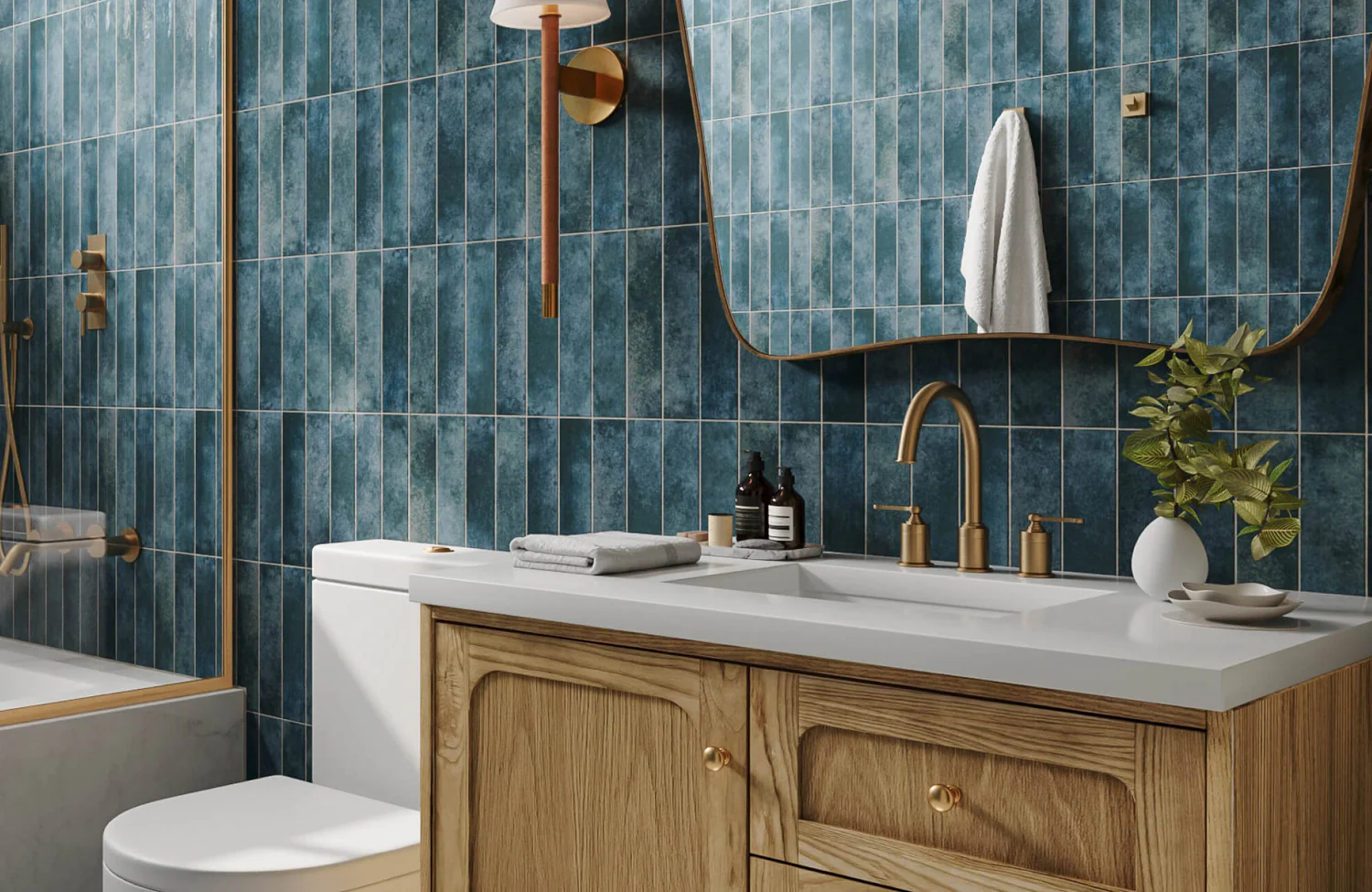
Zellige tiles are extremely versatile and can be used in various interior applications. They are commonly used in kitchen backsplashes, bathroom walls, shower areas, and feature walls. Their reflective quality makes small spaces appear brighter and more open. Designers also use them in living rooms and hallways to create artistic focal points. Their ability to blend with both modern and traditional interiors makes them highly desirable for residential projects.
How Are Zellige Tiles Used in Exterior Architecture?
In exterior architecture, zellige tiles add texture, color, and cultural depth to building facades, patios, fountains, and garden walls. Their durable, glazed surface allows them to withstand outdoor conditions while maintaining beauty. When exposed to sunlight, the tiles create shifting reflections and tones, enhancing the visual appeal of exterior spaces. This makes them ideal for both decorative and functional outdoor applications.
Why Do Designers Prefer Handmade Tiles Over Machine-Made Alternatives?
Designers prefer handmade tiles like zellige because they offer authenticity and individuality. Machine-made tiles often appear uniform and predictable, while handmade tiles provide variation and character. This uniqueness allows designers to create spaces that feel organic and artistic. The imperfections in zellige tiles add warmth and personality, making interiors feel more inviting and visually engaging.
What Color Options Are Available in Zellige Tiles?
Zellige tiles are available in a wide spectrum of colors, ranging from soft neutrals to bold, vibrant shades. Popular choices include white, cream, black, emerald green, cobalt blue, terracotta, and pastel tones. Each color carries subtle variations due to the handmade glazing process. These natural differences allow designers to create both uniform color fields and artistic blends depending on the desired aesthetic.
How Do Zellige Tiles Enhance Lighting and Space?
One of the most remarkable features of zellige tiles is their ability to interact with light. Their glossy surface reflects both natural and artificial light in unique ways. This reflection adds brightness and depth to interiors, making spaces feel larger and more dynamic. In dim lighting, the tiles create a soft glow, while in bright environments, they produce shimmering reflections that enhance visual interest.
What Role Do Zellige Tiles Play in Luxury Design?
Zellige tiles are widely used in luxury design because they represent craftsmanship, exclusivity, and artistic value. High-end interiors often incorporate them in statement walls, spa-like bathrooms, and elegant kitchens. Their handcrafted nature makes them a premium material that elevates the overall design. Luxury designers value zellige tiles for their ability to create sophisticated and timeless environments.
How Are Zellige Tiles Used in Modern Minimalist Interiors?
In minimalist interiors, zellige tiles are used to introduce texture without overwhelming simplicity. Designers often choose neutral tones such as white, beige, or soft gray to maintain a calm aesthetic. The subtle variations in surface and color add depth while preserving a clean design language. This makes zellige tiles an ideal choice for modern spaces that require elegance without excess decoration.
What Are the Benefits of Using Zellige Tiles?
There are many benefits to using zellige tiles in design projects. First, they offer handcrafted uniqueness, ensuring no two installations are identical. Second, they provide durability when properly installed and maintained. Third, their reflective surface enhances lighting and spatial perception. Fourth, they add cultural and artistic value to interiors and exteriors. Finally, their versatility allows them to fit into a wide range of design styles.
How Does Lighting Influence the Appearance of Zellige Tiles?
Lighting plays a crucial role in how zellige tiles are perceived. Natural light enhances their color variations and reflective glaze, creating shifting tones throughout the day. Artificial lighting can highlight textures and create dramatic effects at night. Because of their uneven surfaces, each tile reflects light differently, resulting in a constantly changing visual experience.
What Is the Future of Zellige Tiles in Architecture and Design?
The future of zellige tiles remains strong as designers increasingly value authenticity and handcrafted materials. With growing interest in sustainable and artisanal design, zellige tiles are becoming more popular in both residential and commercial projects. Modern innovations in installation and color variation are expanding their applications while preserving traditional craftsmanship.
Conclusion: Why Are Zellige Tiles a Timeless Choice for Elegant Design?
Zellige tiles represent a perfect blend of tradition, craftsmanship, and modern design flexibility. Their handmade nature, elegant finishes, and unique surface variations make them suitable for both interior and exterior applications. Whether used in luxury spaces or minimalist environments, they bring depth, authenticity, and artistic beauty. As architecture continues to evolve, zellige tiles remain a timeless material that enhances spaces with elegance and cultural richness.
Write and Win: Participate in Creative writing Contest & International Essay Contest and win fabulous prizes.
About the Author