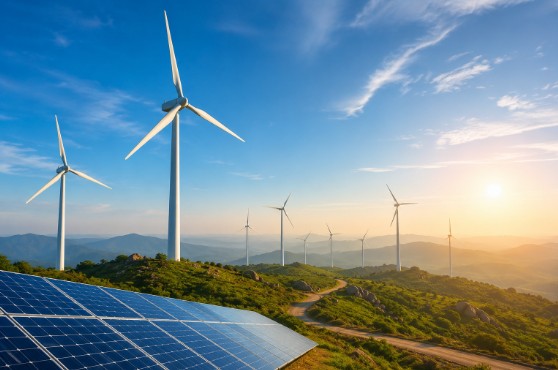
India is steadily expanding wind power as part of its transition toward cleaner electricity generation. As of June 30, 2026, the country had 57.44 GW of installed wind capacity. The growth of wind energy in India is being supported by new projects, modern turbines, repowering, domestic manufacturing, and wind-solar hybrid development. These approaches are helping the country use available wind resources more effectively while expanding renewable electricity capacity across its power system.
India’s Wind Power Capacity Is Gaining Momentum
India has built a substantial wind power base over the years. According to the Ministry of New and Renewable Energy (MNRE), India ranks fourth globally in installed wind power capacity, with 57,443 MW installed as of June 30, 2026.
Recent additions reflect the continued development of the sector. Wind power also makes a significant contribution to India’s renewable electricity generation, while new project development is creating opportunities to expand installed capacity.
New Wind Projects Are Expanding Installed Capacity
New projects remain one of the most direct ways to increase India’s wind capacity. Suitable wind resources across several regions allow developers to establish utility-scale projects and add renewable generation capacity to the country’s electricity system.
Gujarat, Tamil Nadu, Karnataka, Maharashtra, Rajasthan, and Andhra Pradesh are among India’s major wind power states. Their wind resources and established renewable energy infrastructure can support further project development across these regions.
Policy measures also support expansion. The Wind Renewable Purchase Obligation trajectory through 2030 provides long-term direction for wind procurement, while competitive bidding provides a pathway for additional projects to enter the renewable electricity market.
Larger Turbines Are Increasing Generation Potential
Advances in turbine technology are helping developers make more effective use of suitable wind sites. Modern turbines can feature taller towers, larger rotor diameters, and higher rated capacities, allowing them to capture available wind resources more effectively.
India’s manufacturing ecosystem includes wind turbine models with unit capacities of up to 5.2 MW. These turbines give developers more options when designing wind farms around site conditions, wind speeds, and project requirements.
Improved wind resource assessment, digital monitoring, and modern control systems can also enhance turbine performance. These technologies allow project developers to combine new installed capacity with increasingly advanced generation equipment.
Repowering Older Wind Farms Can Unlock More Capacity
Repowering offers another route to increase generation at established wind locations. It generally involves replacing older, lower-capacity turbines with modern machines that have higher rated capacities and updated technologies.
Established wind sites can be suitable for repowering because developers have operational data and experience from existing projects. Modern turbines at suitable existing locations can increase generation potential while complementing new wind farm development elsewhere.
India has established a policy framework for this approach. MNRE issued its Policy for Repowering of Wind Power Projects in December 2023, providing a framework for repowering eligible wind projects with newer technology.
Domestic Manufacturing Is Supporting Wind Capacity Expansion
India has developed a sizeable domestic wind turbine manufacturing ecosystem. According to MNRE, the country has an annual domestic wind turbine production capacity of about 18,000 MW, providing a manufacturing base for further installations.
The sector has achieved approximately 70%-80% indigenization. Domestic capabilities cover several parts of the wind power value chain, including turbine and component manufacturing, as well as project development, installation, and operations.
As projects expand and technologies advance, this manufacturing ecosystem can support the deployment of modern turbines while responding to changing technology and capacity requirements across the wind sector.
Wind-Solar Hybrid Projects Are Supporting Further Expansion
Wind-solar hybrid projects combine two renewable energy sources within a single integrated project. Their generation profiles can complement each other at suitable locations, helping developers make effective use of renewable resources and associated transmission infrastructure.
Renewable energy companies such as Hero Future Energies are participating in this segment. The company developed an 87 MW wind-solar hybrid project in Manvi, Karnataka, aligning with India’s broader move toward integrated renewable power projects.
Energy storage can further complement hybrid projects by storing electricity during periods of high renewable generation and supplying it to meet system requirements. This combination creates additional pathways for integrating wind capacity into a flexible renewable electricity system.
What India Needs to Sustain Wind Power Growth
India’s next phase of wind expansion can build on its manufacturing capabilities, project experience, technology base, and renewable energy framework. Several areas can support further capacity growth, including:
- Transmission Expansion: Additional transmission infrastructure can connect new wind projects to electricity demand centers and move renewable electricity between regions as more capacity comes online.
- Grid Integration: Advanced forecasting, scheduling, storage, and grid management can support growing wind generation and help coordinate renewable electricity with demand across the power system.
- Repowering Opportunities: Modernizing suitable older wind farms can increase their generation potential and complement the development of new projects at other locations.
- Technology and Investment: Continued investment in advanced turbines, manufacturing, digital systems, hybrid projects, and energy storage can provide more options for developing additional wind capacity.
Progress across these areas can complement new project development. Coordinating transmission, technology, repowering, manufacturing, and grid management can support sustained wind power growth.
Conclusion
India is scaling wind power through new projects, modern turbines, repowering, domestic manufacturing, and hybrid renewable systems. The continued growth of wind energy in India can benefit from advances in transmission networks, technology, manufacturing capabilities, and grid systems. Wind-solar projects and energy storage can also support more flexible integration of renewable electricity. Together, these developments can expand wind capacity and strengthen its contribution to India’s growing renewable energy system in the coming years.
Write and Win: Participate in Creative writing Contest & International Essay Contest and win fabulous prizes.
About the Author