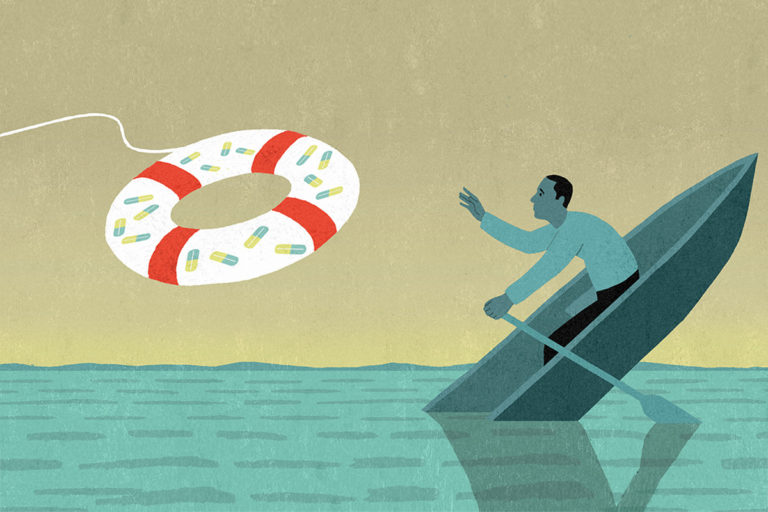
Throughout history, humanity has been trying to avoid violence or at least minimize it. Traditionally, the absence of abuse is seen as a morally unattainable ideal. Progress has been visible even over the past few centuries, and there is a tendency for each new generation to grow up in a more peaceful environment. The authorities of developed countries are introducing more and more laws protecting the rights of individuals, their physical and moral integrity. There is a struggle for gender equality, which is expected to lead to a reduction in violence. And it seems that it works, as evidenced by the fact that many revolutionary processes in the 20th century took place without the involvement of military operations. Nevertheless, despite possessing impressive moral strength, non-violence can seem vulnerable. Peaceful communities can be subjected to aggression from the outside world and suppressed due to external defenselessness and inability to fight back and defend themselves. As a result, nonviolent movements are often doomed to failure and do not achieve their goals. In other words, non-violence is a powerful tool because it mobilizes moral authority, social legitimacy, and collective action; however, it remains fragile because it relies on institutional protection, public trust, and deterrence of opponents – conditions that cannot always be guaranteed.
Nonviolence is a very complex phenomenon due to its dual nature, which means that the term can be understood in different ways. For example, as an ethical ideal that humanity aspires to. But also as a political strategy, the most important task of which is not the safety and feelings of a person, but the prosperity of the state. In the ethical dimension, nonviolence means a principled refusal to harm anyone. In the first case, there is a close connection with the concept of human dignity and the belief that everyone has an intrinsic moral value. Consequently, violence is rejected for the reason that it violates fundamental moral norms. Thus, nonviolence is seen as a morally superior action due to the fact that it preserves the humanity of both the victim and the perpetrator and allows for justice without taking revenge. On the other hand, nonviolence is used as a successful political tool. It is used to counter strikes, protests, boycotts, and acts of civil disobedience. The special feature of this strategy is the participation of citizens who actively defend their interests and demand changes. In this way, citizens are given the opportunity to challenge injustice without resorting to armed struggle. In this way, nonviolence becomes a mass mobilization strategy capable of exerting pressure on institutions and transforming power structures.
Nonviolence has demonstrated many times its effectiveness and amazing power in social and political struggle. This method often achieved more superior results than armed resistance. One of the greatest strengths lies in moral authority. When individuals or groups refuse to respond to harassment with violence, they more clearly demonstrate the injustice of their opponents. The contrast created in this way between the peaceful protesting population and the violent reaction of the authorities can change public opinion both at home and abroad. Moral legitimacy becomes a source of political power as broader segments of society begin to sympathize with the nonviolent movement.
Another but equally important source of strength is universal participation. Nonviolent movements are diverse, and consist of participants of different ages, social classes, and physical abilities. This distinguishes such a movement from armed struggle, which is usually limited to trained fighters, and peaceful resistance may involve workers, students, religious leaders, and families. Strikes, boycotts, marches, and acts of civil disobedience create collective pressure that can destroy economic systems and challenge political power. Such widespread participation often makes nonviolent campaigns more sustainable over time.
Also, historical events prove their effectiveness, because looking at the actions of people from the past, you can analyze them and determine with great accuracy the results of such actions in the present or the future. An example is the independence movement in India under Mahatma Gandhi. It relied on mass non-cooperation and civil disobedience to challenge colonial rule. And this was not an isolated case, similarly, the American civil rights movement, led by Martin Luther King Jr., used peaceful protests and boycotts to fight racial segregation. In both cases, nonviolence played a significant role in the positive outcome of the protests. It helped expose injustice, mobilize public support, and bring about significant political change.
Moreover, nonviolence has a positive response in the social sciences. Numerous studies have been conducted on this topic, and their results show that nonviolent campaigns often have higher success rates than violent ones, especially because they attract broader participation and reduce the risk of internal fragmentation. This undermines the legitimacy of despotic regimes and strengthens solidarity among citizens. Thus, nonviolence turns out to be a powerful force capable of transforming societies without destroying them.
It can be concluded that the absence of violence is indeed a good tactic, because it transforms power from physical domination into social legitimacy. There is evidence of this from various fields of research. However, the same characteristics that make nonviolence strong and influential make it fragile and vulnerable.
As it turned out earlier, nonviolence has many undeniable advantages, which gives it impressive power. But there are 2 sides to any coin, so nonviolence has its drawbacks and weaknesses that need to be taken into account before drawing conclusions. The result of the method of avoiding violence depends on many factors, because success will be achieved only if a delicate balance is observed between the discipline of public perception and the political context. Unlike violent resistance, which relies on physical force, nonviolent movements rely heavily on moral consistency and collective restraint. This is where vulnerability lies, because a single act of aggression can destroy what has been under construction for a long time. And the nonviolent organization itself will be perceived as a danger, a threat, not security. That is why nonviolence requires not only courage, but also the extraordinary self-control of many, not just one person.
Repression is another source of instability. Authoritarian regimes and forms of government react particularly acutely to various protests, even the most peaceful and harmless, responding to them with violence, restrictions, and imprisonment. When protesters face such a violent reaction, the temptation to respond in kind becomes stronger. Such responses are not surprising, because they are confirmed by the psychological nature of man. As a result, the protesters are doubtful that the problems can be solved peacefully, there is a strong disappointment, and then a small and relatively peaceful protest develops into radicalization. Thus, nonviolence can be destroyed from within when hope weakens or when one side remains unheard.
Moreover, the effectiveness of nonviolence depends on its ability to arouse sympathy from broad sections of society or the international community. However, media opinion can change quickly, and governments may try to control information by portraying protesters as extremists or foreign agents. Without public support, peaceful campaigns can lose their power and become isolated. Unlike armed groups, which can continue to operate in secret, nonviolent movements rely on visibility; invisibility weakens them.
Internal divisions further threaten the stability of nonviolent action. Diversity of participants is a strong advantage, but it can also lead to disagreements about strategy, goals, and acceptable trade-offs. If unity is disrupted, the moral purity of the movement may be replaced by confusion. Social and political change rarely happens instantly, and prolonged struggles can exhaust participants both financially and emotionally.
It is reasonable to conclude that the paradox of nonviolence is that its greatest strength – moral legitimacy and collective participation – is also its greatest vulnerability. It depends on discipline, unity, and public trust, which can be easily shaken. This fragility does not detract from its importance, but it shows that nonviolence is not an easy matter, but requires constant work and a lot of effort. This is a complex strategy that must constantly defend its own principles in order to survive.
Nonviolence does not arise or succeed in a vacuum. It requires favorable conditions for appearance and work, the efforts of a huge number of people to maintain existence and development. One of the most important foundations is the existence of strong civil institutions. Independent courts, for example, create legal channels through which complaints can be handled without resorting to force. This system allows citizens to believe in the existence of justice and the possibility of being heard. Therefore, they are more likely to seek justice through legal and peaceful means. Having a free press in a similar way plays a key role. It exposes injustice and creates transparency. The media also benefits nonviolent movements by exposing violations and preventing the complete suppression of dissent. Active communication between civil societies strengthens peaceful resistance by organizing collective actions and supporting dialogue between citizens and the State.
Nonviolence strongly depends on economic stability. The reason for this is obvious, inequality, unemployment and poverty can generate frustration and despair, which increase the attractiveness of radical or violent solutions. Conversely, if a country has a stable economic condition, basic civic needs are met, and opportunities for social mobility exist, people are less likely to view violence as a way out and a solution to problems.
In addition, education and social trust are equally important. Societies with higher levels of education often encourage critical thinking and tolerance, encouraging dialogue rather than confrontation. High social trust promotes cooperation and reduces fear between groups, allowing them to freely express their dissatisfaction and find a compromise.
Finally, international norms and institutions reinforce nonviolence. International law, the human rights protection system and the global condemnation of aggression create external pressure against violent repression. Taken together, these structural conditions make peaceful strategies more viable and sustainable.
As already discussed, both social structures and the psychological state of people have an impact on the stability of nonviolence. Basically, its fragility is the result of the second influencing factor. Maintaining a peaceful environment requires exceptional emotional discipline and self-control, which not everyone is capable of. Each participant must endure provocation, humiliation, and sometimes physical harm without reciprocating. Such restraint contradicts the natural human impulses to self-defense and revenge. Maintaining such discipline over time requires strong moral conviction and collective solidarity.
Another but no less important reason leading to the destabilization of a nonviolent community is fear. When people feel threatened and see aggressive attacks from an opponent, they subconsciously put themselves in the victim’s shoes. Not wanting to be in this place, they do not want to continue to appear defenseless and weak, and commitment to principles recedes into the background. Repression, arrests, public intimidation and threats undermine courage, cause feelings of panic and anxiety. At such moments, anger can be no less dangerous. If discontent becomes so strong that a person cannot control it, it can turn peaceful protests into mass riots, thereby undermining the moral legitimacy of the movement.
Another psychological problem is doubt. Nonviolent change often occurs slowly, and visible results may only appear after a long period of time. Such prolonged uncertainty can lead to frustration and internal disagreements about strategy. Some participants may begin to doubt the effectiveness of peaceful methods, especially when faced with ruthless opponents.
Thus, the fragility of nonviolence lies not only in external pressure, but also in the internal emotional struggle of individuals. His success depends on his ability to deal with fear, anger, and doubt while maintaining collective hope.
Nonviolence has this paradox where it seems like it might leave people unprotected, but it is impossible to sort that out without ditching the whole idea. A society thats peaceful still has to have some ways to keep things from falling apart. For example, rules that everyone follows are needed, police who answer to people, and a government that is legit to stop chaos from taking over. Without that, harm could come to citizens easily.
Legal force comes in as a last option, strictly controlled, more like a shield than something to push people around. Institutions have to handle preventing crime and also make sure no one gets repressed unfairly. That way nonviolence works on a bigger scale.
To make it stronger, focus on preventing problems before they start. Policies that cut down inequality, get more folks education, and open up jobs help a lot with the roots of violence. If people feel like they matter and are included, aggression drops off. Peace is not just no fighting, it is having justice there and also sense of security.
The limits on force ethically have to stay clear. Coercion needs legal rules that are tight, with watching from the public and ways to hold people accountable. Transparency matters because without it, even small uses of force can break trust in peaceful ways.
Nonviolence should be flexible nonviolence, and it cannot be some strict rule you stick to no matter what. It needs ongoing thinking about it, support from institutes, and keeping an eye on the morals. Balancing principles with real world protections plays a key role, or nonviolence will not last for a long period of time.
In conclusion, nonviolence is not an easy method of dealing with society. It contains a paradox, because nonviolence has great power, but at the same time it is easy to destroy. A powerful force in moral responsibility, restraint and collective participation. Most importantly, nonviolence can transform conflict without using dominance, suppression, or rigid constraints. The long-term construction of this method of communication has led to the mobilization of broad segments of society and appealing to common ethical values. In other words, nonviolent actions have changed political systems and expanded human rights.
The instability of this system is also obvious. Nonviolence cannot exist without the support of social institutions, public trust, emotional discipline, and fair political structures. These fundamentals are simply necessary, otherwise, if there is not at least one point, peaceful movements can be suppressed, distorted or radicalized. Nothing gets success automatically, instantly; it requires time, protection, regulation, long-term commitment, tolerance for failure, and the patience of the participants. Nonviolence is no exception.
Therefore, non-violence should not be misunderstood as weakness. It has a special power due to the rejection of superiority, dominance, and the main goal is equality and justice. And the tools are also unusual, everything is achieved by deterrence, not force. However, its survival depends on how strong societies are able to protect rights, reduce inequality, and respect the ethical constraints of power. Only in such circumstances can nonviolence remain not just an unattainable ideal, but also a feasible, viable and sustainable path to peace.
By: Daria Romeykova
Write and Win: Participate in Creative writing Contest & International Essay Contest and win fabulous prizes.
About the Author