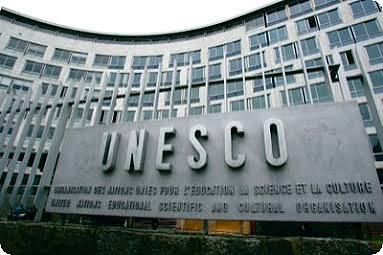
“Since wars begin in the minds of men, it is in the minds of men that peace must be built” [UNESCO constitution 1945]
When the Second World War ended in 1945, millions of people had died, thousands of years of cultural heritage and numerous objects of art, many priceless historical monuments had been destroyed, the world’s education and civilization suffered great losses. People realized that peace cannot be achieved only through military means. It became clear that if it were possible to teach people to hate, it would be possible to teach them to love each other. This axiom or, perhaps, belief was the initial impulse for creating UNESCO.
When UNESCO was established, the following question arose: Can peace really be taught? This depends only on the attitude of each person to his own mind. UNESCO does not always bear immediate responsibility for the causes of the world’s wars; UNESCO tries to prevent wars by addressing their root causes before they occur.
KEY FIGURES IN UNESCO’S HISTORY
Julian Huxley – the first director general of UNESCO, an eminent biologist, an international figure.
The reason for choosing him was not only his personal prestige but also the fact that his vast scientific knowledge and the position he held as president of the British Royal Society gave him authority among scientists all over the world. Choosing Julian Huxley meant a demonstration that for UNESCO, the path to world peace goes through education and science, not through weapons, military alliances, and military confrontations.
Sir Eric Ashby – he has influenced the development of UNESCO’s educational policy; he has promoted the work of the Organization in the field of higher education and scientific research.
Irina Bokova – during her tenure, she drew attention to the issue of cultural heritage in times of war; she especially pointed out the destruction of the famous city of Palmyra in Syria.
STEPS TAKEN BY UNESCO
How UNESCO is rethinking education:
UNESCO’s work is often mistakenly reduced to building schools and promoting illiteracy, but its impact extends far beyond – in many ways, it reaches the root of the problem. Immediately after its founding, UNESCO recognized that international violence, including military conflicts, is often the result of biased and distorted education, as well as ignorance in general.. UNESCO sought to change the then-dominant perception of education as a means of solely acquiring knowledge for employment. It worked to convince governments that education is also about developing a social and civic spirit, respect for life, human rights, tolerance, and environmental awareness.
UNESCO’s Universal Declaration sought to ensure that education promotes sustainable development, democracy, global citizenship, and active participation in social and environmental problems. Thus, UNESCO fought to change the school curriculum at the level of civic education, to introduce ethical standards of behavior in participants in education, and to develop school programs inculcating respect for different beliefs and social norms. It has helped governments to promote quality education and ensure equal opportunities for learning for every child. UNESCO’s key goal is to educate people who care about the world and are ready to confront the problems of this world.
It has developed educational programs such as Global Citizenship Education, Education for Sustainable Development, and Open Educational Resources, which have allowed building resilience against social, technological, and environmental challenges. It is important to note that the Organization considers education to be a fundamental right of every person regardless of their status and means. According to UNESCO, in communities affected by war, restoring schools is at least as important as rebuilding roads and cities. Education helps to create peaceful and thriving societies.
Science for a better future (UNESCO’s contribution):
UNESCO is not directly involved in scientific research but brings together scientists from different countries to study the most pressing questions that individual countries cannot address on their own. Such joint activities also help to achieve sustainable development and global security. One of the UNESCO’s main achievements is that it has helped to promote international scientific cooperation around the world. One of the reasons for creating the organization was the failure of the League of Nations to find a solution to global problems.
After the tsunami in the Indian Ocean in 2004, which resulted in more than 230,000 deaths, it became urgent to act to prevent future tragedies. An IOC (Intergovernmental Oceanographic Commission) of UNESCO (United Nations Educational, Scientific and Cultural Organization) has developed a tsunami forecasting and warning system that has saved thousands of lives in India. According to recent news in India, the Indian Ocean tsunami has served as a wake-up call for nations to act together to combat natural disasters.
UNESCO’s scientific vision reaches far beyond tsunamis. The Organization is working to address the challenges of climate change, fresh water resources, pandemics, and food security through scientific knowledge. To do this, UNESCO unites scientists, governmental and non-governmental organizations, and international authorities through IOC. For example, the Man and the Biosphere (MAB) Program, which was initiated in 1971, unites experts working on the relationship between people and nature. The goal of the program is to conduct research that will allow preserving biodiversity and achieving sustainable socio-economic development. MAB has published many scientific documents that have drawn attention to the importance of ecological security for humanity. Another significant program of UNESCO is the International Hydrological Program (IHP), which is dedicated to freshwater issues.
Preserving Shared Heritage of Humanity:
In 1972, UNESCO adopted the Convention concerning the Protection of the World Cultural and Natural Heritage. The subject of protection under this convention was natural and cultural monuments of outstanding universal value. This problem was raised in response to the growing interest in natural and cultural heritage. This position was supported by many members of the UNESCO committee, including the director-general of UNESCO, who pointed out that such cultural values had to be recognized as world cultural and natural heritage. In addition, UNESCO wanted to draw attention to this problem and organize the necessary restoration and research work. In addition, a list of cultural, natural, and mixed monuments was published.
For example, this list includes the Taj Mahal in India, the Great Wall of China, Macchu Picchu in Peru, the center of Florence and Prague, the ancient city of Angkor in Cambodia, the Pyramids of Giza in Egypt, and many other cultural and natural landmarks. It should be noted that in addition to the above, there are also cities in the UNESCO World Heritage List. For example, Ahmedabad is a city in India that made it to the UNESCO list of world cultural heritage. It became the first city in our country to be included in this list.
This is due to the unique ancient buildings that have been preserved to this day and the harmony in which representatives of different religions and cultures, such as Hinduism, Islam, Jainism, and others, live in these walls. In addition, Ahmedabad is famous because it was in Ahmedabad that Gandhi laid the foundation for his concept of non-violence. The city’s Sabarmati Ashram, part of which was built by Gandhi himself, is also called the Salt March Memorial. It was from Ahmedabad that Gandhi went to Saurashtra and declared the start of the non-violent liberation of Indians from British exploitation. It was in Ahmedabad that he began his campaign against antisemitism in Nazi Germany.
UNESCO is also involved in restoring and protecting the world’s natural heritage. In particular, the organization monitors the state of natural sites and world natural heritage sites, and takes measures to ensure their protection. For example, if local warring parties or natural factors threaten the integrity of the site, UNESCO makes an emergency appeal to restore it. UNESCO has also taken steps to stop the illegal trafficking of cultural property, restore the cultural heritage of countries at war, and combat the destruction of cultural monuments in times of war.
UNESCO’S SUCCESS AND FAILURES
Success:
UNESCO’s greatest success is that it helps to change the perception of one country against another. For instance, in the 1960th, UNESCO solved the problem of saving the ancient Abu-Simbel temples in Egypt from being submerged in the Nile. However, that is not the only and even the greatest success of this Organization. Firstly, UNESCO managed to help preserve the ancient culture like Yoga and promote it to a billion of people around the world, persuading individuals to lead a healthy lifestyle. Secondly, the Organization has scientific potential, for example, developing tsunami warnings systems for the countries surrounding the Indian Ocean, which significantly reduced the number of victims at the time of the catastrophe. Finally, UNESCO has a great impact on education, making it more democratic than ever. The Organization emphasizes not only the importance of education for a better career path but also its role in promoting an active and healthy contribution to the development of society. Therefore, UNESCO managed to find the key to long-standing peace and stability through education.
Failures:
Although UNESCO has had many successes, it has also experienced failures. For example, the Organization failed totally to protect the ancient Bamiyan Buddhas in Afghanistan, which were destroyed by the Taliban government of Afghanistan in March 2001, despite all of UNESCO’s efforts and offers of assistance.
Moreover, another threat to cultural property was radical Islamic fundamentalism, which resulted in imposing severe restrictions on cultural property in several Muslim countries. First, in 2015, the self-proclaimed Islamic State of Iraq and Syria (ISIS) conquered the ancient city of Palmyra in Syria and killed the ancient civilization there. More precisely, terrorists announced that they would destroy the Bel temple and the Arch of Triumph. Next, radical Islamic fundamentalists appeared in Mali, which was partially Jihadist. They significantly impeded the protection of Timbuktu’s ancient monuments and mausoleums, followed by their restoration.
Furthermore, political problems occurred, during which UNESCO’s independence and impartiality were questioned. For instance, when Palestine joined UNESCO in 2011, the US decided to cut off the contributions to the Organization by 22%. Consequently, there were threats to undermine the allocation of funds to specific programs within UNESCO’s competence. Therefore, it can be said that the Organization is rather fragile regarding political interference and susceptible to pressure from some countries. However, despite these failures, UNESCO is still rather successful in fulfilling its mission because it withstood all criticism and protected cultural heritage from attacks and destruction.
QUESTIONS WHICH UNESCO STILL FACES
Why can’t UNESCO protect world heritage cities?
Perhaps, this is the most controversial and urgent question of all. When the Taliban terrorists destroyed the Bamiyan Buddhas in Afghanistan, when ISIS militants occupied the ancient city of Palmyra, when armed groups in Mali ransacked the mausoleums in Timbuktu, many asked themselves this question. Obviously, UNESCO does not have the capacity to protect world cultural heritage from destruction during wartime – the organization can only help in its restoration and call for an end to the destruction.
Has UNESCO become too political?
There are also questions about the political and ideological neutrality of the Organization. The main argument in this case is associated with the admission of Palestine to UNESCO. When Palestine officially became a member of UNESCO, the US administration opposed this decision, arguing that it contradicted the US Constitution. Thus, the US decided to cut off financial aid for the time being, which, according to officials, threatened to drain the budget by about 22 percent. In addition, some countries believe that when considering membership applications or selecting nominees for World Heritage, political and economic issues should be taken into account. This is because some members have greater resources and opportunities to conduct research and promote their cultural values. Although many works have been done to ensure equal consideration of all applications, this perception still prevails. One of the Organization’s challenges in the future will be to ensure objectivity and neutrality in its decisions.
Does UNESCO move too slowly?”
A few years after its creation, UNESCO faced another challenge. The issue raised was whether Palestine should join UNESCO, but no solution was found for several years. The reason for this delay was the complicated decision-making mechanism of the organization. It requires the approval of all 200 plus member states for any action. Moreover, critics say that such a policy hurts the organization’s ability to act quickly in times of crisis. If an emergency occurs, UNESCO has to wait for member states to make a decision, instead of taking immediate action.
In many ways, these questions are related to the misconception that UNESCO performs the functions of both a government and an army. However, these problems are due to the lack of understanding that UNESCO is an organization whose authority is based only on persuasion, not on legal authority.
Conclusion
Though being one of the most influential international organizations for almost 8 decades, UNESCO still faces serious questions on existing issues that were pressing after its creation. If education prevents people from committing the atrocities of war, why do nations wage wars nonetheless? If cultural heritage represents the universal values, why are ancient cities destroyed during military conflicts? If international scientific cooperation prevails over geopolitical interests, why can humanity barely agree on measures to fight climate change, pandemics, and technological singularity? As the final thoughts on the mission of UNESCO, I would like to propose a single rhetorical question that hopefully will have a straight answer in the future in terms of time rather than space. Why do we fail to learn the primary lessons from the devastating events of the Second World War that pushed forward the creation of this organization in 1945?
By: Ronak Sagar
Write and Win: Participate in Creative writing Contest & International Essay Contest and win fabulous prizes.
About the Author