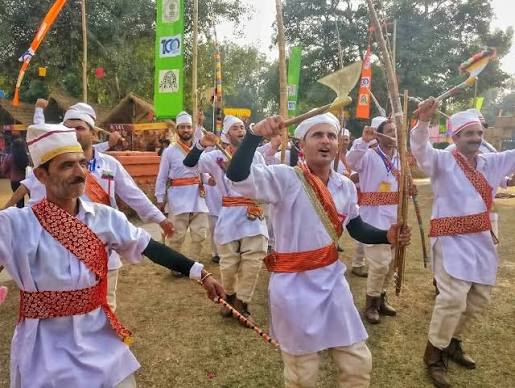
Himachal Pradesh is a land of distinct traditional practices, customs, clothing, linguistic heritage, making it a culturally rich place. Such practices maintain their relevance till date. Thoda(ˈtʰoːɖaː/), a game of archery, is one of the age old cultural practices followed in the districts of Shimla, Solan and Sirmour of Himachal Pradesh. Thoda is played in fair, locally called bissu or bishu arranged in the spring season. It is a demonstration sport symbolising physical fitness, cultural pride, devotion and martial arts. The game of thoda has religious, social, cultural as well as historical significance. Thoda is played by the rajput communities of these districts. The sport is played by two sub-groups namely; Shatha or Santhi and Pasha or Pashi. The shathas are those who claim to be the descendants of Kauravas of Mahabharta and Pashas, on the other hand, are the claimants of Pandava descent. Players are called thathori in local language. Thoda is a game of displaying one’s physical strength and endurance. Players sustain themselves throughout the game despite the severe pain caused by the blows of the arrow and sometimes could even lead to blood clots and temporary deafness.
The significance of archery in Indian subcontinent can be traced back to the Vedic period. Yajurveda has distinguished section written on Dhanurvidya(archery). The art of archery was an integral part of the curriculum in gurukulas in ancient period. Mahabharta, the great battle between the Pandavas and Kauravas, was mostly an archery based combat. In the districts of Shimla, Solan and Sirmour, it is said that the Pandavas and Kauravas are the ancestors of Rajputs. The game of thoda sprang up as a combat ritual among the rajput communities in the area. Overtime, it became a convention to play thoda in the name of ancestors, rajput valour, Gods and demigods.
The local deities all over the state of Himachal are a part of day to day affairs of the populace. Similarly, thoda fair is also considered as a pious event and is only conducted after invoking the ‘devta or the devi’(deities) for their blessings. In fact, some of the bissu fairs are entirely dedicated to and are conducted in the name of a deity. The rajput communities are locally called khash or khashiya. There are various divisions of the khashiyas associating themselves with a particular devi or devta. The players are teamed up based on these devisions as they share kinship with each other. Players belonging to same lineage cannot play as opponents. Therefore, thoda is a game of the showcasing family valour, pride and ancestry. A Pashi team can only play with other pashi teams as there are only five members in these teams. Whereas, the shathis are a group of sixty players as opposed to hundred kauravas in the great scripture of Mahabharta and they can only play with other shathi teams.
In the days bygone, thoda was played rather differently. A handful of villagers would go to another village before the dawn and throw a few tree leaves into the common well of the village. These outsiders would afterwards hide themselves while waiting for the villagers to come to the well and draw water. As the villagers would come, the people who were hiding would come out and call for a combat challenge with the youth of the village. This practice is now evolved into a well-organised event. Now, the fair is conducted by one rajput community calling mostly two other rajput communities to their place of residence. The team of players, called thoda dal, are invited for the event as players. These players are accompanied by fellow members of their own community who don’t take part in the game of archery but play active role in other rituals of the event, viz., dancing and singing. The communities make a splendid entry to the grassy ground called jubbar or jubdi while dancing and singing with swords and dangru; an axe shaped decorated tool smaller and thinner than axe made mostly of copper, in their hands. The songs are sung by the community members on their own. The local community designated for playing traditional drums called nagara and trumpets are also called in the event increasing the pomp. The nagara and trumpets are played in consonance with pace and intensity of the sport. Earlier, Thoda fair happened to be a five-day long event that would begin on the day of baisakhi, which marks the first day of the month of Vaishakh marking the arrival of spring. Nowadays, most fairs last for one or two day(s). In some parts of the districts where thoda is prevalent, people decorate their homes with beautiful rhododendrons flowers. Pink rhododendron is the state flower of himachal pradesh found mostly in jungles.
The fair is arranged by the members of a particular Rajput community. Funds are raised collectively and responsibilities are delegated. A committee is formed for the proper functioning of the event. The respectable members of the community are given chief positions. Village elders also play a key role in the whole event.
The players wear a dedicated lower garment called suthan ,typically thick enough to reduce the pain caused by the blunt wooden arrow with a thick tip. A short shirt called natloo was worn by players earlier while it is replaced by the team jersey, nowadays. On reaching the arena, players salute the game of thoda. Since the blow of an arrow is quite painful, the targets are supposed to be hit strictly below the knees. Violations of the rules call for disqualification and criticism. In the olden times, cheating could even become a cause of bloodshed. The bow is also quite heavy owing their weight to the fact that it is made of wood and can be approximately 8 ft. long in length. While players compete in archery they pass satirical and witty remarks on the opposing team while maintaining the respect towards the opponents and also speak of the valour of their own team in the local dialect. Players carry out the whole archery event while dancing rhythmically in the jubdi itself. Singing and dancing are the part of combat ritual. Victory in the game earns a status of heroism and bravery for the whole community. After the event is over post leaving the jubdi, the players and other team members stay at the residences of the inviting community where they are properly looked after. The traditional dish of the area, siddu-ghee, is served to the guests. Food is cooked collectively by the members of the community and those who cook the food are called boti or botiye.
Moreover, thoda is a gender specific game only played by men determined by generally patriarchal society of Himachal Pradesh. Women observe the event from a safe distance. Vendors as well, come to set up market in the fair. Shops selling goodies and sweets are an integral part of the fair. Jalebi happens to be a special sweet for the event. Children take merry-go-round and other amusement rides. Various dignitaries are also called to the fair as chief guests.
Casteism, being quite prevalent across the state of Himachal Pradesh has its strong imprint on the festival of thoda. Thoda has been the game of kshatriya caste of the society. Players belong to the rajput ancestry. It is only recently that the other castes like kolis or brahmins have begun to play the game. However, there is no culture of intercaste team game of thoda. People belonging to koli caste can only play among themselves and the same happens among brahmins and rajputs.
For years, thoda remained officially unrecognised. However, it is only recently that the government has made initiatives to promote this traditional game of martial arts, music and dance. Thoda is performed in the statehood celebration and at the summer festival an international event held in Shimla annually. The festival is conducted to celebrate the rich culture of Himachal Pradesh, therefore the inclusion of thoda. Government also sponsors fairs and announce winning and participation prize for the players. Furthermore, the game is supported by Himachal Pradesh Thoda Games and Cultural Association and the Youth Services and Sports Department. The sports council of Himachal Pradesh also offers grant-in-aid to state sports associations to fund the procurement of wooden bows and arrows. In fact, thoda is also being integrated in the local tournaments and even at the school level events.
Thoda is not just a game but a symbol of rich culture of Himachal Pradesh. People consider it more of a sacred event. It also promotes a sense of unity among people. Performances as well are emotionally charged. It also gives an insight of the structure of the society in the state. Every associated generation takes humongous pride in being linked with thoda and attaches extensive significance to the event. It reminds people of their roots and the bravery of their ancestors. Thoda fair is a quintessential event displaying how an age old tradition can be kept alive gracefully.
By: Samriti Chauhan
Write and Win: Participate in Creative writing Contest & International Essay Contest and win fabulous prizes.
About the Author