The Hardest Part of Creating a Character Is Often the First Step
When I write a new character, the first problem is rarely a total lack of ideas. The harder problem is that the ideas are scattered. I may know the character is lonely, stubborn, or funny, but I do not yet know how that should look on the page or in a visual reference.
That is where online character tools can be surprisingly useful. I do not see them as magic buttons. I see them more like creative notebooks. A platform such as OCMaker AI can help turn a rough character idea into something easier to examine, question, and improve.
For writers, this matters more than it may seem. A visual reference can reveal whether a character feels specific or generic. It can also show whether the outfit, expression, and mood support the story I want to tell.
Why Visual References Help Writers Think More Clearly
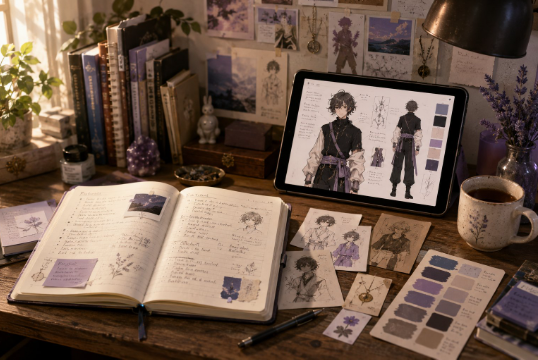
Writing is not only about words. Characters also live through rhythm, posture, color, and small details. When I have a visual reference in front of me, I often write better descriptions because I am no longer guessing.
A tired-looking character with a neat uniform tells a different story from a tired-looking character with messy sleeves, old boots, and a broken hair clip. Both may be exhausted, but the second one gives me more material to work with.
Visual references help me answer questions such as:
- Does this character feel gentle or guarded?
- Does the outfit match their background?
- Is the color palette too random?
- Would I recognize this character again later?
- Can this design support more than one scene?
These questions are useful even if I never use the generated image directly.
How Character Makers Support Different Types of Creators
Different creators use character tools in different ways. I have found them especially helpful during early exploration, when the idea is still flexible.
| Creator Type | How Character Tools Help |
| Writers | Build clearer character descriptions and story notes |
| Artists | Test visual directions before drawing final art |
| Roleplay users | Create OC profiles with stronger identity |
| Comic creators | Draft cast designs and emotional reactions |
| Game storytellers | Explore NPCs, avatars, and worldbuilding ideas |
The common thread is not automation. It is clarity. A creator can look at the result and decide what to keep, what to remove, and what needs more thought.
From a Simple Idea to a Full Character Concept
My usual process starts with one sentence. I try to describe the character without making it too decorative.
For example:
“A cheerful apprentice witch who is secretly afraid of failing her family.”
That single sentence already gives me more direction than “cute anime witch.” It suggests mood, conflict, expression, and possible costume details. Maybe she wears bright colors to appear confident. Maybe her bag is overpacked because she prepares too much. Maybe her smile looks slightly forced.
From there, I build the character in layers:
| Layer | Example Question |
| Role | What does this character do in the story? |
| Personality | How do they behave under pressure? |
| Visual identity | What detail makes them easy to remember? |
| Conflict | What do they want but cannot easily get? |
| Setting | What kind of world shaped them? |
This process keeps the character from becoming only a pretty image.
Using an Anime Art Maker for Faster Visual Exploration
For anime-inspired characters, an anime art maker can make early testing faster, especially when I want to compare hairstyles, outfits, moods, or fantasy themes before settling on one direction.
I may generate several versions of the same character idea and study them like sketches. One version may have the right expression but the wrong outfit. Another may have a strong silhouette but feel too cold. A third version may suddenly reveal a detail I had not considered, such as a scarf, charm, or unusual color contrast.
That kind of surprise is useful. Not because the tool “knows” the character better than I do, but because it gives me material to react to.
What Makes an Original Character Memorable?
A memorable OC usually has more than attractive design. It has an internal reason behind the design.
Here is the difference I often notice:
| Weak Character Detail | Stronger Character Detail |
| Blue hair because it looks nice | Blue hair tied to a water-magic family |
| Fancy jacket | Jacket inherited from an older sibling |
| Cool sword | Sword the character refuses to use |
| Quiet personality | Quiet because they are hiding guilt |
| Cute mascot | Mascot connected to a childhood promise |
The stronger version gives the reader something to remember. It also gives the writer more story possibilities.
Mistakes to Avoid When Using AI Character Tools
The most common mistake is relying on the first attractive result. I have done this before, and the problem appears later. The image looks good, but the character has no real direction.
Another mistake is stuffing too many ideas into one prompt. A “cyberpunk vampire angel princess detective” may sound fun, but unless the concept has a clear emotional center, the result can feel messy.
I also avoid copying famous characters too closely. It may be tempting to reference a popular anime design, but it is more useful to describe the qualities I want: lonely atmosphere, sharp silhouette, soft color palette, military-inspired outfit, or playful magical-girl energy.
Practical Tips for Writers and Artists
When I use character tools, I keep notes beside the image. I write down what works and what does not.
A simple note may look like this:
| Detail | Keep or Change? |
| Short silver hair | Keep |
| Red cloak | Change to darker green |
| Calm expression | Keep |
| Large weapon | Remove |
| Forest background | Keep |
This small habit prevents me from treating the image as final. It reminds me that I am still designing, not just selecting.
Final Thoughts
Online character makers are most helpful when they support a creator’s own thinking. They can speed up the early stage, make vague ideas visible, and help writers or artists test directions before committing.
But a character becomes alive through choices. What do they want? What do they hide? What detail reveals their past? Those answers still come from the creator. The tool can show a face, but the story has to give that face a reason to matter.
Write and Win: Participate in Creative writing Contest & International Essay Contest and win fabulous prizes.
About the Author