All buildings at some point require some sort of access to their roofs. HVAC systems break, gutters get clogged, solar panels need cleaning, roofs require inspections. But for years, there’s been a lackluster solution to the problem. A standard roof hatch is functional but from an aesthetic standpoint, it’s horrible.
It’s a rectangular metal frame with an insulated lid, which operates as a door for an adjacent ladder/stair shaft. A ceiling with no skylight opportunity. A darkened space below. Horrendous aesthetics for whatever space is under the ceiling.
Thus, the question shouldn’t be whether you need access to your roof, because if you have a building with equipment up there, you should. The question is whether you should have to sacrifice both natural light and visual comfort to get it.
Why Roof Hatches Fail Us
Walk into a commercial property with a roof hatch and more likely than not, it’ll be shoved in a utility closet, storage room, or other generally ignored space. That’s on purpose. It’s something that functions, but it’s not something that anyone really wants to see. It’s a metal hatch that opens to a ladder/stair shaft that goes up to the roof.
That’s only the beginning of what’s wrong with standard hatches. They eliminate natural light. Whether they’re installed in a private residence (most likely a ceiling in a hallway, closet or bathroom) or a commercial space (back room, utility area), when hatches are installed, they create a permanent obstruction, thus eliminating any opportunity for a skylight.
Now, where there could have been natural light at one point, there’s exclusion, the space below becomes darker and more often than not, lights are needed even during the day. For additional safety for professionals going up and down with ladders, there’s no easy or convenient way to mount your tools for successful execution.
They operate per building code requirement, but it’s not comfortable. To get up and through a hatch with your body and all of your tools isn’t the easiest or safest maneuver. For people who are supposed to have constant access to equipment (like HVAC systems), roof access should be simple and easy enough that property managers and building owners find themselves enjoying no added charges for less-than-convenient access.
Plus, let’s be honest, hatches are ugly. They’re not meant to be observed, they’re meant to be access points and nothing more.
When Roof Access Becomes Complicated
For buildings with HVAC systems on their roofs, especially commercial offices, that’s all she wrote. HVAC companies need access to do regular maintenance, filter changes, refills, checks and tunings at certain seasons. When roof access has complicated entry and they can’t get a simple Phillips screwdriver and one filter in their hands at once, they’re going to defer maintenance. Deferred maintenance leads to inefficient operation, higher energy bills and ultimately repair or replacement.
Property managers hear the doom and gloom often: We can’t get in there to do a thorough job; we’re going to have to charge you for XZY anyways because there’s not much we can do without getting up there without adequate access. The once-a-year supplement cost might not seem like much, but each of those occurrences adds up across multiple service calls per year.
The same holds true for residential properties with solar panels, they need cleaning and inspection from time to time. A technician who has to pay extra and bring in all of his equipment just because you don’t want an ugly hatch has no incentive to help you at the drop of a hat.
Solutions That Actually Work
But thankfully, recent developments in the building industry fill the gap between functionality and aesthetics.
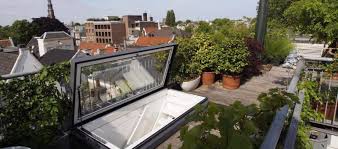
A product like Sunsquare’s Aero Electric Roof Access Skylight (https://sunsquareskylights.com/products/aero-electric-roof-access-skylight/) takes roof access opportunity and day lighting potential into account, what has been functional out of compromise is now an aesthetic offering. With an electric hatch/skylight configuration, aesthetic comfort comes when it closes; it’s no longer just a vulgar hole in the roof, a safe access point is enabledand natural light pours into the space below when it’s closed.
This makes sense for so many buildings where several factors need to coexist on rooftops – no need for one or the other when both options are safe, reliable and simple. The electric function means you’re not trying to muscle open a heavy door each time maintenance comes; there’s less reliance on safety as well as the hatch/skylight will remain in place longer.
Holes in your roof also require more thought than most people consider.
Where is it easiest to access rooftops without giving too much of it away? Too far away and professionals won’t have easy access to where they really need to go; too close means that there may be no structural reinforcement below or such strong elements that your interior space (especially if on the second floor) will suffer from exposure/weathering.
Similarly, sizing is important, there are minimum code requirements which state how big something has to be for people to safely go through. However bigger doesn’t mean always better. Bigger could mean excess costs; excess sizes require more support; they mean heat loss/gain when thermal bridging is concerned with hatches exposed on both sides; excessively bigger sides mean oversights for someone working quietly.
Roofs need proper weather protection, standard hatches might leak slightly as they get older. They start rusting after constant exposure; bumping them open over time leads to bad seams; they eventually spoil when crossing the membrane threshold without proper precaution, only forgetting proper flashing might expose tons of risks across weather patterns.
The Lifetime Maintenance Factor
Buildings designed with maintenance in mind cost less to operate throughout their lifetime and roof access is part of it. When maintenance professionals have ease of access via safe roof access, they’ll do routine maintenance instead of deferring it until next time or possibly never getting in there because they don’t want to bring ladders up if there’s one there.
Scheduled routine maintenance beats emergency services every single day.
The same holds true for insurance agencies and safety inspections; negligent roof access might cause higher insurance premiums due to violations or minor fines as they’re brought to attention because once upon a time someone fell through the improper standard hatch at your building last week.
Updated roof access ideas conform with safety standards set forth today, a better option exists for your building.
Save functional hatches for emergencies, or don’t save them at all. These days it’s less about resigning yourself to some ugly service hatch just because it’s what used to be appropriate.
Now that design considerations are taken into account whenever possible, why not do it during the build process or re-model when unnecessary deferred neglect comes into play? There’s no reason why proper construction shouldn’t yield aesthetic benefits as well. It’s not asking too much, and ultimately, ideal safety and functionality encourage driving natural light instead of creating darkened spaces below.
Getting roof access right saves money throughout operations later, creating a comfortable space throughout what’s supposed to be an appealing building. Getting it right from the start makes the most sense.
Write and Win: Participate in Creative writing Contest & International Essay Contest and win fabulous prizes.
About the Author