“Unable to save the planet that is ours, man is dreaming to find life on Mars!”
As the bulldozers wrenched through the lush green forests of Kancha Gachibowli in Telangana, the poignant cries of peacocks echoed in the skies, serving a heart-breaking reminder of the catastrophic destruction human greed has led to.
Climate Crisis: An Overview
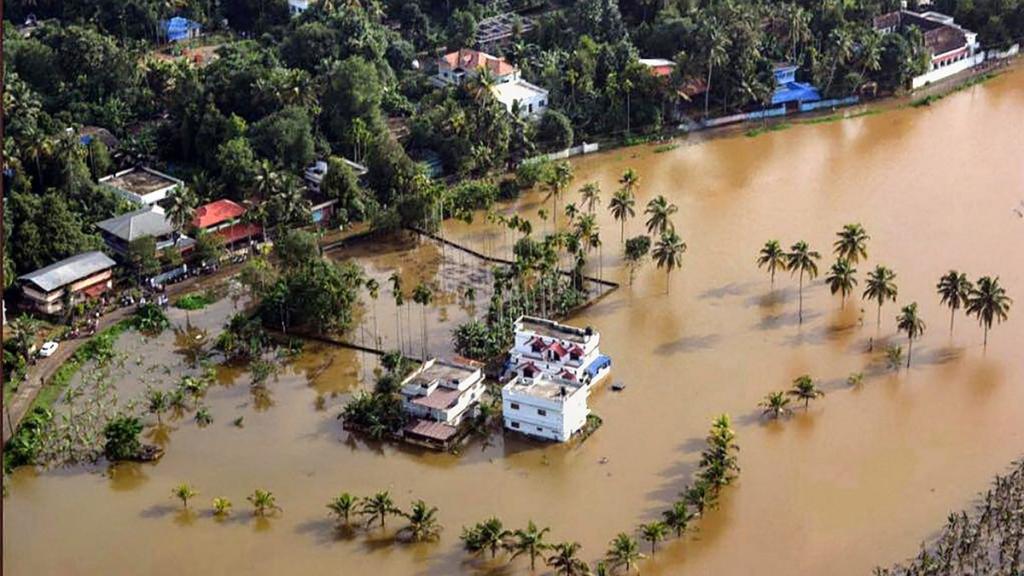
Climate change is neither a ‘hoax’ nor a ‘scam’, it is indeed a brutal reality ticking like a time bomb and taking us towards the planet’s ‘Sixth Mass Extinction’, this time driven by our own deeds. It is high time that we take our blindfolds off and look at the devastation happening every moment around us. Venezuela lost its last glacier, Humboldt. California charred to the flames of wildfires. Nearly 20000 people in India succumbed to heatwaves between 2001 to 2019. The Great Barrier Reef is struggling with the fourth global coral bleaching event and the list has not even started. Unfortunately, the palette is not only turning colourless for the corals but for each and every species in the world, including the homo sapiens, referred to as the smartest creatures but are ironically digging their own graves.
Climate Change: Efforts so far
The ‘Earth Summit’, a major international conference held more than three decades ago in Rio De Janeiro, Brazil gave promising hopes with its Agenda 21 to reconcile environmental protection, paving a path towards sustainable development. Moving in the direction, we saw more collaborations from Montreal Protocol as a step against ozone depletion to annual COP meetings led by UNFCCC. The ‘Panchamrit Targets’ reflect India’s green commitments. It aims to achieve Net Zero emissions by 2070 among others. Paris Agreement of 2015, renowned for its goal to keep the global average temperature increase to well below 2°C above pre-industrial levels has been a significant step in the journey.
Hence, it is not that we are completely unaware of the deleterious ramifications, climate crisis has the potential of bringing. From a birds-eye view, it is visible that we have taken preventive as well as curative measures to bring down the Earth’s fever. However, a closer analysis makes it apparent that the grass is not greener on the other side. As per latest reports, the threshold of limiting global rise of temperature below 2°C in the Paris Agreement is already out of our hands and even in the best case scenario, it will hit at least 2.4°C. The damage is irreversible and the hopes are dwindling. Therefore, the gap lies not in setting targets but their real life stringent implementation.
Sustainable Technology: A peek through
The concept of sustainable technology stems from the notion of sustainable development which advocates for growth in a manner that meets the needs of the present generation without compromising the ability of future generations to meet their own requirements. It thus provides a beacon of hope amidst the daunting climate war. At its core, sustainable technology encompasses a broad spectrum of innovations designed to minimize environmental impact, conserve natural resources, and promote long-term ecological balance. Sustainable Development Goal (SDG) 17 by United Nations calls for ‘Partnership for the Goals’ fostering greater collaboration and contribution. It is thus essential that we begin by incorporating everyone as each contribution makes a difference.
Innovation: An angel in disguise
The most important facet of combating climate crisis lies in amalgamating sustainable technology using an innovative approach. A common manifestation of this is ‘Renewable Energy’, a non-conventional source of energy, it can be extracted from various natural resources. Unlike fossil fuels, it has considerably lower carbon footprint. India has set an ambitious target to achieve 500 GW of renewable energy capacity by 2030, thus, sourcing 50% of its energy from green sources. International Solar Alliance (ISA) with the objective of ‘One Sun One World One Grid’ is a crucial move in collecting funds for solar energy. A breakthrough technology of sodium-ion battery as a viable replacement to lithium- ion batteries holds immense potential to transform energy production along with its storage. From biomass to wind, waves and the sun, renewable energy is a compass in the journey towards sustainability.
In the transportation sector, hydrogen fuel cells, biofuels and Electric Vehicles (EVs) are rapidly gaining traction, propelled by improvements in battery technology, charging infrastructure, and public awareness. The shift inherently allows for decarbonisation as grids transition to renewables.
Carbon Capture and Storage (CCS) is a carbon sequestration technology that captures and stores carbon dioxide, a greenhouse gas in geological formations. Iceland installed world’s largest direct air capture plant which throws light on uncompromising techniques with a rigorous dimension. It brings up questions concerning failure of preventive techniques.
We live in a world where the number of screens will soon take over the population of humans. While Artificial Intelligence (AI) poses a threat to the environment, it also has a silver lining. It has wide scope in resource management, renewable energy grid and supply chain optimization for reduced waste. Big data analytics has its uses in environmental monitoring, tracking deforestation, pollution, and climate patterns. ‘Methane SAT’ is a satellite that keeps track of methane emissions and their point sources. Drones should further be better deployed for reforestation efforts.
When it comes to deplorable condition of food security, nature based solutions enhanced by technology can fill the gap by bringing genetically modified (GM) crops into play. They not only help reduce agricultural greenhouse gas (GHG) emission but also mitigate land-use changes. Climate resilient crops also display better durability towards extreme climatic events that sadly, are going to be a frequent reality for us.
From a macroeconomic perspective, circular economy model is a simple yet impactful road. It minimizes waste and maximizes resource utilisation through the flow of ‘Reduce’, ‘Reuse’, and ‘Recycle’ reflecting industrial symbiosis where waste from one process becomes a resource for another. It can be replicated at any level of economy from vermicomposting in farm to producing carbon negative concrete. Even the ‘Best out of waste’ competitions held at school are a depiction of the idea.
Other stakeholders in the battle
Change begins from within, behavioural change is something that should be inculcated in every individual to make them ‘Climate Conscious’. Excessive consumerism should be avoided. It can be initiated from the grocery store itself by opting for eco- friendly products having minimal carbon footprint. ‘Climate discipline’ in children can make them active citizens in the long run.
At the societal level, ‘Climate communities’ are a good step to raise awareness and include people in cleanliness drives, seminars as well as protest against wrongdoings towards the planet. Alok Shukla, the winner of 2024 Goldman Environmental Prize highlights the power of involving the local communities.
Business groups as well as start-ups can play their part through Corporate Social Responsibility (CSR), green bonds as well as ensuring that their products are produced through cleaner mechanisms. Carbon markets are a fine way to realise this. Carbon tax imposed by the European Union is a laudable move to discourage polluters.
As a nation, the importance of effective policies is non-negotiable. Government incentives, subsidies and regulations to accelerate sustainable tech adoption is necessary. International cooperation along with technology transfer mechanisms for developing nations is a way ahead. Government should focus on the poor masses, most vulnerable to climate change consequences. They are prone to displacement owing to calamities. Unfortunately, these climate refugees who pay the highest price are the ones least responsible for the crisis.
Education as well as research and development is a continuous need to help us adapt, mitigate and come up with more solutions. It should be supplemented by promoting STEM education and vocational training for the green economy.
Despite the immense potential, the path forward is not without its challenges. The scaling up of sustainable technologies requires massive investment, supportive policy frameworks and a strong willingness. Furthermore, the ethical implications of certain technologies like geoengineering or large-scale carbon capture, require careful consideration to avoid unintended consequences
At last, on top of all this, we need an immediate realisation that there is no substitute for our planet. Morality is quintessential to protect our Mother Earth. Efforts towards climate change should not be restricted to essay, speech and poster making competitions on Environment Day. We need a fundamental shift in our approach. By embracing and accelerating these innovations, we can indeed innovate our way out of the climate crisis and ensure we pass on the same healthy planet that we inherited from our ancestors.
By: Akanksha Prajapati
Write and Win: Participate in Creative writing Contest & International Essay Contest and win fabulous prizes.
About the Author