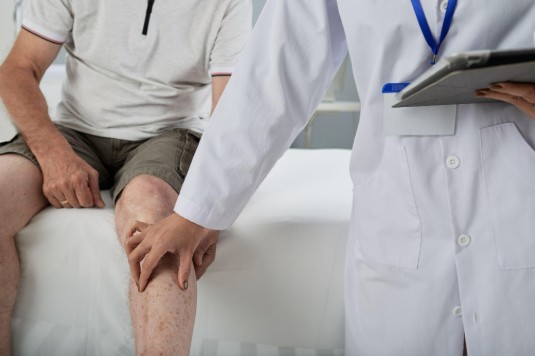
People usually shrug off leg pain as a symptom of tiredness, having worked long hours, or just getting older. In many instances, however, it may be a warning sign of a serious circulatory disease known as Peripheral Artery Disease (PAD), which decreases blood flow to the limbs.
The danger with PAD is not just the discomfort in the legs, but the silent damage happening inside the arteries. If left untreated, it may become a serious condition that can lead to infection, non-healing wounds and loss of a limb.
The good news is that early diagnosis and prompt intervention can make a big difference in the prognosis and help maintain vascular health.
What is Peripheral Artery Disease?
Peripheral Artery Disease is a condition in which the arteries running to the legs narrow or get clogged because of the accumulation of fatty deposits (atherosclerosis). This makes it difficult to get oxygen-rich blood to the muscles, particularly during exercise when muscles require more oxygen.
Therefore, the legs are often the first to show symptoms. It is a progressive condition, which means that, if not treated, it will get worse over time. It can start out as a slight ache and then become a problem that impacts mobility and quality of life.
PAD is also a warning sign of broader cardiovascular disease. Those who suffer from PAD also tend to have similar blockages in heart and brain arteries, which can lead to a heart attack or stroke.
Early Symptoms That Should Not Be Ignored
Claudication (leg pain during walking) is one of the earliest indications of PAD. This pain typically goes away after a brief rest, and many people ignore it.
Other symptoms include:
- Occasional tightness, heaviness or fatigue in the calves or thighs
- Coldness in one leg compared to the other
- Slow-healing cuts or wounds on the feet
- Shiny skin or hair loss on the legs
- Weak pulses in the feet
The symptoms may be gradual in onset and be confused with normal ageing or muscle strain. But if you experience pain in your legs that lasts longer than a few minutes or happens more than once, it is not normal and should be assessed.
Why Leg Pain Is Often Ignored
A lot of people think that leg pain is a result of physical exertion, dehydration and joint problems. This results in late diagnosis of most PAD cases.
Another reason is that the body adapts to reduced blood flow gradually. Unknowingly, people shorten their walking distance because it is uncomfortable, thereby masking the seriousness of the condition.
By the time pain starts occurring even at rest or during sleep, the disease is usually in an advanced stage. At this point, treatment becomes more complex and urgent. Seeking the best doctor for peripheral artery disease in Kolkata early can make a crucial difference in preventing complications and improving outcomes.
Risk Factors That Increase PAD Chances
Some lifestyle and health problems place a person at a higher risk for developing PAD:
- Smoking and tobacco use
- Diabetes
- High blood pressure
- High cholesterol levels
- Obesity
- Lack of physical activity
- Age above 50 years
Among these, smoking and diabetes are the most damaging, as they directly accelerate arterial narrowing and damage blood vessels.
Importance of Early Diagnosis
Early diagnosis is an important key to the prevention of complications. The treatment typically starts with a physical exam and simple, non-invasive tests.
Common diagnostic techniques are:
- Ankle-Brachial Index (ABI) test to compare blood pressure in arms and legs.
- Measurement of the blood flow in the arteries via Doppler ultrasound
- In more complicated cases, computed tomography (CT) or magnetic resonance imaging (MRI) may be used to help make the diagnosis.
These tests are used to help diagnose the severity of the blockage and to help decide on treatment.
Early diagnosis helps to stop the disease from worsening and can substantially lower the chances of amputation or cardiovascular problems.
Modern Treatment Options for PAD
The treatment of Peripheral Artery Disease is aimed at improving blood flow, relieving symptoms and preventing additional blockages.
Treatment will vary depending on the severity and may involve:
- Lifestyle changes, such as quitting smoking and regular walking exercises
- Cholesterol, blood pressure and blood clotting medications
- Antiplatelet drugs to promote blood flow
- Angioplasty (or stenting) to open blocked arteries
- Bypass surgery in severe cases
In Kolkata, patients often consult highly experienced experts such as Dr Dhiman Kahali and Dr Anup Banerji, who have extensive expertise in treating complex cardiovascular and vascular conditions with advanced techniques.
For those seeking specialised care, consultation with the best cardiologists for peripheral artery disease in Kolkata can help ensure accurate diagnosis and timely intervention using modern treatment approaches.
When You Should See a Doctor
Medical consultation should not be delayed when symptoms start to appear. If you see any of the following, you should seek medical advice:
- Recurrent leg pain when walking
- Pain that improves only with rest
- Cold and numbness in the feet that does not go away
- Non-healing wounds on lower limbs
- Limited walking distance because of discomfort
Early consultation can have a significant impact in preventing disease progression and avoiding unfavourable consequences.
Conclusion
PAD is a serious condition that can develop without any symptoms and commonly starts with mild leg pain. The symptoms are slow to appear, and many people overlook them until the disease has progressed to an advanced stage.
Knowing the symptoms, being aware of risk factors, and getting timely medical care are key elements of vascular health protection.
Leg pain should never be dismissed as routine fatigue. In many cases, it is the body’s earliest warning that blood circulation needs urgent attention.
Write and Win: Participate in Creative writing Contest & International Essay Contest and win fabulous prizes.
About the Author