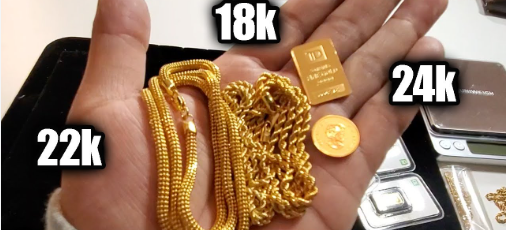
When comparing gold jewellery, purity is one of the first details people notice. However, the number attached to gold does more than indicate value. It also influences the metal’s composition, appearance, and suitability for different designs.
A 22K and an 18K gold chain may look similar at first glance, but the difference lies in the amount of pure gold and other metals used in their making. These variations affect how the jewellery is structured, how it reflects light, and how it fits into everyday styling.
Understanding these differences can help you look beyond the karat number and decide which type of gold works better for your preferences and wearing habits.
What 22K and 18K Actually Mean in Jewellery
Karat refers to the proportion of pure gold present in a jewellery piece. Since pure gold is measured as 24 parts, the karat number shows how much of those parts are made up of gold.
| Gold Purity | Gold Content | Fineness Mark | What it Means |
| 24K | 99.9% pure gold | 999 | Pure gold, generally too soft for regular jewellery |
| 22K | 91.6% gold | 916 | Higher gold content with a rich yellow appearance |
| 18K | 75% gold | 750 | More alloy content with greater scope for different finishes and colours |
A 22K gold chain contains a higher percentage of pure gold, which gives it the characteristic warm yellow tone associated with traditional gold jewellery. An 18K piece contains more alloy metals, which changes the balance between purity and design flexibility.
The difference does not mean one karat is universally better. It depends on what you value in jewellery, such as a deeper gold tone, specific design details, or the way the piece is intended to be worn.
What Metals are Mixed in and Why it Matters for a Chain
Pure gold is naturally soft, which makes it difficult to use in many jewellery forms without modification. Adding other metals helps create alloys that can hold different shapes, finishes, and structures.
Common alloying metals include:
- Copper: Adds strength and can create warmer tones, including rose gold shades.
- Silver: Helps modify the colour and properties of yellow gold.
- Zinc: Can support the overall alloy composition.
- Palladium or Other White Metals: Used in some white gold formulations.
The proportion of these metals changes depending on the karat and the desired finish. This matters particularly for a gold chain because chains contain multiple connected links that move against each other during wear.
A few design and construction factors can also influence material mixing in chains:
- Link Structure: Determines how freely the chain moves while helping it retain its form.
- Thickness: Influences the chain’s overall feel, weight, and visual presence.
- Clasp Quality: Plays an important role in keeping the chain secure during everyday wear.
- Finish: Affects how the surface interacts with and reflects light.
How Design And Karat Work Together For Everyday Comfort
Karat is only one part of how a jewellery piece feels when you wear it. Its design, construction, proportions, and metal composition all contribute to its overall comfort and balance.
White gold is a good example of this. If you’re wondering which white gold chain with pendant set works best for everyday wear, look for one with a lightweight pendant, comfortable chain length, and secure clasp. These details make the piece easier to wear and style throughout the day.
A pendant that is too heavy for its chain can feel uncomfortable and affect how it moves. The right balance between the metal, chain, and pendant can therefore make just as much difference as the karat itself.
Does Karat Change How Gold Looks on Skin?
Karat can influence the colour of gold, although the final appearance also depends on the alloy mix, finish, and design. Let’s see how it looks on skin:
| Aspect | 22K Gold | 18K Gold |
| Yellow Gold Appearance | Richer and warmer | Slightly softer depending on alloy |
| Colour Variations | More commonly associated with yellow gold | Allows greater flexibility for white and rose gold |
| Surface Effect | Strong natural gold tone | Final look depends more on alloy and finish |
Clothing colour, neckline, and other jewellery can change how strongly the metal stands out. For example, a gold mangalsutra combines gold with black beads, creating a contrast that can make the gold sections appear more prominent. The same principle applies to chains with different finishes, textures, or pendant designs.
Which Gold Chain Length and Weight is the Best for Everyday Wear and for Special Occasions?
Many buyers wonder which gold chain length and weight will suit their daily needs and special days. There is no fixed weight that works for everyone. The appearance and comfort depend on the chain’s width, link style, and construction.
However, length can help determine how a piece sits:
| Occasion | Common Length Range | Design Consideration |
| Everyday Wear | 16–18 inches | Sits closer to the neckline and pairs well with smaller pendants |
| Layering | 20–24 inches | Adds variation when combined with shorter chains |
| Special Occasions | 24 inches and above | Creates a longer silhouette and stronger visual presence |
A lighter gold chain can work well for frequent styling, while heavier designs may create a more noticeable appearance for occasions where jewellery is meant to stand out.
Beyond Karat: What Makes a Gold Chain Right for You
Choosing between 22K and 18K gold jewellery becomes easier when you understand what each karat represents. Purity affects the amount of gold present, while alloy composition influences colour options, structure, and design possibilities.
A gold chain is shaped by more than its karat number. Its links, length, finish, and proportions all contribute to how it looks and feels when worn. Collections from brands like Indriya bring together varied gold chain designs. Visit your nearest store to explore different designs for gold chains. Learn more about your choice, whether it is the richness of higher-purity gold or the versatility offered by different alloy combinations.
Write and Win: Participate in Creative writing Contest & International Essay Contest and win fabulous prizes.
About the Author