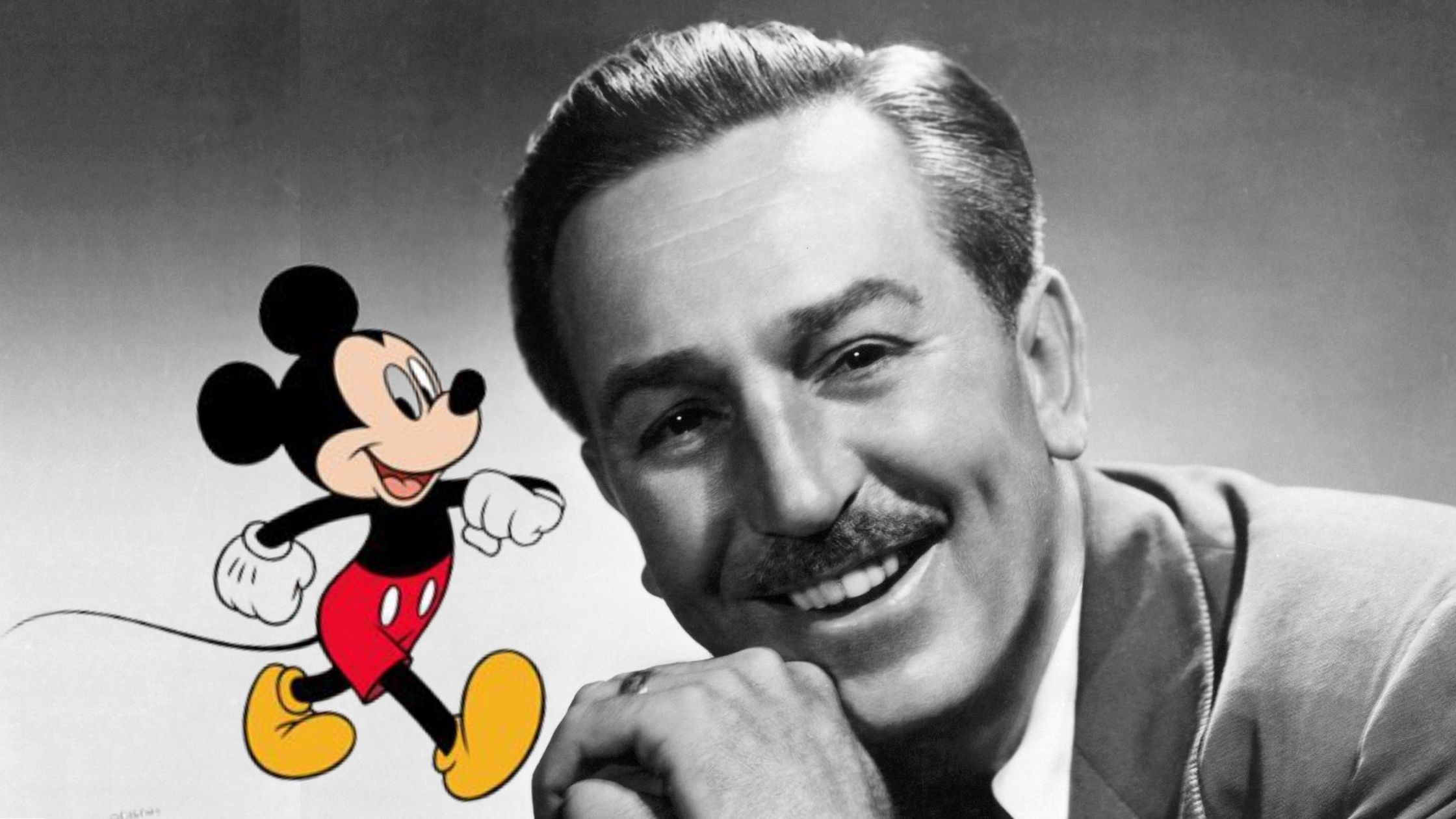
Ever wonder why this specific corporate mascot stands completely apart from every other pop culture icon in human history? He does not possess magical superpowers. He does not carry legendary weapons or fight cosmic villains. His ultimate secret weapon is actually a devious psychological mind trick that hacks the human brain. Seriously, if you look at his structural design completely stripped down, he is nothing more than three basic geometric circles thrown together on a sketchpad. But his physical body shapes did not stay consistent at all over the decades. If you look back at his historic 1928 debut, the cartoon mouse actually looked incredibly creepy. He was way more like a sneaky, sharp-nosed street rat with thin limbs and a mischievous grin than a wholesome, cute family mascot .
As the years rolled on, the studio animators completely warped his design on purpose. They blew his head up like a giant balloon, completely rounded his body, gave him a massive forehead, and made his eyes utterly giant. Scientists and evolutionary biologists have a very real name for this specific physical transformation: neoteny. By actively copying and mimicking the exact biological traits of a human infant, the artists basically rewired our nervous systems. They forced us to feel an instant, protective evolutionary urge to love and care for him. It was not just a simple creative drawing choice; it was a highly advanced, accidental psychological experiment engineered to guarantee that audiences across the globe would instantly bond with him. This structural design is his truest unique selling proposition. It is a biological cheat code that turns adults and children alike into absolute fans without them ever realizing why they feel so attached.
Most people look at his signature wardrobe today and assume his outfit is just a classic fashion statement meant to look cute on merchandise shelves. But honestly? Those famous white gloves were actually born out of a total, frantic technical emergency behind the scenes of early cinema. Back in the late 1920s, movie theater projection screens were incredibly blurry, grainy, and full of visual static. On top of that, everything was captured in low-quality, high-contrast black-and-white film. This environment created a brutal visual roadblock for the drawing team. Whenever the little guy clapped his hands together in excitement or crossed his arms over his front, his dark, jet-black hands completely melted right into his dark, jet-black torso. He basically looked completely handless on screen, and audiences could not track his frantic movements or see what his arms were doing. To stop this bizarre disappearing act, the animators threw bright white gloves onto his black hands. That single instant of color contrast saved the entire production. Suddenly, the theater audience could finally follow his frantic gestures and emotional expressions against his dark chest. It was not a creative stylistic choice at all.
It was a quick, desperate, and practical fix for a technological roadblock in early Hollywood history. This simple hack highlights how the character’s most iconic visual traits were not born out of corporate boardrooms, but from independent artists frantically solving film projection issues on a tight budget.Beyond his physical appearance, his entry into the world of movie sound was an absolute technological revolution that shocked the entire planet. In the modern world, we take background music and character voices for granted, but back in 1928, films were completely silent. Entertainment was just moving pictures with someone playing a piano in the back of the theater. The cartoon short Steamboat Willie changed the course of human media forever by becoming the first animation in history to feature fully synchronized sound. This meant that when the character stomped his feet or played a tune, the audio track matched his exact physical movements down to the millisecond. Audiences at the time were utterly stunned. People had never seen a drawing seemingly come alive with its own independent auditory heartbeat. It felt like absolute black magic to the public, setting a brand-new standard that forced the entire Hollywood film industry to abandon silent movies entirely .Strangely enough, even though he was an absolute pioneer of the sound era, the famous mouse actually spent his first year on screen completely silent.
He communicated solely through wild facial expressions, squeaks, and whistles. He did not say a single actual word until his ninth short film, The Karnival Kid, which hit theaters in the summer of 1929. Audiences were completely on the edge of their seats waiting to hear what the world’s most famous drawing would sound like. When he finally opened his mouth, his very first spoken words were not an elegant greeting or a funny joke. Instead, he blurted out a completely bizarre, everyday phrase: “Hot dogs! Hot dogs!” He screamed it out while working at a carnival food stand. The creator of the character was so incredibly protective of this squeaky, high-pitched voice that he actually chose to voice the character himself for nearly two decades, refusing to let any professional Hollywood actors touch the role. But the secret history gets way weirder if you step outside of the cartoon screens of Hollywood. The mascot actually holds a deeply classified, high-stakes place in real military combat. Think back to June 6, 1944.
That was the day Allied forces launched the historic D-Day invasion along the heavily fortified beaches of Normandy to liberate Europe. Soldiers were dropping out of ships and planes into complete, pitch-black darkness, and the entire battlefield was pure, unadulterated chaos. In the middle of the gunfires and night raids, troop commanders urgently needed a fast, foolproof way to check if a shadow moving in the dark was a friendly soldier or an enemy combatant so nobody would get shot by friendly fire.Obviously, the soldiers could not just shine bright flashlights or scream out complex questions because enemy guards would spot their positions and target them instantly.
To solve this, supreme military high command chose an incredibly weird, top-secret voice password to separate friends from enemies: the secret code name was the name of this exact cartoon mouse. If a soldier hissed out the first half of the mouse’s name into the dark, the responding soldier had to whisper back the second half to prove his identity. It is completely mind-blowing to think that a fictional cartoon character created for pure childhood escapism and bedtime stories ended up serving as a literal code word for survival on the deadliest battlefields of World War II.Outside of military history, this simple pencil drawing also served as a massive economic savior during the absolute worst days of the Great Depression. Back in the 1930s, big American businesses and factories were collapsing and going bankrupt left and right. The legendary Lionel Toy Train Company was totally broke, buried under mountains of debt, and on the absolute verge of locking its factory doors forever.
Out of pure financial panic and desperation, the owners decided to gamble their absolute last bit of remaining cash to license this animated character’s image for a cheap, wind-up toy car. It sounded like a crazy, foolish risk at the time, but the gamble paid off completely.They ended up moving over a quarter-of-a-million of those tiny wind-up cars in no time flat. The lines at department stores were blocks long, with parents scraping together pennies just to buy a piece of joy for their children. Honestly, that one single cartoon-licensed product wiped their corporate slate completely clean financially. It single-handedly pulled a major manufacturer out of bankruptcy and kept hundreds of regular, real-world factory workers off the unemployment line during the darkest economic crisis in modern history. At the exact same time, a failing watchmaker called Ingersoll was also facing complete collapse. They decided to place the mouse’s image on a brand-new concept called a wrist-watch, using his arms as the physical clock hands. Macy’s department store sold eleven thousand of these watches on the very first day of release, completely saving the watch company from extinction and transforming a cartoon into an economic powerhouse.
But where did this legendary mouse actually come from? The most uncommon, hidden truth of all is that he was born entirely out of a heartbreaking business betrayal and a real-life wild animal. Before he became a global success, the creator was a starving artist working out of a tiny, run-down studio in Kansas City. He had just lost the legal rights to his first successful cartoon character, a lucky rabbit, because a ruthless distributor stole his entire animation staff and took the character right out from under him. Broke, lonely, and working late into the night, the creator noticed that his trash can was frequently overrun with wild field mice looking for food crumbs. Instead of setting traps or chasing them away, the lonely animator grew incredibly fond of them. He actually befriended one specific, brave little brown mouse that used to scurry up onto his drawing desk. The artist kept this wild rodent in a small cage on his desk, fed it cheese crumbs, and used a pencil to tap its nose gently. Through a psychological training process known as operant conditioning, he actually trained this wild field mouse to run in perfect little circles inside a track he drew on his sketchboard .Years later, when the animator was sitting on a train ride back from New York, completely devastated by his business losses and needing a brand-new character fast, he remembered his tiny, trained desk pet from Kansas City.
He picked up his sketchbook and drew that exact wild house mouse, transforming his real-life memories of a tiny studio companion into the first rough sketches of the icon we know today. He initially wanted to name the character Mortimer, but his wife complained that the name sounded way too pompous and arrogant, suggesting a friendlier name instead. When you piece all these hidden stories together, you realize this character’s true popularity does not stem from massive corporate marketing budgets. It comes from his unique ability to represent hope when everything else is failing. He was born because an artist lost everything and found inspiration in a wild desk pet. His gloves were invented because early movie cameras were too primitive to capture hand movements. His face was re-engineered by animators using baby biology to subconsciously make the world comfort him. And his name was whispered by terrified soldiers in the dark mud of Normandy to keep each other alive. He is not just a commercialized cartoon mascot; he is a historical mirror of human resilience, psychological design, and survival.
By: AWANTIKA YADAV
Write and Win: Participate in Creative writing Contest & International Essay Contest and win fabulous prizes.
About the Author