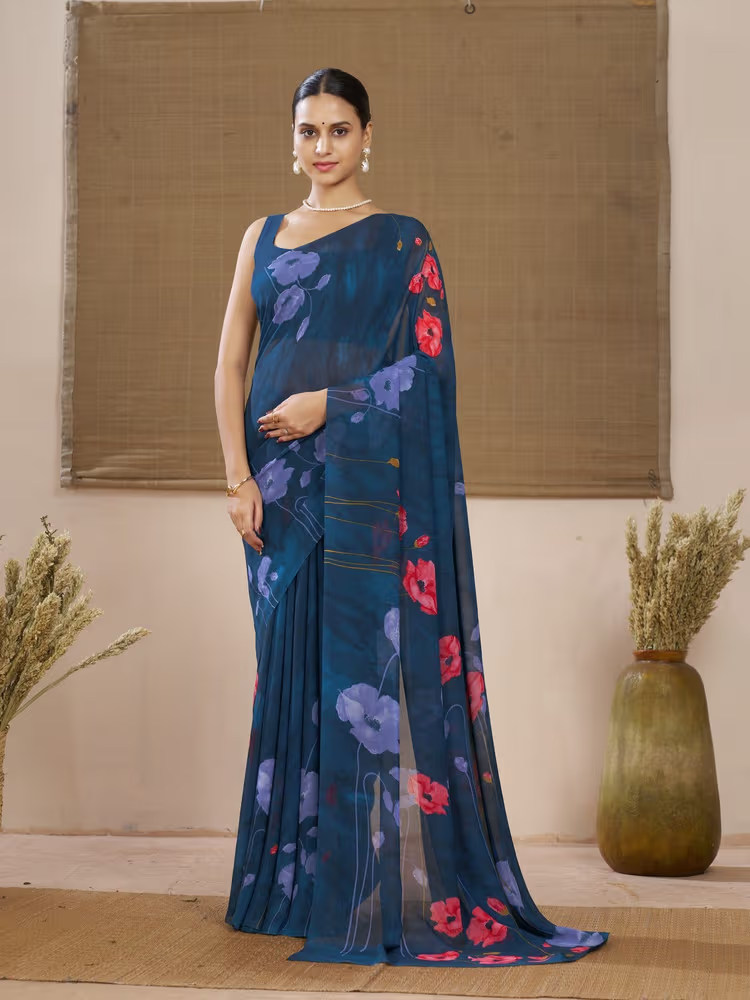
A saree is not merely six yards of fabric but an eternal symbol of elegance, tradition, and individuality. Whether it is to address an urgent crisis in the boardroom or to groove at your cousin’s wedding, this highly versatile outfit is always ready to serve you with unparalleled elegance. While it takes a lot of practice to master this art of styling, it is interesting to see how you can adapt your style to your needs, whether it is the lightweight charm of georgettes or the imperial lustre of silk.
Why the Saree is the Most Versatile Outfit in India
There is a reason the saree has stood the test of time, across generations and geography. Unlike most Western or contemporary Indian outfits, the same fabric can be styled, accessorised, and draped in dozens of ways, making the saree infinitely versatile. The same outfit can look casual, formal, festive, professional, subtle, or dramatic, depending on the fabric, its drape, the blouse type, and the accessories. The secret, as they say, is in knowing the occasion, the fabric, and the styling details to take the outfit to the next level.
The Office-Ready Saree: Professional, Polished, and Practical
Donning the saree to the office is an empowered look, especially when done correctly, as the wearer exudes an aura of power and pride in her culture. The key is to ensure the look is neat, well-kept, and flexible enough to let the wearer focus on her job without her outfit getting in the way.
Opt for cotton, linen, or georgette as the fabric:
They are extremely comfortable and practical, especially in the hot, humid weather found in most parts of the country. The classic cotton saree with an elegant yet subtle weaving or the pure linen saree in an unobtrusive print are the most professional and office-ready looks.
Stick to the classic Nivi Drape:
It is the most practical and elegant look. The Nivi Drape is the most popular and commonly worn drape in the country, and its neat, well-structured look is the most appropriate and professional for the office.
A blouse and accessories should be simple:
In a work environment, it is best to wear a simple blouse with a low neckline. A boat-neck, mandarin-neck, or round-neck blouse would be perfect for this. Paired with small studs, a simple chain, and block heel footwear, this would complete your outfit.
The Casual Day Out: Relaxed, Fun, and Effortlessly Stylish
Does a saree have to be relegated to formal events? Of course not! With the right fabric and styling, you can rock your saree at your lunch date, shopping trip, or casual family gathering.
Cotton, khadi, or printed chiffon would be suitable for a casual day out:
Block-print cotton sarees, tie-dye chiffon sarees, or khadi sarees would be great for casual outings. These sarees are easy to wear and manage, and they have a relaxed, artistic appeal.
Experiment with non-traditional draping styles:
The Gujarati-style pallu or a dhoti-style draping will give your saree a trendy look. These styles will give your style a quirky touch, making it more comfortable and relaxed rather than a traditional Nivi-style draping. These will look best for daytime events when paired with Kolhapuri sandals or juttis.
Quirky accessories and blouses:
A crop-style blouse in a contrasting colour, a printed or embroidered blouse, or a tie-front blouse will give your style an instant trendy touch. These will look best if you wear a regular saree.
The Festive Saree: Vibrant, Celebratory, and Unmistakably Indian
Festive seasons are the best time to don your most celebratory outfits. It could be Diwali, Navratri, Pongal, or Eid, and there’s no better way to dress for the occasion than in a well-styled festive saree.
Look for rich fabrics like silk, chanderi, or banarasi:
Festive occasions require fabrics that shine and reflect cultural importance. A Kanjivaram silk saree in rich colours, a Chanderi with zari borders, or a Banarasi weave with traditional motifs immediately conveys the festive mood. These fabrics drape well and photograph even better.
Add traditional jewellery for an added touch of festivity:
Temple jewellery, polki sets, or antique gold jewellery can be paired with rich fabrics for an added touch of festivity. Choose a bold piece of jewellery, such as a necklace, jhumkas, or bangles, for a traditional yet festive look. Avoid over-accessorising; instead, let your fabric do all the talking.
Play around with embellished blouses for an added touch of festivity:
An embellished blouse, like an embroidered, mirror-work, or sequined blouse, can work wonders for a simple fabric like silk. A high-neck blouse with elaborate embroidery or a halter-neck blouse can be an added touch, adding a modern twist to a traditional fabric like silk.
The Cocktail and Evening Event Saree: Glamorous and Contemporary
The saree has fully entered the domain of contemporary evening wear, competing with other evening gowns or jumpsuits for the glamorous quotient at cocktail parties, awards ceremonies, etc.
Sheer, embellished, or pre-draped sarees are the best options for evening events:
Sheer georgette or net sarees are the most popular options, especially when they are heavily embroidered, sequined, or hand-painted.
Sarees can be paired with matching or contrasting blouses:
Depending on the look one wants to create. In cocktail events, the blouse can carry the wow factor, especially when the saree is plain, allowing the focus to be on it with dramatic cuts, heavy embellishments, etc.
Sarees can be paired with bold accessories and make-up
These are a must in evening events. While the saree can be simple, the accessories can be bold, creating the perfect contrast, or the saree can be bold while the accessories are simple, creating the perfect balance in the look.
The Wedding Saree: Opulent, Timeless, and Extremely Personal
If you are the bride, a member of the bridal party, or an honoured guest, a wedding is a time for the best, the opulent, and the extremely personal. The wedding saree is one of the most carefully chosen outfits of a lifetime.
Brides can opt for heavy silk, tissue, or bridal lehenga-saree combos:
Traditional brides may prefer Kanjivaram, Benarasi, or Patola sarees, as these are considered to be extremely luxurious and culturally significant. Brides may choose traditional shades such as red, deep magenta, and royal gold or opt for new shades like pastels, ivory, and two-tone sarees. The important factor is to choose a saree that is personally meaningful to the bride.
Guests may opt for a mix of opulent and comfortable wear for a wedding:
Indian weddings are known to be extremely time-consuming, and one may need to move around a lot. Guests may opt for comfortable wear such as a silk and cotton saree, a net or brocade saree in a bright or pastel shade, and matching jewellery to make a stunning impression at the wedding.
Be sure to accessorise according to the time of day:
For a daytime wedding, light jewellery and pastel shades are a must, while for a night wedding, heavy jewellery and darker shades are recommended. An embroidered saree, along with matching jewellery, a clutch, and shoes, can look elegant and wedding-ready from the sangeet to the reception.
Conclusion
Styling a saree for every occasion is, in the end, all about understanding the fabric’s texture, draping, blouses, and accessories and then making the most appropriate and honest choices. Whether you are stepping into a board meeting or dancing the night away at the wedding reception, there is a beautiful saree form that is appropriate for the occasion. Garden Vareli provides a wide and well-thought-out variety of sarees, and with them, you are sure to find the perfect occasion and the perfect saree that speaks to you.
Write and Win: Participate in Creative writing Contest & International Essay Contest and win fabulous prizes.
About the Author