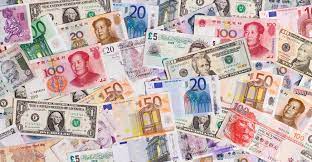
different currencies
Why Countries Use Distinct Currencies
In the midst of college applications, as I convert my Korean won into U.S. dollars to pay fees, I watch the exchange rate climb like a stubborn tide. Each click of the calculator feels personal: every extra won I need is another reminder that money isn’t just numbers—it’s power, history, and identity. This moment, standing in front of a screen of flashing rates, makes me wonder why the world runs on so many different currencies. Wouldn’t one global currency make life simpler? Yet the answer, I’ve discovered, goes far beyond convenience.
Nations possess their own currencies not just to dictate their economic regimes but also to ensure independence and pronounce their national identity. From Mesopotamia’s first minting of coins to today’s central banks, unique currencies endure because they let nations structure policies, stay self-governing, and maintain cultural pride.
How It All Started
The story of many currencies is as old as civilization itself. Ancient societies from Greece to China used grain, shells, and coins to simplify trade. Even when gold and silver had value everywhere, city states insisted on minting their own coins stamped with local rulers or gods. Economists like Barry Eichengreen note that money has always been tied to political authority: governments guaranteed its worth, and in doing so, tied identity to currency. As the modern nation state took hold after the 1600s, money became a symbol of sovereignty. Managing a national currency wasn’t just economic, it was political, a declaration of independence. For me, realizing this history reframed my frustration with today’s exchange rates. What I saw as a financial obstacle was also a reflection of centuries of nations refusing to give up control.
Sovereignty and Economic Regulation
One the of the main reasons currencies remain separate is control over monetary policy. A unique currency lets governments adjust interest rates, fight inflation, and respond ot crises. Economist Paul Krugman calls independent monetary policy “the essential tool” for stabilizing jobs and growth. Without it, countries risk becoming powerless in the face of global shocks. The eurozone shows both the promise and the peril of shared currency. It makes trade easier, but during the European debt crisis, nations like Greece couldn’t devalue their money to recover, Decisions were left to the European Central Bank, leaving some countries stuck with prolonged unemployment. This example reminded me why the won must stay independent: it protects Korea from being trapped in policies made for someone else’s economy
Currency as Identity
Currencies aren’t just tools they’re symbols. Banknotes and coins carry images of leaders, landmarks, and cultural icons. They tell stories of heritage and resilience. For newly independent countries, printing money is almost as important as raising a flag it says “We exist”. Even stability itself carries meaning. A Strong national currency builds trust; its collapse can undermine governments, as seen in Zimbabwe’s hyperinflation. As a student, I may groan every time the dollar rises, but I can’t ignore the pride attached to a nation’s money. When I hold a Korean 10,000 won note, decorated with scholar Seojong the Great, I’m reminded that currency is as much about who we are as what we buy.
At first glance, it may look economical to have only one universal currency to facilitate trade. But actually, exchange rates are shock absorbers. If an economy enters into slowdown mode, its currency tends to soften and thus cheapens its export making the equilibrium of the system. The International Monetary Fund deems it “one of the most effective instruments for absorbing external shocks.” History shows the value of this flexibility. During the Asian Financial Crisis of the 1990s, floating currencies could devalue, shielding domestic industries from collapse. A single global currency would have spread that pain instead of containing it. For families like mine, the constant fluctuation of the won against the dollar is frustrating but at the global level, it’s what helps economies survive.
Practical Considerations in Trade and Policy
Globalization has connected countries more tightly to each other than ever before. Organizations such as the IMF or World Bank promote collaboration, and trade agreements reduce impediments. But when it comes to crises such as in 2008 nations look after their own residents. They use their own currencies to spur growth, safeguard employment, and ensure stability. That was something that hit me personally: if Korea’s won drops in strength, my family pays more for my tuition at college in the States. But simultaneously, it cushions Korea’s economy from larger shocks. What seems like a blow for me is, in the grand picture, a defense.
Currencies continue not only as stores of exchange value, they also represent declarations of independence, identity, and determination. They allow for governments to act in concurrence with national interests and give citizens a sense of belonging. My own realization of this principle came during my own preparation for college. I will check constantly at the exchange rate until I finally take my journey to the United States, yet every fluctuation is a declaration that countries, just like college students going out of the home country, need to take their own routes. During times of global markets, distinct currencies represent that the notion of autonomy is important.
References:
University Press, 2019.
International Monetary Fund. “The Role of Exchange Rates in an Era of Globalization.” IMF Publications, 2020, www.imf.org/exchangerates-globalization
. Accessed 11 Sept. 2025.
Krugman, Paul, and Maurice Obstfeld. International Economics: Theory and Policy. 11th ed., Pearson, 2021.
Rogoff, Kenneth. “The Case for Flexible Exchange Rates in a Global Economy.” Journal of Economic Perspectives, vol. 34, no. 3, 2020, pp. 5–28.
World Bank. “Currency and Sovereignty: Historical Perspectives.” World Bank Research Papers, 2023, documents.worldbank.org/currency-and-sovereignty. Accessed 11 Sept. 2025.
By: Jack Jin
Write and Win: Participate in Creative writing Contest & International Essay Contest and win fabulous prizes.
About the Author