countries stock Conflicts Big Short Impact of the Russia-Ukraine War on the Economies
The stock market is one of the most important parts of the global economy. It helps investors, companies, and governments grow money, make decisions, and manage risks. For a long time, trading depended on human analysis, experience, and intuition. Traders studied reports, watched trends, and made decisions based on what they thought might happen.
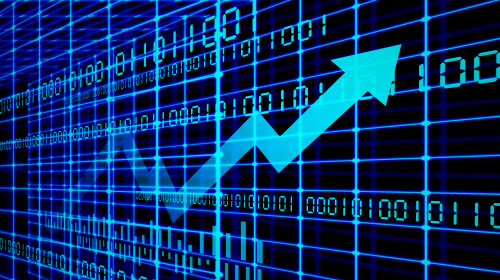
Today, things are changing. Artificial Intelligence (AI) is starting to play a major role in the stock market. AI can study huge amounts of information, find patterns, and make decisions faster than any human. It is now used for trading, predicting prices, managing risks, and even giving personalized advice to investors. AI does not only impact local markets; it also helps investors understand trends in global stock markets. By analyzing international data, AI can show how events in one country might affect investments in another, giving investors a wider perspective.
From my perspective, AI feels like a bridge between human intuition and the enormous speed of technology. It not only analyzes data but also helps investors think more strategically. This essay explores how AI is affecting the stock market, its benefits, the challenges it brings, and what the future may hold.
In the past, trading was slow and heavily dependent on people. Investors and brokers had to analyze company reports, news, and market trends to make decisions. While this worked for decades, it had clear limits. Humans cannot process huge amounts of data quickly, and mistakes happen when emotions or fatigue interfere. The first major change came with electronic trading, which allowed transactions to happen faster and gave access to global markets. Then came algorithmic trading, where computers followed set rules to buy and sell stocks automatically. This made trading faster and reduced errors caused by human decisions.
The next step was the introduction of Artificial Intelligence. Unlike earlier systems, AI can learn from data, notice patterns, and even make predictions. Each trade or prediction teaches the system, gradually making it more accurate and better at anticipating market trends. Today, AI helps investors and companies analyze millions of data points in seconds something no human could ever do alone. I find it interesting how quickly technology changed trading from a slow, human-driven process to an almost fully automated system. It shows how innovation can reshape traditional industries.
Key Applications of AI in Stock Market
(a) Algorithmic Trading: AI can automate trading using complex algorithms. For example, a small investment company uses AI to monitor stock prices. One morning, the AI detects a sudden drop in tech stocks and automatically sells part of its holdings, preventing bigger losses. This example shows how AI can act faster than human traders, protecting investments from sudden market changes. Trading can be stressful for humans due to fast-changing markets, but AI can handle multiple tasks simultaneously, reducing stress for investors and allowing them to make calmer decisions. I imagine it would feel reassuring as an investor to know that the AI can protect your investments even when the market suddenly drops.
(b) Predictive Analytics: AI can look at past market data, real-time prices, and even news or social media posts to predict future stock movements. A young investor uses an AI tool to analyze trends before buying shares. The AI recommends waiting a week because prices might fall, helping the investor avoid potential losses. Predictive analytics gives investors a more data-driven approach than relying solely on intuition. From my view, predictive AI helps reduce the fear and uncertainty that often prevent beginners from investing. It also helps investors feel more confident in their decisions because they can see data-based reasons for suggested actions.
(c) Risk Management and Fraud Detection: AI is useful for spotting unusual patterns that may indicate fraud or risky behavior. A bank employs AI to track unusual transactions. One day, the system notices several odd transfers and alerts the staff, stopping potential fraud before any money is lost. This shows how AI protects investors and institutions, making the financial system safer. It seems amazing that AI can detect suspicious patterns that humans might miss, increasing safety and transparency in financial markets.
(d) Personalized Investment Advice (Robo-Advisors): AI-powered tools, called robo-advisors, guide individual investors. For instance, a university student wants to save for education. A robo-advisor studies their income and spending habits, then recommends a low-risk investment plan, helping them grow savings gradually. Robo-advisors make investing accessible, even for beginners, and provide guidance that would otherwise require professional expertise. I feel that tools like these make finance more democratic because anyone can access professional-level advice. AI systems can be tailored to individual goals; a young investor saving for college can follow a different plan than a retiree seeking stable income.
Benefits of AI in Stock Market
AI brings several important advantages to the stock market:
- Speed and Efficiency: AI can analyze millions of pieces of data in seconds, making trades faster than humans.
- Reduced Errors: Unlike humans, AI does not get tired or emotional, so mistakes caused by stress or panic are minimized.
- Better Decision-Making: AI finds patterns and predicts trends, helping investors make informed choices.
- Accessibility: Tools like robo-advisors allow anyone, even beginners, to participate in investing.
These applications show how AI helps people and companies make faster, safer, and smarter investment decisions. It also empowers small investors to compete with larger firms, leveling the playing field for those with limited experience or smaller budgets. In my opinion, the most valuable benefit is giving beginners confidence to participate in investing, which can help people plan for the future.
Challenges and Risks
AI is powerful but not perfect. There are some risks:
- Over-Reliance: If everyone depends on AI, similar strategies might create risks in the market.
- Algorithm Errors: Mistakes in AI programming can cause sudden market fluctuations, sometimes leading to big losses.
- Ethical Issues: Decisions made by AI can be hard to understand, which raises questions about fairness and accountability.
- Potential Misuse: AI could be used for unethical trading or manipulation if not carefully controlled.
Even with AI, predictions can fail. If many investors follow the same AI advice and the prediction is wrong, it could lead to losses. Investors must still use human judgment to evaluate the risks and understand the limits of AI, ensuring balanced and ethical decision-making. I think it is important for investors to remember that AI is not perfect and should always be used alongside human judgment.
Future Outlook
AI will likely play an even bigger role in finance in the future:
- It may combine with blockchain and advanced computing to improve security and predictions.
- AI tools could make investing smarter and faster for both large companies and individual investors.
- More people will have access to AI investment guidance, making the stock market more inclusive.
- Continuous learning will allow AI to adapt to new trends and challenges, making it a permanent part of the market.
In the future, AI might also help local communities invest in projects like green energy. It could suggest which initiatives are most likely to succeed, track their progress, and manage risks, opening new opportunities for small investors. Financial education can also be enhanced by AI, allowing students and beginners to practice trading in safe simulations without risking real money. I personally feel excited about the possibility that AI could help communities invest in meaningful projects, creating both financial and social benefits.
Artificial Intelligence is changing the stock market in many ways. From automated trading and predictive analytics to risk management and personalized investment advice, AI makes trading faster, smarter, and more accessible. At the same time, it has risks, including errors, ethical concerns, and market instability. The future of the stock market will depend on using AI responsibly. When combined with human judgment, AI can help investors make better decisions and create a safer, more efficient market. From my perspective, combining AI with human wisdom could be one of the most powerful ways to shape the future of investing. AI is no longer just a tool it is shaping the future of global finance, helping people invest smarter, faster, and with greater confidence.
By: Su Phyo Hlaing
Write and Win: Participate in Creative writing Contest & International Essay Contest and win fabulous prizes.
About the Author