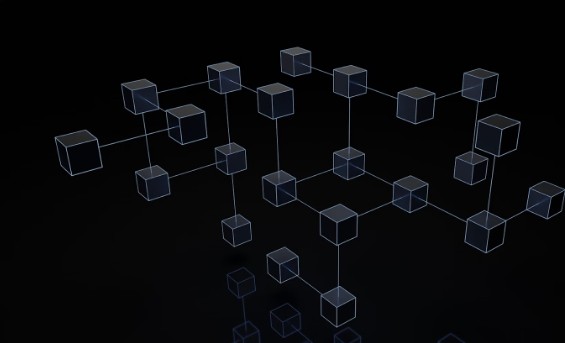
Monero’s network topology (the structure of the nodes in the blockchain) is not often discussed. But by analysing the network, we can see how Monero’s centralization improves security and robustness, but also introduces potential vulnerabilities.
In 2025, interest in Monero has grown. On January 1, the XMR to USD price closed at 195.40. By mid-May, it was closing at 347.98. What are the details of its network topology and the factors that may affect its future price?
Peer-to-peer architecture
Monero’s decentralization depends on a peer-to-peer (P2P) structure with no central authority or structure. Every node validates transactions independently. The network uses the Levin protocol (a messaging system for P2P communication) to help nodes talk to each other and quickly share blocks and transactions.
This approach strengthens Monero’s autonomy. There’s no reliance on any single point of failure, so the network becomes harder to disrupt. Each node holds a partial view of the whole network, forming a web of shared responsibility.
Core and periphery dynamics
Despite its flat design (with all nodes treated equally), Monero’s network displays a core-periphery structure. In practice, a small subset of nodes acts as central relays. These “supernodes” connect to many peripheral peers and play an important role in distributing transaction data across the network.
This improves efficiency but can raise concerns. The more influence a node has, the greater its capacity to impact network performance or, in worst-case scenarios, exploit vulnerabilities.
Zurich study reveals structural insights
In April 2025, researchers at the University of Zurich published a detailed analysis of Monero’s P2P network, titled “Charting the Uncharted: The Landscape of Monero Peer-to-Peer Network”. Their methodology involved “collecting peer lists extracted from the TCP data exchanged between our Monero node and its peers”, offering a rare empirical look into the network’s structure.
The study highlights key takeaways. One of the main concerns centers on the emergence of “small-world” characteristics – patterns often found in social networks. As the authors explain:
“If small-world characteristics emerge from user social relationships, nodes with significantly higher degrees can exert disproportionate influence on the network structure, introducing potential risks such as Eclipse attacks, Sybil attacks, and DoS attacks.”
These insights suggest that while Monero is decentralized in principle, certain nodes may accumulate power unintentionally. Addressing this imbalance is important for long-term resilience.
Eclipse and sybil risks
Eclipse attacks happen when an adversary controls the majority of a node’s peers. In effect, this isolates it from the broader network and can allow attackers to manipulate the victim’s view of the blockchain.
Sybil attacks involve creating many fake nodes to gain disproportionate control. If these nodes successfully connect to many real peers, they could flood the network, skew data propagation (how information spreads through the network), or degrade performance.
Monero’s topology, especially the reliance on certain high-degree nodes, may increase exposure to these threats. But the Monero community continues to implement defences and refine protocols to mitigate the risks.
Dandelion++
Monero uses the Dandelion++ protocol to protect the origin of transactions. This breaks transaction propagation into two phases: a stem phase (where the transaction is sent along a random path), and a fluff phase, where it’s broadcast more widely.
Dandelion++ makes it harder to trace the initial sender, obscuring the source of transactions. It also complicates network-level analysis and mapping, adding another layer of privacy.
ASIC resistance
A key part of decentralization is making sure many different people can take part in mining. Some currencies can be mined using ASICs (Application-Specific Integrated Circuits) –machines built to mine as efficiently as possible. These devices are powerful but expensive, and are usually only used by big mining companies.
When only a few groups own most of this hash power (the total computing strength used to mine and secure the network), it can lead to centralization.
Monero avoids this by using a mining algorithm called RandomX, which is designed to work on regular CPUs like the ones in most laptops and desktops. This allows more people to mine Monero without needing expensive, specialized hardware.
Governance
Monero’s governance model reinforces its decentralized roots. The project operates without a formal foundation or leadership team. Contributors from around the world maintain its codebase and collaborate in open forums.
Forbes reported on HTC’s particular interest in blockchain technology. In 2020, HTC partnered with Mida Labs to bring cryptocurrency mining to mobile phones. The initiative aimed to decentralize the hash rate by allowing mobile users to mine Monero.
Monitoring and mitigation
Understanding network topology is crucial for improving security. The Zurich study underlines the need for ongoing observation of Monero’s structural evolution. Regular auditing of node distribution, connection patterns, and peer behavior may allow developers to pre-emptively address vulnerabilities.
Last word
Monero’s network topology reflects a balance between efficiency, privacy, and decentralization. Its P2P design minimizes central points of failure; added layers like Dandelion++ obscure traceability. But new research makes clear that vigilance is needed. Structural tendencies such as supernode formation may inadvertently introduce weaknesses. By continuously adapting, auditing, and engaging with academic research, Monero’s community may be able to better meet these challenges.
The evolution of Monero’s network topology will face scrutiny from both supporters and potential adversaries. The tension between centralization for efficiency and decentralization for security presents a challenge. The University of Zurich researchers have laid groundwork for monitoring tools that could help detect new vulnerabilities. Ultimately, Monero’s success will depend on adapting to evolving threats.
Write and Win: Participate in Creative writing Contest & International Essay Contest and win fabulous prizes.
About the Author