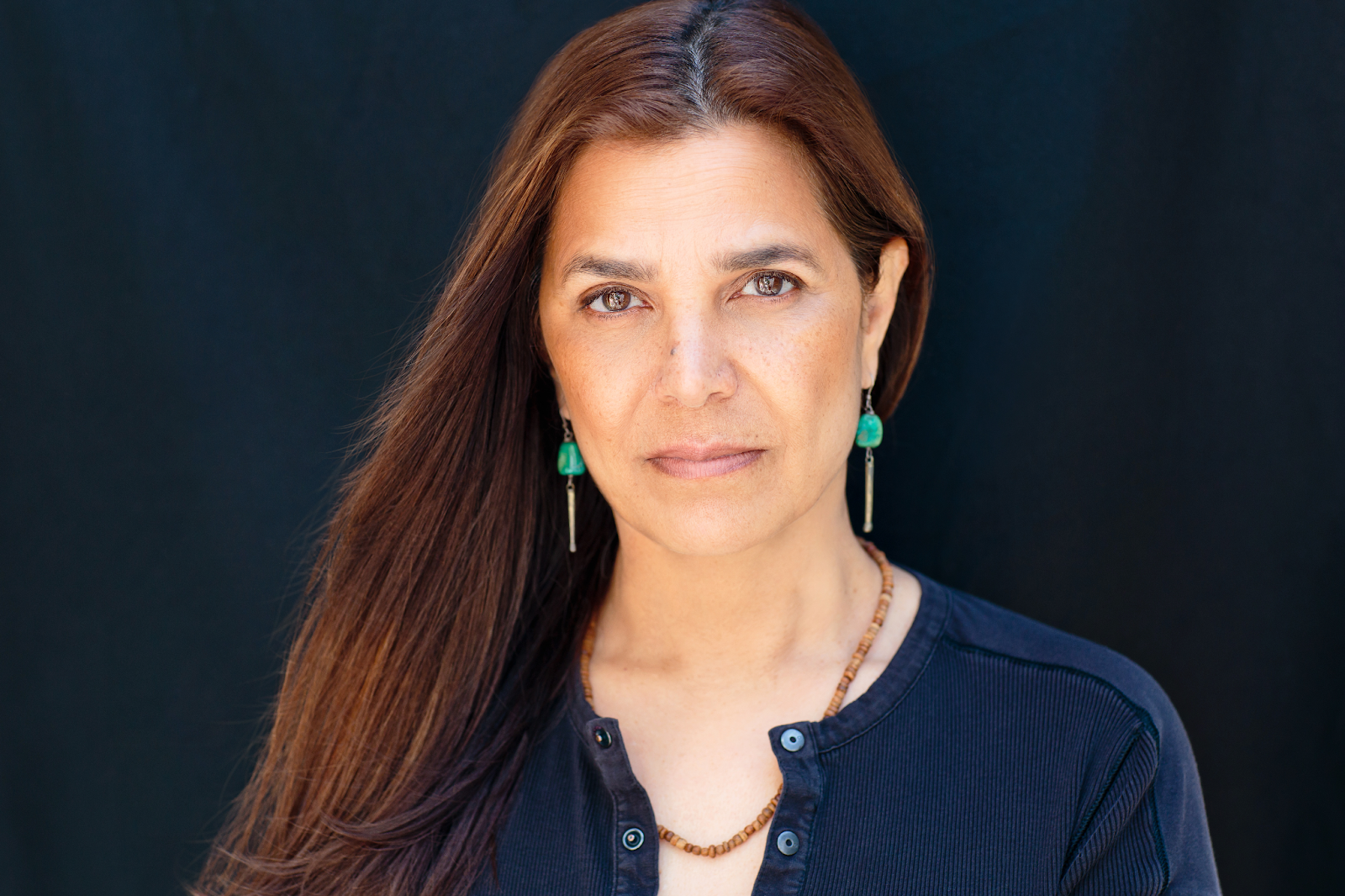
1. Overview of Kamala Lopez
a. Early Life and Education
Born to a Venezuelan mother and an Indian father, Kamala Lopez experienced a multicultural upbringing that would later inform her perspective on equality and representation. Growing up between New York City and Venezuela, she developed an early awareness of how women’s roles and opportunities varied across cultures. This foundation would prove instrumental in shaping her future advocacy work.
Lopez pursued her education at Yale University, where she studied philosophy and theatre. These seemingly disparate disciplines converged in her approach to storytelling and advocacy, combining intellectual rigor with artistic expression. During her university years, she became increasingly aware of the underrepresentation of women in media and the political sphere—observations that would later fuel her professional endeavors
b. Career in Entertainment Industry
After graduating, Lopez moved to New York to pursue acting, quickly securing roles in television and independent film. Her early career included appearances on popular shows like “Medium” and “Star Trek: Voyager,” establishing her presence in the entertainment industry. Despite achieving success as an actress, Lopez grew frustrated with the limited and often stereotypical roles available to women, particularly women of color.
This frustration catalyzed her transition into directing and producing. In 2007, she established Heroica Films, a production company dedicated to telling women’s stories and addressing gender inequality through visual media. As a director, Lopez brought a distinctive perspective to her projects, challenging conventional narratives and exploring themes of identity, equality, and social justice.
“As a woman in film, I saw firsthand how our stories were being shaped by others,” Kamala Lopez has stated. “I realized that to create meaningful change, I needed to step behind the camera and become part of the storytelling process itself.”
c. Advocacy Work for Women’s Rights
While continuing her work in entertainment, Lopez became increasingly involved in advocacy for women’s rights. Her pivotal moment came when she learned about the absence of the Equal Rights Amendment (ERA) in the U.S. Constitution—a discovery that shocked her and redirected her professional focus.
In 2009, Lopez launched the “ERA Education Project,” an initiative designed to inform Americans about the lack of constitutional equality for women in the United States. This project marked her transformation from an artist commenting on inequality to an activist directly challenging it, using her skills as a filmmaker and communicator to educate the public on constitutional rights.
2. Kamala Lopez’s Impact on the Equal Rights Movement
a. The Representation of Women in Media
Throughout her career, Lopez has been a vocal critic of how women are portrayed in film and television. Her production company has consistently created content that passes the Bechdel test and offers nuanced representations of women’s lives and experiences. By highlighting the connection between media representation and political reality, she has helped illuminate how cultural narratives shape policy decisions.
Her documentary work has been particularly influential in this area, providing a platform for women whose stories have been historically marginalized. Through interviews with women from diverse backgrounds—from political leaders to single mothers—Lopez has created a comprehensive picture of the American woman’s experience, challenging simplified narratives that often dominate mainstream media.
b. Advocacy for Gender Equality in the United States
Lopez’s most significant contribution to the equal rights movement has been her work on “Equal Means Equal,” a feature documentary examining gender inequality in the United States. Released in 2016, the film explores how discrimination against women persists in various sectors, including the workplace, healthcare, and the justice system.
The documentary connects these disparate issues to the lack of constitutional protection, arguing that the failure to ratify the Equal Rights Amendment has allowed gender discrimination to continue under the law. By presenting compelling personal stories alongside legal and historical analysis, Lopez created a powerful argument for constitutional change that resonated with audiences across the political spectrum.
Following the film’s release, she established the Equal Means Equal organization, which has become a leading voice in the renewed push for ERA ratification. Through this organization, Lopez has coordinated grassroots activism, legal challenges, and educational campaigns designed to advance gender equality in national legislation.
c. Kamala Lopez’s Role in Promoting Equal Rights Legislation
Beyond raising awareness, Lopez has been directly involved in lobbying for the ratification of the Equal Rights Amendment. Her work has included organizing congressional briefings, coordinating with state legislators, and mobilizing citizens to pressure their representatives. This hands-on approach has contributed to renewed momentum for the amendment in recent years.
Lopez has been particularly effective at building coalitions across political divides, emphasizing that equal rights is not a partisan issue but a civil rights concern. By framing gender equality as fundamental to American democracy, she has helped broaden support for the ERA beyond traditional feminist circles.
3. Recognition and Achievements of Kamala Lopez
a. Awards and Honors Received
Lopez’s work has earned her numerous accolades from both the entertainment industry and advocacy organizations. Her documentary “Equal Means Equal” received the Audience Award at the 2016 Traverse City Film Festival, while her advocacy efforts earned her the Women’s Human Rights Award from the United Nations.
In 2019, she was recognized with the Woman of the Year Award from the National Organization for Women, acknowledging her contribution to advancing gender equality through media and activism. The Latino Spirit Award and the Latina Leadership Award have also honored her intersectional approach to women’s rights, recognizing her ability to address how gender inequality affects women from various backgrounds differently.
b. Notable Projects and Films
Beyond “Equal Means Equal,” Lopez has directed and produced several influential films exploring women’s experiences and challenges. “A Single Woman,” her 2008 feature about the life of Jeannette Rankin, the first woman elected to Congress, highlighted the long struggle for women’s political representation in the United States.
Her television series “The Female Face of America” examined the diverse experiences of American women through intimate portraits and discussions. The project, which aired on PBS stations, brought attention to issues often overlooked in national conversations about gender, including rural women’s challenges and the specific barriers faced by women in poverty.
Most recently, her film “The Rotten ERA” explores the opposition to the Equal Rights Amendment, analyzing the historical and contemporary forces that have prevented its ratification. Through archival footage and contemporary interviews, the documentary provides a comprehensive understanding of the political landscape surrounding women’s constitutional equality.
c. Future Initiatives and Contributions
Looking forward, Lopez continues to expand her advocacy work while developing new film projects. Her current initiative focuses on the intersection of women’s rights and climate justice, exploring how environmental degradation disproportionately affects women globally. This project represents her evolving understanding of equal rights as connected to broader social and environmental concerns.
She is also developing educational materials for schools, aiming to incorporate women’s constitutional history into standard curricula. Through partnerships with educational organizations, Lopez hopes to ensure that future generations understand the ongoing struggle for equal rights and their role in advancing it.
As she continues her work, Lopez remains committed to using media as a tool for social change. “Film can reach people in ways that political speeches cannot,” she has noted. “It allows audiences to experience the reality of inequality emotionally, not just intellectually—and that’s often what motivates people to take action.”
Through her unique combination of artistic talent and political commitment, Kamala Lopez has established herself as an essential voice in the contemporary equal rights movement, bridging the gap between cultural representation and constitutional change. Her work reminds us that achieving gender equality requires addressing both the laws that govern us and the stories we tell about ourselves.
Write and Win: Participate in Creative writing Contest & International Essay Contest and win fabulous prizes.
About the Author