A message does not always need more words to become more powerful. Sometimes, a headline appearing at precisely the right moment, a product rotating into view, or a simple illustration unfolding step by step can communicate an idea more effectively than several paragraphs of explanation. This is the creative strength of motion design. By combining visual elements with carefully controlled movement, designers can turn otherwise ordinary information into experiences that attract attention and make complex ideas easier to understand.
As audiences consume more content through short videos, interactive advertisements, digital presentations, and social media, the way information is presented has become almost as important as the information itself. This shift has created new opportunities for creators to experiment with animation and visual communication. With an AI-powered motion studio, creative professionals can explore ways to transform written concepts, data, product information, and brand messages into animated visual compositions without making every element from scratch.
However, effective motion design is not simply about making objects move. It involves understanding how people process visual information, how timing influences attention, and how individual elements work together to communicate a coherent message.
When Still Images Are No Longer Enough
For a long time, digital communication relied heavily on static graphics. Businesses used photographs for advertisements, illustrations for educational materials, and text-based designs for promotional campaigns. These formats remain valuable, but they do not always communicate information in the most engaging way.
Imagine a company introducing a new electronic product. A conventional advertisement might display a photograph accompanied by a list of specifications. A motion-based presentation could instead reveal the product gradually, highlight its individual components, and demonstrate how its features work together.
The difference is not necessarily the amount of information being presented. It is how the audience experiences that information.
Movement creates a natural sequence. It allows designers to control what viewers notice first, what they discover next, and where their attention should settle. This makes animation particularly useful when a message contains several connected ideas.
The same principle applies to educational content. A complicated process can be divided into smaller visual stages, helping viewers understand the relationship between individual steps without being overwhelmed by a large block of information.
The Psychology Behind Movement and Attention
Human attention responds strongly to changes in the visual environment. An object entering a frame, a headline changing position, or a chart gradually revealing new information can naturally attract the viewer’s eyes.
Motion designers use this characteristic to establish visual hierarchy.
For example, an animated advertisement might begin with a short statement before introducing the product. Supporting details appear afterward, followed by a final message that encourages the audience to take action. Each transition serves a purpose within the communication process.
Timing is especially important. If text disappears too quickly, viewers may not have enough time to understand it. If every object moves simultaneously, the composition can become confusing. A well-designed animation gives important information sufficient space while avoiding unnecessary delays.
Movement can also influence the emotional character of a design. Smooth transitions may create a calm and refined impression, while energetic movement can communicate excitement or urgency. Subtle animation may feel appropriate for a professional presentation, whereas bold visual effects might suit entertainment or promotional content.
Understanding these differences allows designers to select movement according to the message rather than relying on effects simply because they look impressive.
Motion Design Has Become a Language of Its Own
Modern motion graphics combine several creative disciplines, including typography, illustration, graphic design, animation, sound, and storytelling.
One particularly interesting area is kinetic typography, where written words become active visual elements. Instead of remaining fixed on the screen, letters can appear in sequence, change scale, move across the composition, or interact with surrounding graphics.
This approach is useful for promotional videos, opening sequences, social media campaigns, and educational presentations. A carefully timed headline can establish the subject before additional information appears.
Animated charts represent another important application. Businesses and researchers frequently need to communicate numbers, comparisons, and trends. Presenting all the information simultaneously may make a chart difficult to follow. Gradually introducing individual values can help viewers understand how the data develops.
Logo animation also demonstrates how movement can strengthen brand recognition. A simple visual transformation can make an otherwise ordinary brand introduction more memorable, provided the animation respects the original identity.
These examples show that motion design is not restricted to entertainment. It has become a practical communication technique across numerous professional environments.
Turning Creative Briefs Into Animated Visual Experiences
One of the most challenging parts of producing motion graphics is translating an abstract idea into a structured visual composition.
A client might request an animated product announcement, but that description alone does not explain how the final result should look. The designer must consider the message, visual hierarchy, brand colors, typography, transitions, duration, and intended platform.
Traditionally, this process involves several stages of planning and production. Designers may prepare storyboards, arrange visual assets, create individual animation elements, and refine their timing through editing software.
AI-assisted creative workflows are introducing another way to approach this process.
Dreamina’s Motion Studio is designed as a workspace for turning natural-language briefs into motion graphics. Its planned creative workflow focuses on animated typography, charts, product explainers, and branded visuals. Users can describe the intended composition, explore visual styles, and refine results through conversational instructions.
For example, someone developing an animated business presentation could describe how a headline should appear, when supporting figures should become visible, and how the final composition should remain on screen. This offers an alternative to manually constructing every animation element through traditional coding-based workflows.
The important distinction is that creative direction still matters. AI can help translate instructions into visual output, but the quality of those instructions determines whether the resulting animation communicates the intended idea.
Where Motion Graphics Are Making a Difference
The usefulness of motion design becomes particularly clear when examining how different industries communicate with their audiences.
Advertising and Brand Campaigns
Advertising often has only a few seconds to establish interest. Motion graphics allow businesses to introduce products, highlight benefits, and present promotional messages through carefully organized visual sequences.
A campaign might combine animated headlines, product imagery, graphic transitions, and a closing brand message. Maintaining consistent colors, typography, and visual style across these elements helps create a recognizable identity.
Education and Knowledge Sharing
Some subjects are difficult to explain through written descriptions alone. Scientific processes, mathematical relationships, historical timelines, and technical instructions can become easier to follow when presented visually.
An animated diagram can reveal one stage at a time, allowing learners to understand how separate components connect. This approach is especially useful for online courses, instructional videos, and classroom presentations.
Product Demonstrations
Businesses frequently need to explain how products work before customers make purchasing decisions. Motion graphics can highlight internal components, demonstrate product functions, or illustrate a process that might otherwise require extensive filming.
For digital products, animated interface demonstrations can show how users navigate different features without requiring a lengthy written explanation.
Social Media Communication
Social platforms encourage content that delivers a clear message quickly. Animated text, visual comparisons, short explainers, and moving illustrations can help creators present information in formats suited to mobile screens.
However, speed should not come at the expense of clarity. Content that moves constantly may attract initial attention but can become difficult to understand if viewers cannot follow its message.
The Importance of Choosing the Right Visual Style
Not every project benefits from the same animation technique. The visual language of a financial presentation, for instance, will usually differ from that of a music event advertisement or a children’s educational video.
Minimalist motion graphics often work well when the objective is to communicate information clearly. Simple shapes, restrained transitions, and readable typography help keep attention on the central message.
Isometric illustrations can be useful for explaining systems, products, and processes because they provide a structured perspective on complex subjects. Meanwhile, hand-drawn animation may create a more personal and expressive atmosphere.
Other styles, including 3D rendering, collage, liquid motion, geometric compositions, and glass-inspired effects, offer different creative possibilities.
Dreamina’s Motion Studio page outlines a planned range of motion styles, allowing creators to explore different visual directions for their projects. Selecting an appropriate style should begin with the intended audience and purpose rather than personal preference alone.
A visually impressive animation is not necessarily a successful one. Its effectiveness depends on whether the selected style makes the information easier to understand and remember.
Why AI Is Changing the Creative Workflow
Artificial intelligence is gradually changing how designers approach the early stages of visual production.
One of the biggest advantages is the ability to experiment with concepts more quickly. Instead of committing to a single visual direction immediately, creators can explore alternative compositions, styles, and presentation ideas.
This can be particularly valuable during discussions with clients or marketing teams. A rough creative direction can be translated into a visual concept, making it easier for everyone involved to discuss what should change.
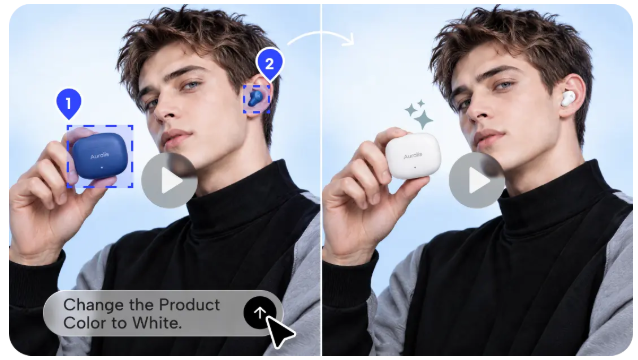
Conversational editing introduces another interesting possibility. Rather than adjusting every individual element manually, a creator can describe a specific revision, such as changing a headline, modifying a color, or slowing down a transition.
Still, human review remains essential. Designers must check readability, timing, visual balance, accuracy, and brand consistency before delivering finished work.
AI should make creative experimentation more accessible, not remove the thinking that makes good design effective.
Common Mistakes That Weaken Animated Content
Even technically impressive animations can fail when the design lacks a clear purpose.
One common mistake is excessive movement. Adding transitions to every object may make a composition appear busy and distract viewers from the main information. Movement should guide attention rather than compete for it.
Another problem is poor timing. Important text needs enough time to be read, and complex diagrams should not reveal multiple unfamiliar elements simultaneously.
Inconsistent typography and color choices can also weaken a visual identity. When different sections of an animation use unrelated design styles, the overall presentation may feel disconnected.
Finally, designers sometimes focus too heavily on appearance while overlooking factual accuracy. This is particularly important when creating animated charts, statistics, and product demonstrations. Every displayed figure and claim should be checked before publication.
A successful animation is therefore the result of several connected decisions, not simply the application of visual effects.
The Future Belongs to More Thoughtful Visual Communication
As digital content continues to expand, audiences will encounter more animated advertisements, interactive presentations, educational explainers, and branded visual experiences. AI-assisted production is likely to make experimentation easier, giving individuals and smaller teams access to creative approaches that once required specialized production resources.
Yet the growing availability of animation tools will also raise expectations. When almost anyone can produce moving graphics, originality, clarity, and storytelling will become increasingly important ways to distinguish professional work.
The most effective creators will be those who understand when movement adds value and when simplicity communicates more effectively.
Ultimately, motion design is not about filling a screen with activity. It is about giving an idea a visual structure, allowing information to unfold naturally, and creating an experience that audiences can understand without unnecessary effort. Technology may change how animations are produced, but the ability to communicate a meaningful idea will remain at the heart of great design.
Frequently Asked Questions
- What is motion design used for?
Motion design is used to communicate information through animated graphic elements. Common applications include advertisements, brand introductions, educational explainers, animated charts, product demonstrations, and social media content.
- How is motion graphics different from traditional animation?
Motion graphics generally focus on moving graphic elements such as text, shapes, charts, logos, and illustrations. Traditional animation can involve broader character-driven storytelling, including detailed actions, performances, and fictional narratives. The two disciplines can overlap.
- Can motion graphics improve business presentations?
Yes. Animated diagrams, charts, headlines, and visual transitions can help organize information and guide an audience through important points. The animation should support the presentation rather than distract from its message.
- Is AI useful for creating motion graphics?
AI can help translate creative descriptions into animated compositions, explore different visual styles, and simplify certain production and revision tasks. Human direction remains important for accuracy, timing, readability, and overall design quality.
- What should beginners consider before creating an animated project?
Beginners should first identify the main message, intended audience, preferred visual style, and platform where the animation will appear. Planning these elements before production helps prevent unnecessary effects and keeps the final composition focused.
- Can motion graphics be used for social media marketing?
Absolutely. Animated promotional messages, product highlights, typography, and short explainers can make social media content more visually engaging. The format and duration should be selected according to the platform and audience.
Write and Win: Participate in Creative writing Contest & International Essay Contest and win fabulous prizes.
About the Author