Reliable electricity has become an essential part of modern life rather than a convenience. From working remotely and attending online classes to preserving food, powering medical devices, and staying connected during emergencies, households now depend on a consistent supply of electricity throughout the day. At the same time, growing energy demand, extreme weather events, and aging power infrastructure have increased interest in solutions that improve energy resilience.
Battery storage has emerged as an important technology because it allows electricity to be stored and used when it is needed most. Whether paired with solar panels or connected to the grid, battery systems help households and businesses make better use of available energy while reducing disruption during outages.
Understanding how battery storage supports energy independence can help property owners make informed decisions based on their energy needs, budget, and long-term goals. This guide explains the key concepts, practical applications, and important considerations behind battery storage in an educational and balanced way.
What Does Energy Independence Really Mean?
Energy independence does not necessarily mean disconnecting completely from the electricity grid. Instead, it refers to reducing reliance on external power sources by generating renewable energy, storing excess electricity, and using that stored power when it is needed most. For many households, the goal is greater energy resilience and control rather than becoming fully off-grid.
A grid-connected home with battery storage can continue powering essential appliances during certain outages while still benefiting from the reliability of the public electricity network when additional power is required. This balanced approach often provides greater flexibility, reliability, and cost-effectiveness than relying on a single energy source alone.
For example, a home with rooftop solar panels may generate surplus electricity during sunny afternoons. Rather than exporting all of that energy, a battery stores part of it for evening use, increasing solar self-consumption and reducing dependence on grid electricity without requiring a completely off-grid lifestyle.
Why Reliable Electricity Matters More Than Ever
Electricity supports almost every aspect of daily life. Remote employees rely on stable internet connections, students participate in virtual learning, and many households use smart devices that depend on continuous power. Even short interruptions can affect productivity, communication, and everyday routines.
Reliable electricity is equally important for health and safety. Refrigerators preserve food and medication, medical equipment may require uninterrupted power, and emergency communication devices become especially valuable during severe weather events or natural disasters. Businesses also depend on electricity to process payments, operate security systems, and maintain customer service.
As renewable energy adoption continues to grow, battery storage provides an additional layer of flexibility by helping households use electricity more efficiently rather than simply consuming it as soon as it is generated. This ability to shift energy use from one time of day to another is becoming increasingly valuable in modern energy systems.
How Battery Storage Supports Everyday Life
Battery storage allows electricity to be saved for later use instead of being consumed immediately. During normal conditions, stored energy can supply household appliances when electricity demand is higher or when solar panels are no longer producing power. During outages, a properly designed battery system may continue powering selected household circuits, helping reduce disruption until grid electricity returns.
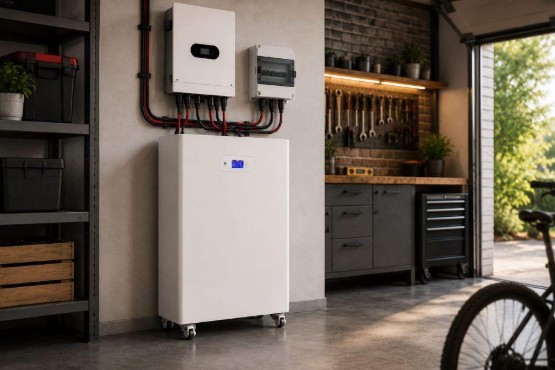
Unlike a portable power station designed for charging a few devices, a whole home battery backup is engineered around household electrical circuits, expected appliance loads, and the length of time essential systems need to remain operational. Choosing between these options depends on energy requirements rather than simply battery size.
| Feature | Portable Power Station | Whole-Home Battery System |
| Typical use | Small electronics and portable appliances | Essential or entire household circuits |
| Backup duration | Short-term | Depends on battery capacity and household demand |
| Installation | Plug-and-use | Professionally installed |
| Best suited for | Temporary portable power | Long-term residential energy resilience |
How Battery Storage Supports Everyday Life (Continued)
Beyond providing backup electricity during outages, battery storage helps households manage energy more efficiently throughout the day. Instead of relying entirely on grid electricity during peak evening hours, a battery can supply stored energy generated earlier or charged when electricity demand was lower. This flexibility can improve overall energy resilience while making better use of available power resources.
Battery storage also supports essential household functions during unexpected interruptions. Lighting, internet routers, refrigeration, security systems, and selected medical equipment can often remain operational when a system has been properly designed around the home’s critical loads. Rather than attempting to power every appliance continuously, many homeowners prioritize the equipment that keeps daily life running safely and comfortably.
As energy needs change over time, modular battery systems offer additional flexibility. Some homeowners begin with a smaller installation that covers their most important electrical circuits and expand capacity later as their energy consumption increases. This approach allows investments to match changing household requirements instead of purchasing unnecessary capacity from the beginning.
Battery Storage and Solar Self-Consumption
Solar panels usually generate the most electricity during the middle of the day, when many households are using relatively little power because people are away at work or school. Without battery storage, excess electricity is often exported to the grid, where its value depends on local utility policies and net metering arrangements.
Battery storage improves this process by capturing surplus solar energy and making it available when demand is higher, such as during the evening, early morning, or cloudy periods. This practice, known as solar self-consumption, allows homeowners to use more of the renewable electricity they produce instead of relying on grid power after sunset.
Because household energy demand rarely matches solar production perfectly, battery storage helps bridge this timing gap. While it does not generate additional electricity, it stores available energy for later use, improving overall efficiency, increasing energy resilience, and helping households make better use of their solar investment throughout the day.
Battery Storage for Rural and Off-Grid Communities
Battery storage plays an especially important role in rural and remote locations where electricity service may be less reliable or where extending the power grid is difficult and expensive. Farms, remote homes, cabins, and agricultural properties often experience unique energy challenges that differ from those of urban households.
In these settings, batteries paired with renewable energy systems can provide dependable electricity for water pumps, lighting, communications equipment, refrigeration, workshops, and other essential operations. Even where the grid is available, battery storage can reduce the impact of temporary outages caused by storms or infrastructure maintenance.
Off-grid systems require particularly careful planning because they depend entirely on locally generated electricity. System designers must consider seasonal energy production, weather variations, appliance usage, and future energy demands to ensure sufficient storage capacity throughout the year. Proper planning is often more important than simply installing the largest battery available.
Choosing the Right Battery Size
Selecting the right battery involves understanding how electricity is actually used rather than focusing only on battery capacity. A larger battery may appear attractive, but it is not always the most practical or cost-effective solution.
Several factors influence battery sizing, including:
- Daily electricity consumption
- Number of essential appliances requiring backup
- Expected backup duration
- Solar generation capacity
- Budget and future expansion plans
Many homeowners benefit from choosing a modular system that can be expanded later if their energy needs increase. This approach allows the battery system to grow alongside changes such as purchasing an electric vehicle, installing additional solar panels, or expanding the household.
Professional load assessments also help prevent oversizing or undersizing. A carefully matched system often delivers better long-term performance than selecting the largest available battery without considering actual energy requirements.
Household vs Commercial Battery Storage
Residential and commercial battery systems are designed for different operating conditions and energy demands. Homes generally focus on supporting essential appliances, improving solar self-consumption, and maintaining electricity during outages. Commercial properties, on the other hand, may require significantly higher capacities to support larger electrical loads, longer operating hours, and business continuity.
For example, a 50kwh battery is generally more suitable for large villas, farms, off-grid properties, or light-commercial facilities than for a typical apartment or small family home. Selecting battery capacity should always reflect actual energy consumption, operational priorities, and future growth rather than assuming that larger systems automatically provide greater value.
Why Professional System Design Matters
Battery storage performs best when the entire system is designed around the property’s electrical requirements. Qualified installers evaluate household energy usage, backup priorities, solar generation, electrical safety standards, and future expansion opportunities before recommending a suitable solution. This planning helps ensure reliable operation while avoiding unnecessary costs or performance limitations.
Manufacturers such as Avepower also support installers and energy professionals by providing battery technologies, technical documentation, and educational resources that help systems be configured appropriately for residential and commercial applications. Regardless of the manufacturer selected, professional design, proper installation, and ongoing maintenance remain essential for achieving safe, reliable, and efficient long-term battery performance.
Common Misconceptions About Battery Storage
Battery storage is becoming more common, but several misconceptions can lead to unrealistic expectations. Understanding the facts helps homeowners choose a system that matches their actual energy needs.
- A battery provides unlimited electricity: Every battery has a fixed capacity, so backup time depends on both battery size and household energy use.
- Solar panels work automatically during blackouts: Most grid-connected solar systems shut down during outages unless they include compatible battery backup equipment.
- A larger battery is always better: Bigger systems are not always the best choice. Proper sizing based on energy consumption usually provides better value.
- Battery storage eliminates electricity bills: Batteries can reduce grid reliance, but overall savings depend on energy usage, solar generation, electricity prices, and system design.
Key Takeaways
Battery storage is becoming an important part of modern energy management because it improves flexibility, resilience, and the efficient use of renewable electricity. However, achieving greater energy independence is not simply about installing the largest battery available. Long-term performance depends on matching battery capacity with actual energy needs, integrating renewable generation effectively, and designing the system around the property’s electrical requirements.
Key points to remember:
- Energy independence is about reducing grid reliance, not necessarily disconnecting from it.
- Battery storage allows electricity to be used when it is needed most.
- Solar panels and battery storage work best together.
- Proper battery sizing is more important than maximum capacity.
- Professional planning improves safety, reliability, and long-term performance.
Final Thoughts
Battery storage is playing an increasingly important role in supporting reliable electricity, renewable energy adoption, and greater household resilience. Whether the goal is maintaining essential power during outages, increasing solar self-consumption, or improving long-term energy security, every property benefits from a solution that reflects its unique energy requirements rather than a one-size-fits-all approach.
Homeowners and businesses considering battery storage should consult qualified installers who can assess energy usage, backup priorities, and future expansion needs before recommending a suitable system. Manufacturers such as Avepower also provide educational resources and battery storage solutions that support residential, commercial, and off-grid energy applications, helping industry professionals design systems that meet a wide range of requirements.
Frequently Asked Questions
1. How does battery storage improve energy independence?
Battery storage allows electricity to be stored and used later, reducing reliance on the power grid and improving access to electricity during outages or periods of high demand.
2. Can a battery power an entire home?
Yes, some systems can power an entire home, but this depends on battery capacity, household electricity consumption, and which appliances are prioritized during backup operation.
3. Does battery storage work without solar panels?
Yes. Battery systems can charge from the electricity grid where regulations permit. However, combining battery storage with solar panels allows renewable electricity to be stored and used after sunset.
4. How long can a home battery provide backup power?
Backup duration varies depending on battery capacity and household electricity demand. Conserving energy by prioritizing essential appliances generally extends operating time.
5. Is a larger battery always better?
Not necessarily. The most effective battery is one that matches the property’s energy consumption, backup expectations, available budget, and future expansion plans.
Write and Win: Participate in Creative writing Contest & International Essay Contest and win fabulous prizes.
About the Author