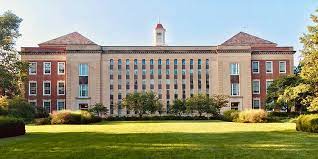
Oxford Universities in USA
When you think of a school that’s the best of the best, with a history stretching back forever and graduates who’ve changed the world, the University of Oxford is the one that stands out. It’s in the lovely town of Oxford, England, where old stone buildings and winding streets make you feel like you’ve stepped into a storybook. People from all over the planet—students, teachers, dreamers—come here because it’s famous for being amazing. Let’s take a closer look at how it got started, what you can study, some of the big names who went here, and why it’s such a special place. I’ll keep it simple and real, like a friend telling you about something cool.
How It All Started
Oxford’s beginning is a bit fuzzy, which makes it even more interesting. No one can say, “It started on this exact day,” but folks think teaching kicked off around 1096. Back then, smart people started gathering in this little town to talk about big ideas, share what they knew, and learn from each other.
It wasn’t some grand plan—it just happened because people were hungry to understand the world. By 1209, things got messy when the townsfolk and the students clashed, and some of the teachers took off to start a new school in Cambridge, which became Oxford’s lifelong rival. But Oxford didn’t give up. It kept growing, getting love from kings and even the Pope as the years rolled by.
In the 1200s, small colleges started popping up—like University College in 1249, Balliol around 1263, and Merton in 1264. These were the building blocks of Oxford’s famous college system, where each college runs itself but is still part of the big university family. It’s a setup that’s pretty unique, and it’s been a huge part of what makes Oxford tick for centuries.
Over time, more colleges joined in, and today there are 38 of them, plus six private halls, all with their own personalities. You’ve got places like Magdalen with its tall, pointy towers, or St. Catherine’s with a more modern look. Walking around, you can see how Oxford has changed from the Middle Ages to now. But the real magic isn’t in the stones—it’s in the learning that happens inside.
What You Can Study There
Oxford has tons of courses, and they’re not easy, but they’re awesome. The way they teach is special too. Instead of sitting in a giant room with a hundred other kids, you get something called tutorials. That’s when you sit down with a super-smart teacher—sometimes just you, sometimes with one other student—and talk about what you’re learning. It’s like a brain workout every time. You have to know your stuff because the teacher will ask hard questions, and you can’t just nod along. It’s tough, but it makes you think in ways you never did before.
The subjects you can pick from are all over the place. There’s Classics, which is all about ancient Greece and Rome. You read old stories by people like Homer and learn languages like Latin or Greek—it’s a lot, but it’s perfect if you’re into history. Then there’s PPE, which stands for Philosophy, Politics, and Economics. It’s a big deal because it mixes deep thinking with stuff that affects the world today, and tons of leaders have studied it. Science is a huge part of Oxford too. A guy named Howard Florey helped invent penicillin here, saving millions of lives, and Stephen Hawking started figuring out the universe while he was a student.
You can also go for law, medicine, English, or math. The English course is wild—you start with really old stuff like Beowulf, then move to modern writers like Virginia Woolf. You write a bunch of essays, and it’s hard work, but you come out knowing so much. If you like making up stories, there’s even a creative writing program, which is pretty rare for a place this old. No matter what you choose, Oxford doesn’t let you coast. They want you to dig in, ask questions, and come up with your own ideas. That’s why people who graduate from here are ready for anything.
Famous People Who Went to Oxford
The list of people who’ve studied at Oxford is like a highlight reel of history. Take J.R.R. Tolkien—he went here and got all kinds of ideas for The Lord of the Rings from the old buildings and smart conversations. His buddy C.S. Lewis was here too, and that’s where he dreamed up Narnia. Those two alone show how Oxford can spark creativity that lasts forever.
Then there’s the leaders. More than 30 UK prime ministers came from Oxford—people like William Gladstone way back when, and more recent ones like Tony Blair and Boris Johnson. It’s not just British folks either. Bill Clinton, who became president of the United States, studied here as a Rhodes Scholar, and Indira Gandhi, who led India, was an Oxford student too. In science, Stephen Hawking worked on his big ideas about space here, and Dorothy Hodgkin figured out how molecules are built, winning a Nobel Prize for it.
Writers love Oxford too. Oscar Wilde sharpened his funny, clever style here, and Philip Pullman wrote His Dark Materials with Oxford’s dreamy vibe in mind. Even movie stars like Hugh Grant and Emma Watson started out as Oxford students before hitting the big screen. It’s crazy to think one school could produce so many game-changers, but that’s Oxford for you—it takes regular people and turns them into something huge.
Why It’s Such a Big Deal
So why does everyone talk about Oxford like it’s the ultimate? It’s not just the famous names or the pretty buildings, though those are a big part of it. It’s about how long it’s been around—almost a thousand years—and how it’s been a place for big ideas the whole time. Things like the Magna Carta, which helped shape laws, got started with Oxford’s help. Scientists here pushed the world forward too, figuring out stuff that changed how we live.
Part of the magic is how hard it is. Getting in is a battle—you need awesome grades, a great application, and you have to shine in interviews that feel like a test of everything you know. Once you’re in, it’s non-stop work. You’re writing essays, reading piles of books, and talking about it all with people who know way more than you. It’s not a vacation—it’s a challenge, and that’s why it means so much when you make it through.
The colleges make it special too. Each one is like its own little world, with its own teachers, libraries, and hangout spots. You might eat dinner in a giant hall with candles and wooden tables, or chill with friends in a small room by a fireplace. It feels close-knit, even though the whole university is massive. And when you graduate, that Oxford name sticks with you. Bosses, other schools, even governments—they all know it means you’re the real deal. Plus, you’re part of a club of people who’ve been making waves forever.
Keeping It Going
Oxford isn’t perfect, and it knows it. People used to say it was too fancy or only for rich kids, and it’s had some growing pains. But it’s changing—slowly, sure, but it’s happening. More students from different places are getting in now, thanks to scholarships and programs that reach out. It’s also working on today’s big problems, like climate change, new tech, and health stuff, so it’s not just living in the past.
At its core, Oxford’s greatness comes from the people—the students who study late into the night, the teachers who push them, and the graduates who take what they’ve learned and run with it. It’s not just a school—it’s a place that shapes you into something better. That’s why, after all these centuries, it’s still one of the most incredible places to learn in the world.
By: Pradyun Reddy Chintala
Write and Win: Participate in Creative writing Contest & International Essay Contest and win fabulous prizes.
About the Author