| Top 10 Technologies Tackling the World’s Most Critical Global Issues
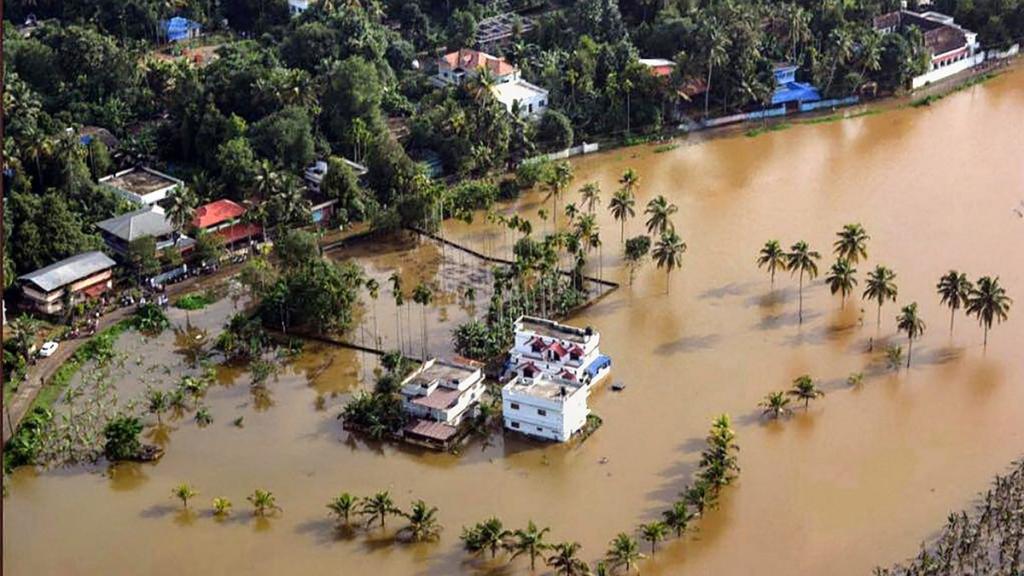
For the past seventy years, the world and humanity have developed at an incomprehensible rate. From walking on disorganised routes, we have progressed to travelling through a wide range of well organised transport systems. However, several serious issues have also emerged. From climate change to human rights violations, challenges that were unimaginable in the past now distress millions across the world. However as per the noble saying “Changes are inevitable!”, dark times are beginning to get illuminated with light rays of hope. Numerous initiatives, especially from technology oriented companies, are now developing solutions by which the globe can eradicate its agony. So in this essay let us explore and dive deep into the top ten technological innovations that are aiding us to resolve some of the most pressing and challenging global issues. Climate change:Climate change has become one of the most discussed global issues. Be it a journalist, an elderly reading a newspaper article or a child, a significant proportion of humans are aware of it. Adding on, all the governments and the global citizens are constantly striving to reduce carbon emissions by switching to renewable sources of energy and a sustainable lifestyle. However these collective efforts are not sufficient to resolve the issue, hence leading tech companies dedicated to developing a sustainable future are innovating systems like Carbon Capture Systems (CCS). CCSs involve transporting the captured CO2 emitted from industrial processes like cement manufacturing and fossil fuel burning, to underground storage sites. Although it raises safety concerns, this system ensures that the primary inducer of global warming is not released into the atmosphere in enormous quantities, hence reducing the impacts of it. Moreover, research suggests that these systems can last thousands of years, making it safe, reliable and practical. Furthermore CCS is becoming cost-effective stemming from innovations in such systems, attracting manufacturing industries across nations to capitalize on them, leading to a win-win situation for both the environment and for the company. Due to its promising capabilities and its ability to store millions of tons of CO2, it has become an effective solution for minimising the carbon footprint and for a more stable global temperatures and climatic conditions. Water scarcity:Despite the severity of climate change, scarcity of natural resources, particularly safe drinking water, persists to be an enormous challenge for the global community. Although awareness about efficient water usage has been improved globally, conserving water in countries such as India or the UK will not directly aid countries suffering from shortage. In the past, countries with scarce sources of water had only a narrow set of options; nevertheless, recent technological advancements like desalination plants powered by renewable sources of energy and Atmospheric Water Generators (AWG) support efforts to resolve this perilous issue. Although desalination plants have existed for centuries, integrating renewable energy, specifically solar power, has transformed it into a highly efficient and sustainable innovation. Researchers at MIT state that this particular innovation solves the crux with ordinary desalination of salt buildup and the high operational cost. The new innovative structure provides a uniform convection current which prevents salt formation resulting in lower maintenance cost. Furthermore, they state that a one square metre unit can provide enough water for a family while costing only four US dollars. Consequently the next innovation, the Atmospheric Water Generator (AWG) , is a system which condenses the moisture in air and provides clean drinking water. These systems work the most effectively in highly humid nations providing a consistent and reliable source of safe drinking water. This outstanding technology has already been implemented in various countries due to its high reliability and extremely low cost. Pollution:Although climate change and water scarcity are often considered more severe, pollution remains the major factor that intensifies both issues. Despite the diligent efforts undertaken by the governments, this particular issue remains unresolved. In response, various technological systems have been developed. One such innovation is the AI powered waste management systems, which have specialised robotic arms and cameras to scan and sort the waste with extremely high accuracy helping to reduce landfills and the problems associated with it. An increasingly vital innovation is the biodegradable bioplastics, made from organic materials like corn starch, algae and even agricultural waste. These can decompose easily into water, carbon dioxide, and biomass by microbial action or enzyme activity, without releasing any toxic substances. Furthermore, usage of biodegradable plastics help us to solve the perilous issue of pollution in oceans and soil, reducing the disruption of food chain and microplastic contamination in food sources. Another promising innovation is the development of smog-reducing photocatalytic materials, a titanium dioxide infused material like paint or cement. This reacts with harmful air pollutants and smog producers, to produce nitrates, carbonates and water vapour. The broken down substances are relatively safer and reduce the air pollution significantly. War & Global conflict:As noted earlier, climate change, water scarcity and the issue of pollution can be detrimental, but they are not as lethal as wars and global conflicts. These events have increased at an alarming rate, directly affecting global peace and harmony. To reduce this devastating global issue governments, organizations and tech companies around the world have collaborated to develop technological solutions. One of such vital innovations is early detection and warning of conflict using Artificial Intelligence. Data such as troop movements, political tensions, public hatred expressed in social media platforms and historical relationships are being monitored by the AI system. In the case of abnormalities in the real time data, the United Nations gets notified, by which they initiate work towards mutual agreement between the conflicting countries, ensuring that no innocent lives are harmed. Another reliable innovation is humanitarian drones, which are not equipped with weapons but with life saving technology. They can be used to provide food and medicine to the survivors and notify their location to the rescue team, reducing the rescue time and fatalities during a war. Hunger & Food insecurity:Following our prior discussion, wars and conflicts often restrict people from receiving proper shelter, clothing and more importantly adequate nutrition. Beyond these, food insecurity persists throughout the world due to several factors such as income instability, poverty, escalating global food prices and inefficient agricultural practices. In response to this, global organizations and large technological enterprises are working together to provide immediate technological assistance. They have collaborated to develop AI based systems to predict the demand for perishable goods, to reduce resource wastage and prevent unintended loss. This further stabilizes the farmers’ income, ensuring consistent availability of food. Another ground breaking innovation is lab grown meat. It requires fewer natural resources, increasing the efficiency of production to provide a sustainable alternative for traditional livestock options. As this innovation advances it is expected to reduce the price of meat. The resources saved can be redistributed for the provision of balanced meals at a reduced price, reducing food insecurity and inequality in the global society. Global health crisis:All the issues being discussed in this essay are closely interlinked with our health. From climate change to food insecurity, each issue directly or indirectly influences our health in a negative way. Beyond these issues, several factors such as location, inadequate medical professionals and improper lifestyle are also worsening our health globally. To reduce these impacts, several technological solutions have been developed. One such revolutionary innovation is telemedicine and remote health monitoring systems. These technological systems remove geographical barriers, allowing even patients located in remote regions to consult with a highly specialised doctor in other parts of the world. Additionally, several nations are implementing these systems, to reduce fatalities and improve public health levels. Another groundbreaking innovation is AI based medical diagnostic systems. This assists doctors during healthcare workforce shortages to consult a large number of people in less time, ultimately reducing the long wait hours, fatality rates and even the operational cost of the hospital. Furthermore the innovation of wearable gadgets like smart watches and rings, has made it easier to track physical activities, monitor sleep quality, measure heart rate and oxygen levels, detect stress levels and even calorie intake. These measurements help individuals to adopt a healthier lifestyle, in which better sleep schedules, adequate physical activity and disciplined food pattern is ensured. Energy crisis:For the past few years, the concept of sustainability has attracted global attention. From all the governments to the United Nations itself, sustainability has developed into one of the primary goals. Furthermore several nations, organizations and technological companies have collaborated together to work on the first step towards sustainability, clean sources of energy. One of the most recent yet groundbreaking innovations is the development of small modular nuclear reactors (SMRs). SMRs are like a miniature version of conventional nuclear reactors. They are mass produced in a factory and shipped to the desired location to produce CO2 emission free energy. Moreover, due to its portability and its ability to produce vast quantities of carbon free energy, it has transformed into the ideal energy sources for remote regions and islands. Countries like the USA, UK , Canada, Japan and India are investing highly in the development of such systems. Another major advancement is the innovation of grid scale flow batteries. These batteries use liquid electrolyte to store massive amounts of electricity, for a prolonged period without losing a significant portion of it. This allows the electricity produced from renewable sources to be stored and discharged whenever needed. Due to its scalability, these systems are efficient enough to power even an entire district. Although several concerns arise like maintenance cost and usage of inefficient electrolyte compounds, consistent innovation and development in this field will transform flow batteries into one of the most efficient grid scale energy storage systems in the near future. Poverty & Economic inequality:Even though the world is rapidly changing and developing, the miserable situation of poverty and economic inequality are continuing to persist, assisted by many factors including unstable income and inadequate education, healthcare and job opportunities. In response, technological systems to reduce relative poverty and to improve the living condition of people have been developed. A key advancement among those is rapid development of digital finance. Digital finance systems include UPI (Unified Payment Interface), which has helped a considerable percentage of the low income population also to get access to digital banking services, proper documentation on income and expenditure aiding in their loan approval and many more. Moreover this has resulted in a substantial decrease in corruption worldwide. Another promising innovation is blockchain based microfinancing systems. These help to provide full transparency on every transaction, reduce the possibility of frauds and decrease interest rates due to the absence of intermediaries. Although this escalates the maintenance cost, the ability to empower vulnerable people like the poor and women makes it one of the best options to consider for developing towards an economically equal society. Human rights violation:Besides basic needs the first and foremost thing a person requires is none other than human rights. However it is deeply distressing to state that this primary need is often left unattended and violated for the majority of the vulnerable population throughout the globe. From racism to faith based bias, discrimination and partiality is inducing mental hardship and is obstructing global development. In acknowledging this devastating issue technological assistance is being developed such as block-chain based identity protection and AI tools for detecting online abuse. As we learnt earlier, block-chain based systems provide a decentralised tamper proof system in which data is being stored, hence it cannot be manipulated or deleted once stored. This huge feature allows billions of peoples’ personal information and identities to be stored in a more safe and secure manner. Moreover this provides solid evidence for refugees and people in need of government subsidies to claim them hassle free, promoting ethical behaviour and equality among the society. Another critical innovation with the help of artificial intelligence is the development of AI based systems to detect online abuses. The emergence of AI has made analyzing vast amounts of data much easier, hence major online platforms are using it to detect any abnormalities by verifying social media contents, messages and images. Developers assure that these systems will significantly aid in reducing the digital abuse of vulnerable groups and also help in faster rescue of human trafficking. Misinformation and Cybersecurity:As the good old saying goes “The greater the power, the greater the danger”, every major groundbreaking technological advancement opens millions of new ways to use that for a negative outcome to emerge. Likewise the recent yet, one of the most revolutionary advancements in the realm of artificial intelligence has introduced countless new ways to spread misinformation and to threaten the cybersecurity of billions across the globe. However, like they say a diamond only can be cut by a diamond, technological advancements are being made with the help of AI itself to reduce the negative impact of it. One such system is the AI powered deep fake detection and verification systems. These are used in social media platforms, news organizations and even governments to detect any hyper-realistic deep fake video, conveying misinformation of any kind (including political misinformations) by fact checking those. Moreover the innovation of cryptographic content verification has further made this process of verification failproof. This system embeds a digital signature into each piece of photos, videos and documents, making it much easier to scrutinize the videos online, further improving the genuinity of the contents visible on the internet. Conclusion:These technological innovations are just tip of the iceberg. Moreover these are not just another innovation, but the baseline for the development of a much more equitable, peaceful and discrimination free society. It is therefore our responsibility to encourage such advancements to grow. So let us all co-ordinate together in developing the world into a safer, sustainable and responsible planet. By: S. Paarthivkumar Write and Win: Participate in Creative writing Contest & International Essay Contest and win fabulous prizes. |
About the Author