Neuroscience
“Success in creating effective AI could be the biggest event in the history of our civilisation, Or the worst. We just don’t know. So we cannot know if we will be infinitely helped by AI, or ignored by it and side-lined, or conceivably destroyed by it.”
-Stephen Hawking
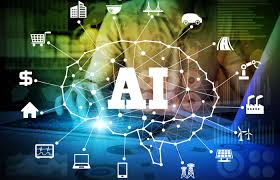
Artificial Intelligence (AI) refers to a computer program’s capability to perform tasks or undertake reasoning processes related to human intelligence. Today AI is growing in leaps and bounds, and the day is not far when the existence of human-like machines will be the new normal. AI software and hardware advancements are set to assist humans in ways never thought of before. However, there is also a lurking fear that AI may even surpass the human brain and gain cognitive thinking abilities in a big way to the detriment of humanity.
Advantages Of AI Advancements in the AI field have indeed made human life easy. One popular and common use of AI algorithms in daily life is the Google Translate feature, which recognises speech or text and provides its appropriate translation. Apple’s Siri and the Global Position System (GPS) are two other beneficial products of Artificial Intelligence. In addition, robotic AIs such as the Roomba robots clean floors, while production companies have Baxter robots on manufacturing lines. For crowd management, there is AI-based surveillance technology like the one used in Ram Mandir at Ayodhya to predict and manage crowds, thus avoiding commotions and stampedes.
Some of the significant advantages of AI are: Reduction in human error: One of the major advantages of Artificial Intelligence is that it can significantly reduce human errors and increase accuracy and precision. The decisions made by AI are based on data previously gathered and a set of algorithms. When programming errors are minimal, the errors can be reduced to nil. We can reduce human error through AI in the medical field by using robotic surgery systems, which can perform complex procedures with precision and accuracy, reducing the risk of human error and improving patient safety and healthcare.
Use of AI-enabled robots to carry out hazardous tasks: By use of AI, humans can overcome risks by letting AI-enabled robots do dangerous tasks such as defusing a bomb, exploring the deepest parts of oceans, space explorations, enemy area surveillance, etc. AIenabled robots are much faster than humans and perform multiple tasks at a time with accurate results. They can even handle tedious and repetitive jobs easily with the help of AI algorithms—round the clock without a break. Using AI and natural language processing, online customer support chatbots provide instant assistance to customers anytime and anywhere.
They can answer common questions and resolve queries at the click of a button. Aid in new inventions: In practically every field, AI is the driving force behind numerous innovations, aiding humans in resolving the most challenging issues. The technology of self-driven cars, being further developed by various companies such as Tesla, Google and Uber, is a recent example wherein a combination of cameras, sensors and AI algorithms are used to navigate roads and traffic without human intervention. Impartial decisions: Human beings are driven by emotions, whereas AI is devoid of emotions and highly practical and rational in its approach.
A big advantage of Artificial Intelligence is that it has no biased views, ensuring accurate and impartial decision-making. AI-powered recruitment systems screen job applicants based on pre-programmed skills and qualifications rather han demographics, which helps eliminate bias in the hiring process, leading to an inclusive and more diverse workforce. Performing repetitive tasks: Many repetitive tasks of our daily lives, such as checking documents for flaws and mailing thank-you notes, can be carried out using Artificial Intelligence-enabled tools that efficiently automate these menial chores. AI-enabled robots in manufacturing assembly lines can handle repetitive tasks such as welding, painting and packaging with high accuracy and speed, reducing costs and improving efficiency.
Usefulness in daily applications: We now use a variety of AI-enabled applications such as Google Maps, Alexa, Siri and Cortana for making calls, responding to emails, and knowing weather conditions, etc. Medical applications: AI has also made significant contributions to the field of medicine, with applications ranging from diagnosis and treatment to drug discovery and clinical trials. AI-powered tools can help doctors and researchers analyse patient data, identify potential health risks, and develop personalised treatment plans. This can lead to better patient health outcomes and help accelerate the development of new medical treatments and technologies. Disadvantages Of AI There are some concerns about the future effects of AI technology.
It is feared that AI-based technologies and products can significantly replace humans and lead to unemployment in a big way, particularly in the industrial sector. Another concern is the safety and privacy of data collected by companies developing Artificial Intelligence technologies based on Internet user experiences. Artificial Intelligence is bound to have many negative consequences, some of which are as follows: AI bias: Since humans build AI algorithms, they can have builtin biases by those who either intentionally or inadvertently introduce them into the algorithm. If AI algorithms are built with a bias, they will produce biased results. Unemployment: With the proliferation of AI machines, a large number of jobs currently performed by humans will be taken over by machines, leading to unemployment.
Requirement of global regulations: With the spread of AI technology, there will be a requirement for new laws and regulations to allow safe and effective global interactions. Since today’s world is like a well-integrated ‘global village’, the actions and decisions regarding Artificial Intelligence in one country could also adversely affect those in other parts of the world. Accelerated hacking: With AI automation, cyber crimes such as phishing and hacking may become difficult to detect and may increase manifold. AI terrorism: There is also a grave concern for the potential use of AI in terrorism. For example, AI-enabled drones can be increasingly used by terrorists to launch attacks remotely. No creativity: A big disadvantage of AI is that it cannot learn to think outside the box.
AI is capable of learning over time with pre-fed data and past experiences but cannot be creative in its approach. No ethics and feelings: Ethics, feelings and morality are important human features that are difficult to incorporate into any AI-based machine. AI’s rapid progress has raised concerns that one day, AI will grow uncontrollably, eventually wiping out humanity. This moment is referred to as the ‘AI singularity’. In addition, neither computers nor other machines have feelings. Humans function as a team, and team management is essential for achieving goals.
There is no denying that robots are superior to humans in a range of activities. But it is also true that human consciousness, emotions and creativity cannot be replaced by computers. Artificial Intelligence has come a long way and is now one of the most advanced research fields of technology that aims to have machines perform independently without human control. The current level of AI development boasts a few tasks that require negligible human input but solve complex problems. AI has many uses, such as medical diagnosis and online translations, and is a good precision tool that makes it extremely useful to humans.
However, Artificial Intelligence technology is also feared to have a huge negative impact in the future as machines are predicted to gain consciousness to the extent that they start competing with humankind. the India Government should establish more research centres and educational institutions to nurture their creative minds because today’s students are tomorrow’s leaders. AI has provided an opportunity for the country to showcase its advancements as India has completed 75 years of its Independence, entered the transformative ‘Amrit Kaal’, and got the G-20 presidency. India can become an AI powerhouse if we navigate the middle path and use Artificial Intelligence better.
By: Archanaa P
Write and Win: Participate in Creative writing Contest & International Essay Contest and win fabulous prizes.
About the Author