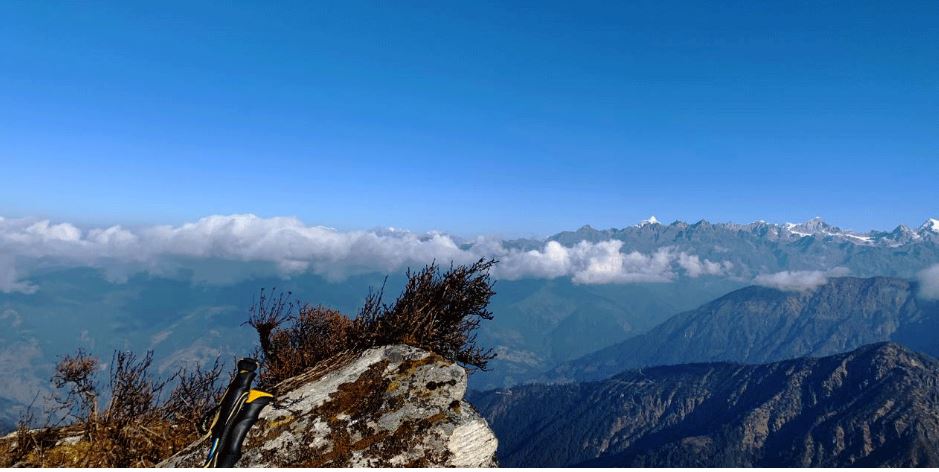
Tucked in the lower Solukhumbu region of Nepal, the Pikey peak Trek is one of the most underrated, however significantly fulfilling Himalayan ventures. This path offers a true social encounter, jaw-dropping all encompassing views of the world’s tallest peaks, and a tranquil elective to the swarmed Everest Base Camp course. Rising to a rise of 4,065 meters, Pikey peak is said to be one of Sir Edmund Hillary’s favorite perspectives, and for great reason. From its summit, you can capture a clearing sea of eight of Nepal’s 8,000-meter giants—including Everest, Kanchenjunga, Lhotse, and Makalu—glowing like firmament gatekeepers over the clouds.
But what really sets the Pikey peak Trek separate is not its vistas, but its social abundance. The path winds through conventional Sherpa towns, centuries-old cloisters, pine and rhododendron timberlands, and open ridgelines. Whether you pick for the full 7–9 day Trek or select the shorter Pikey peak Trek 4 Days schedule, this path presents you to the soul of the Sherpa heartland without the need for a long time commitment or extraordinary elevation acclimatization.
Discovering Pikey peak:
Unlike the more commercialized courses of the Khumbu Valley, the Pikey peak Trek is still generally obscure to numerous worldwide trekkers. Beginning from either Dhap or Jiri, the path passes through farther towns like Jhapre, Loding, and Junbesi—villages that have kept up their social immaculateness in spite of Nepal’s booming tourism industry.
Trekking to Pikey peak is as much an otherworldly and social travel as it is a characteristic one. Buddhist supplication banners shudder in the breeze, antiquated mani dividers line the way, and covered up cloisters roosted on hills offer knowledge into the profoundly otherworldly Sherpa way of life. The local people you meet are warm, inviting, and energetic to share stories, tea, and chuckling with visitors.
The path itself is generally direct, with a few challenging climbs adjusted by long stretches of slow risings and plummets. This makes it open to most trekkers, counting fledglings and families, particularly those looking for a more quiet involvement in the Himalayas.
Highlights of the Pikey peak Trek
The trip to Pikey peak is filled with minutes that wait in memory long after the Trek closes. The dawn view from the summit is without a doubt the greatest highlight. Standing on the peak some time recently first light, wrapped in layers and expectation, trekkers are remunerated with a breathtaking scene as the to begin with beams of daylight bathe Everest, Thamserku, Nuptse, and far off Annapurna in a brilliant glow.
The Trek moreover incorporates a visit to Junbesi, one of the most seasoned Sherpa settlements in the region. Here lies the shocking Thupten Chholing Religious community, domestic to hundreds of nuns and ministers. Going by the cloister offers a special chance to watch religious life, listen to melodic chants resounding through supplication corridors, and pick up understanding into Tibetan Buddhism.
Another highlight is the forested path segment between Jhapre and Lodging, particularly amid spring when rhododendrons sprout in crazy color. These woodlands are moreover domestic to Himalayan natural life like ruddy pandas, fowls, and langurs, including a touch of wild to the social immersion.
Pikey peak Trek 4 Days:

For those brief on time or looking for a reasonable Trek that doesn’t require two weeks off work, the Pikey peak Trek 4 Days schedule offers a condensed adaptation of the classic Trek without compromising on involvement. Beginning from Dhap, this schedule leads you through Loding and to the summit of Pikey peak some time recently plummeting to Phaplu or Salleri for the return Trek.
Day 1 starts with a picturesque drive from Kathmandu to Dhap, taken after by a tender Trek to Jhapre, a little town with fabulous views of Everest and encompassing peaks. The moment day pushes ahead to Loding or Pikey Base Camp, with the path slowly climbing through rhododendron and pine woodlands, and periodic yak pastures. The third day is the crown jewel—an early morning climb to the summit for dawn, at that point a plummet toward Junbesi or another adjacent town. The last day sees you heading back to Phaplu or Salleri for a jeep or flight return to Kathmandu.
Though brief, this 4-day trip includes all the fundamental components: mountain sees, Sherpa culture, forested trails, and tall Himalayan otherworldly existence. It’s perfect for those looking for an immersive Trek without wandering as well profound into tall elevations or long itineraries.
Why Trekkers Are Falling in Cherish with Pikey Peak
Trekkers who select Pikey peak are frequently blown away by how such a mind blowing involvement has remained beneath the radar. The reasons are numerous. To begin with and preeminent is the sense of isolation and tranquility the path offers. On the Pikey peak Trek, you’ll frequently have whole stretches of path to yourself, spare for the incidental neighborhood herder or donkey train.
Second is social genuineness. The Sherpa towns along the course are less touched by tourism and give honest to goodness neighborliness. You’ll remain in unattractive tea houses, eat conventional Sherpa suppers like rildok (pounded potato soup) and shyakpa (meat stew), and learn around traditions that have been passed down for generations.
Third is the openness of the Trek. Since the beginning point is reachable by street, there’s no need for household flights, which makes the Trek more budget-friendly and adaptable. Additionally, the greatest elevation of the fair over 4,000 meters decreases the hazard of height ailment, making it appropriate for a more extensive extent of hikers.
Finally, the seeds are unmatched. From Pikey peak, you can see Everest, Lhotse, Makalu, Kanchenjunga, Dhaulagiri, and Annapurna—all in a single clearing scene. Few places in the Himalayas offer such a show off with such a small elevation or crowd.
Culture and Individuals of the Solukhumbu Region
One of the greatest reasons to Trek through the Pikey peak region is the individuals. The path runs through the heart of Sherpa arrival, where Tibetan Buddhist culture is complicatedly woven into everyday life. Homes are embellished with supplication banners, religious communities sit discreetly over the towns, and local people frequently offer an inviting “Tashi Delek” as you pass.
In towns like Junbesi and Taktor, you can witness conventional Sherpa ways of life that incorporate yak grouping, butter churning, and cultivating on soak mountain inclines. You’ll moreover see delightfully carved mani stones and turning supplication wheels that indicate a profound otherworldly life.
Visitors are regularly welcomed to connect in on nearby celebrations or ceremonies when timing adjusts. Indeed a straightforward container of salt butter tea in a smoky kitchen can get to be a minute of social trade and warmth.
Accommodation and Nourishment on the Trek
Teahouse trekking is the standard on the Pikey peak path. These locally run lodges offer fundamental but comfortable settlement, regularly in twin-sharing rooms with thick covers. Toilets may be shared, and warming is regularly accessible as it were in the common eating area.
The nourishment, in any case, is shockingly generous and changed. Standard trekking suppers like dal bhat (rice with lentils and vegetables), noodles, hotcakes, and browned rice are common, along with nearby Sherpa dishes like thukpa (noodle soup) and tsampa porridge. Hot drinks, including ginger tea and masala chai, are ample and ideal for chilly evenings.
Best Time to Do the Pikey peak Trek
The best time for the Pikey Peak Trek is amid Nepal’s two fundamental trekking seasons: spring (March to May) and harvest time (September to November). Spring brings sprouting rhododendrons and mellow temperatures, whereas harvest time offers fresh discussion, clear skies, and the best perceivability for mountain views.
Winter (December to February) can moreover be an extraordinary time for isolation and snow-draped view, but get ready for colder temperatures and restricted administrations. Rainstorm season (June to Eminent) is not perfect due to rain, sloppy trails, and leeches, in spite of the fact that the region does see less trekkers amid this time.
Practical Data and Permits
To Trek Pikey peak, you’ll require a Gaurishankar Preservation Region Allow (GCAP) and a TIMS card (Trekkers’ Data Administration Framework). These can be gotten in Kathmandu through your trekking office or the Nepal Tourism Board.
No uncommon hardware like mountaineering adapt is required, but legitimate trekking equipment is fundamental. This incorporates tough climbing boots, warm layers, a resting sack evaluated for -10°C, and a headlamp. A trekking shaft, water purifier, and to begin with a help unit are too exceedingly recommended.
Guided vs Free Trekking
While it is conceivable to Trek freely, having a direct relationship significantly upgrades your involvement. A neighborhood direct can clarify social points of interest, encourage homestay encounters, help in crises, and guarantee your schedule runs easily. In addition, enlisting guides and doormen underpins the neighborhood economy and develops your engagement with the region.
Conclusion:
In a nation brimming with notorious trekking goals, Pikey peak remains a covered up gem. It’s a Trek that doesn’t request extraordinary perseverance or long unlucky deficiencies from your life. Instep, it welcomes you into calm woodlands, beneath shining stars, through profound religious communities, and up to a perspective that rivals any in the world.
Whether you set out on the Pikey peak Trek 4 Days schedule or the longer course, this trip through Nepal’s Sherpa heartlands clears out an engraving on the heart. It’s not a fair climb; it’s an involvement of peace, point of view, and significant social connection—making it a culminating enterprise for first-time trekkers, families, or prepared travelers looking for something different.
FAQs
1. How troublesome is the Pikey Peak Trek?
It’s considered direct and appropriate for tenderfoots. The trails are well-marked and don’t require climbing experience.
2. What is the most extreme height of the trek?
The most elevated point is Pikey peak at 4,065 meters.
3. Can I do the Trek without a guide?
Yes, but a direct improves the social encounter and guarantees safety.
4. Is the Pikey Peak Trek appropriate for children or more seasoned adults?
Yes, particularly the 4-day form, which is less strenuous and sensible for families and more seasoned trekkers.
5. What kind of convenience can I expect?
Basic tea houses with twin rooms, shared lavatories, and healthy home-cooked suppers.
Contact Details
Company address: Nepal Wilderness Trekking Pvt. Ltd.
Kathmandu, Nepal
Mobile & WhatsApp: +9779849693351
Email:info@nepalindependentguide.com
Website: https://www.nepalindependentguide.com
Write and Win: Participate in Creative writing Contest & International Essay Contest and win fabulous prizes.
About the Author