NIAMT: Where Tradition Meets Tomorrow
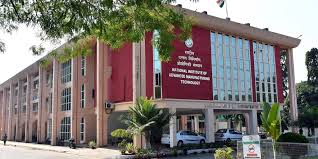
When I first came across the name National Institute of Advanced Manufacturing Technology, it didn’t immediately strike me as extraordinary. It sounded functional, may be even bureaucratic. But then, I dug deeper. What I found wasn’t just an institute- it was an ideology, forged through discipline, sustained by purpose, and driven by a quiet yet unshakable legacy. In a country overflowing with engineering colleges that chase trends, NIAMT, formerly known as NIFFT, stands out for being timeless.
A Legacy Forged in Fire ~
Established in 1966 in collaboration with international industrial experts and academic visionaries, NIFFT was built with a singular goal- to address the critical shortage of skilled manpower in the foundry and forge sectors. These are industries that form the molten core of industrial production- without which, modern infrastructure, defense, and machinery cannot breathe life.
“It is in the furnace that the steel gets its strength.” This is saying holds literal meaning at NIFFT. From the beginning, the institute didn’t focus on engineering in the abstract. It trained its students with their hands- on metal, on machines, on principles that remain vital regardless of which way the technological wind blows.
Reinventing Without Losing Its Soul ~
In 2021, the transformation from NIFFT to NIAMT wasn’t just a name change- it was a generational shift. Advanced manufacturing now includes AI-driven precision, additive technologies, green innovation, and intelligent robotics. NIAMT responded, not by abandoning its past but by expanding its future.
The upgraded curriculum now encompasses programs in Mechatronics, Materials Science, and Electronics & Computer Engineering, in addition to its iconic Foundry and Forge specializations. But ask any student or alumnus, and they’ll tell you- the soul of the institute remains its workshops, its metallurgical labs, and its lived, gritty experience of engineering.
Where Education is Precision, Not Performance ~
There is a unique absence of pretension on the NIAMT campus. Everything- from the modest classrooms to the well-used lathes in the shop floors- has a purpose. It is not an institute draped in marketing gloss. Instead, it lets its graduates speak for it.
Take for instance- Dr. Abhay Kumar, a NIAMT alumnus who now leads innovations in sustainable alloy design at a global aerospace company. His foundation in forge theory and practical metallurgy began not in a foreign lab, but in the heart of Ranchi, surrounded by clanging hammers and smelting pots.
NIAMT students don’t just learn about materials- they learn to respect them.
Industrial Relevance > Academic Prestige ~
Unlike institutions that polish resumes but forget real-world readiness, NIAMT ensures every student gets hands-on industrial exposure. From Bharat Forge to Tata Steel, from ISRO to HAL- NIAMT graduates are known to hit the ground running.
Internships, industry consultancies, live problem-solving labs, and real-time casting simulations are a part of everyday learning here. Placements might not fetch headlines, but they fetch depth- positions in core sectors, public enterprises, and global manufacturing chains.
“Education is not the learning of facts, but the training of the mind to think,” said Einstein. At NIAMT, it is also the training of the hand to build.
Where Humanities Matter in Hard Engineering ~
Often overlooked in technical institutes, the Humanities and Applied Sciences departments at NIAMT play a key role in shaping responsible professionals. Courses in environmental ethics, industrial law, and communication skills are not add-ons, they’re integrated necessities.
As machines grow smarter, human judgement becomes critical. NIAMT doesn’t forget this balance.
A Commitment Beyond Campus ~
In recent years, NIAMT has taken bold steps to extend its expertise beyond academia. Through collaborations with the Ministry of Skill Development, it has trained youth from under-resourced backgrounds in technical trades, hosted workshops on clean casting, and contributed to make in India efforts in rural zones.
Its research wings, though modest in size, are increasingly gaining national attention- particularly in the areas of energy-efficient forging, waste-minimizing casting, and biomaterial composites.
Tradition and Tomorrow: No Longer Opposites ~
Most engineering institutes today are in a race for rankings. NIAMT is in a race for relevance. It seeks not to impress, but to last. And in doing so, it earns a quiet kind of prestige- the kind that doesn’t need billboards.
From its roots in fire and metal to its future in AI and automation, NIAMT stands as a rare institution that preserves tradition without resisting change.
Its success lies in the balance it has achieved- honoring a deep industrial past while embracing a technologically fluid future.
Conclusion: A Personal Reflection ~
What drew me to NIAMT wasn’t just academics- it was its authenticity. Here is an institute that doesn’t scream innovation but practices it. It doesn’t chase acclaim but receives respect. In a world flooded with superficial upgrades and buzzword-driven education, NIAMT chooses substance. And as someone who believes in learning that leaves a mark- not just on a report card but on the world- I find this deeply inspiring.
NIAMT doesn’t produce engineers who want to escape India. It produces engineers who want to build it.
By: ISHANI GANGULY
Write and Win: Participate in Creative writing Contest & International Essay Contest and win fabulous prizes.
About the Author