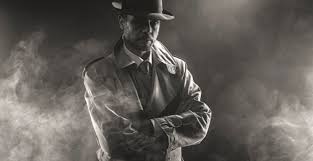
There’s a brass plate on a door in 1930s Calcutta that reads “Byomkesh Bakshi: Satyanweshi.” Not detective. Not investigator. Satyanweshi truth-seeker. Most people would call this pretentious. I think it’s the most honest thing about him.
See, the thing about Byomkesh Bakshi is that he shouldn’t work. A detective who gets married? Who has a kid? Who eventually makes more money from a publishing business than from solving murders? Who ages and worries about buying his wife a car? That’s not how detective stories are supposed to go. Sherlock Holmes stayed brilliant and eccentric and frozen in time for decades. Poirot remained Poirot. They were monuments, not men.
Byomkesh Bakshi decided to be human instead. And somehow, ninety-four years after his first case, he’s still here—more alive than most of the detectives who followed the rules.
The Bicycle Bell That Kills
Let me tell you about the first Byomkesh story ever written. Not the one everyone thinks is first—”Satyanweshi” from 1934, where he meets his chronicler Ajit. The actual first one: “Pother Kanta,” written in 1932 by Sharadindu Bandyopadhyay.
In it, people are dying in broad daylight on busy Calcutta streets. Steel gramophone needles piercing their hearts. No gunshots heard. No one sees anything unusual.
The weapon? A bicycle bell.
Someone had taken an ordinary bicycle bell—the kind that goes ring ring when a 8 year old thumbs it—and modified it into a spring-loaded air gun. The bell’s mechanism fired gramophone needles with enough force to punch through a human sternum. The genius part was that the bell still rang when you used it. So you cycle past your target, the bell rings cheerfully, and the needle fires. The sound masks the weapon. And because the needles were steel, not lead, they’d go clean through the body at close range, leaving no trace inside the victim.
In 2010, science publisher and researcher Anirban Mahapatra conducted an evaluation of the weapon, demonstrating that a highly tensioned spring-piston mechanism could achieve muzzle velocities of 15–20 meters per second.
This was 1932. This was the first time readers met Byomkesh. And this is what you need to understand about both the character and his creator: they took murder seriously every weapon in the Byomkesh stories—the porcupine spine shot through a blowpipe in “Shajarur Kanta,” the poison administered through eardrops in “Chiriyakhana,” the modified pen that created fake snake bite marks in “Durgo Rahashyo”—Bandyopadhyay researched the anatomy, the mechanics, the chemistry. He wanted murders that respected both the reader’s intelligence and actual science.
No wonder Satyajit Ray, who won a National Award for directing the 1967 Byomkesh film “Chiriyakhana,” loved these stories. Ray himself was a detective story writer. He recognized craftsmanship when he saw it.
The Mathematics Teacher’s Son
Nobody talks about the fact that Byomkesh’s father was a mathematics teacher who practiced Sankhya philosophy.
If that sounds random, it’s not. Sankhya is one of the oldest schools of Indian philosophy—it’s all about enumeration, discrimination, systematic reasoning. The word literally comes from “sankhya” meaning number. The philosophy says reality is made of two things: consciousness (Purusha) and matter (Prakriti). Liberation comes from discriminating between them, from seeing clearly what’s what.
Byomkesh’s father, Mahadev Bakshi, taught math at school and studied this philosophy at home. His mother came from a Vaishnavite family. When Byomkesh was seventeen, both parents died of tuberculosis. He finished university on scholarship—brilliant, orphaned, shaped by a father who saw the world as mathematical patterns and philosophical truth.
And that’s exactly why Byomkesh approaches investigations like solving equations. Why he counts, categorizes, enumerates. Why he refuses the word “detective”—because detectives work for money or glory or justice. Satyanweshi means something deeper. It means you’re seeking truth the way a mathematician seeks proof, the way a philosopher seeks liberation. Not because someone hired you. Because truth matters intrinsically.
The Detective Who Went Home
In “Arthamanartham,” Byomkesh meets a woman named Satyabati. She’s the sister of a murder suspect. Notice her name? Satyabati—”devoted to truth.” Of course that’s who he marries.
And he does marry her. They have a son they call Khoka. They worry about money. Byomkesh and his friend Ajit—the guy who writes up all these cases—they start a publishing business together. And here’s the part that would make Sherlock Holmes spin in his grave: the publishing business makes more money than solving murders ever does.
By the later stories—”Room Nombor Dui,” “Shajarur Kanta,” “Lohar Biskut”—Ajit isn’t even narrating anymore. He’s too busy running their company. Byomkesh is solving cases, sure, but he’s also aging. Moving from his rented three-story place on Harrison Road to buying land in Keyatala. Contemplating whether they can afford a car for Satyabati.
This is insane for 1930s-1970s detective fiction. Detectives didn’t do this. They stayed brilliant and eccentric and conveniently unencumbered by normal human concerns. Holmes had his violin and cocaine. Poirot had his mustache and fastidiousness. They were characters, fixed in amber.
Byomkesh had a mortgage.
And that’s the thing, by making him fully human, Bandyopadhyay made him even more compelling. Because now the truth-seeking actually costs something. When Byomkesh takes a case, he’s taking time away from his wife and kid. When he pursues justice outside the law (and he does, we’ll get to that), it’s not because he’s a superhuman intellect above normal morality. It’s because he’s a human being wrestling with what truth demands when the law fails.
When Truth and Law Aren’t Friends
Speaking of which: Byomkesh sometimes lets people die.
In “Balak Jasoos” and “Ret Ka Daldal” and a few other stories, when he’s figured out the truth but can’t prove it legally, he arranges things so the perpetrator becomes victim of their own weapon. He lets karma work through circumstance. Call it extrajudicial. Call it playing God. Call it what happens when someone really believes truth matters more than law.
This is where that Sankhya philosophy gets dark and interesting. Because if you really believe in discriminating between what’s real and what’s merely social convention—if you really think ultimate truth transcends human systems—then sometimes you’re going to make choices that look terrifying from the outside.
Holmes occasionally let criminals go. Poirot sometimes played judge. But they were still fundamentally on the side of legal justice. Byomkesh serves truth first. And sometimes truth demands blood.
That’s deeply Indian in a way Western detective fiction never quite manages. The space between dharma (righteousness) and kanoon (law). The understanding that cosmic justice and legal justice aren’t always the same thing. Byomkesh lives in that grey zone, and Bandyopadhyay never apologizes for it.
The Writer Who Left and Came Back
Sharadindu Bandyopadhyay wrote Byomkesh stories from 1932 to 1938, then stopped for thirteen years.
He went to Bombay, wrote screenplays for the early Bengali and Hindi film industries, made money, had a career. Byomkesh sat in a drawer. And people went crazy. They wanted more. Publishers begged. Readers demanded.
In 1951, Bandyopadhyay came back to Bengal and published “Chitrachor”. Byomkesh was back. And Bandyopadhyay kept writing him until 1970, when death caught him mid-sentence. Literally—his last story, “Bishupal Badh” (The Killing of Bishupal), remains unfinished.
Think about what that gap means. Bandyopadhyay didn’t need Byomkesh. He had other options. He chose to come back because the character had become bigger than the writer’s original intent. That’s rare. Most writers who abandon their famous creation do it out of resentment or exhaustion. Bandyopadhyay seems to have left and returned with genuine affection.
And in that return, he did something brilliant: he let Byomkesh age. The stories from the 1950s-1970s show a detective who’s lived through World War II, the Bengal Famine, Partition, Independence. He’s not frozen in time commenting on current events—he’s living through history, being changed by it. That’s what makes the Byomkesh stories valuable beyond just mysteries. They’re a chronicle of mid-twentieth-century Bengal, told through the eyes of someone actually experiencing it.
Why He’s Still Here
Ninety-four years. That’s how long Byomkesh has been around.
There have been twenty-plus films. Abir Chatterjee has played him seven times alone. There was the iconic 1993 Doordarshan series with Rajit Kapur that basically defined the character for an entire generation—people still argue whether any other actor has matched that portrayal. There’s a Malayalam audio drama series that adapted twenty-two novels and created eight original Byomkesh stories. There was a 2015 Bollywood film with Sushant Singh Rajput. There are Bengali TV series, Radio Mirchi adaptations, even a mobile game.
Satyajit Ray—the Satyajit Ray, the guy who made “Pather Panchali” and “Charulata”—directed a Byomkesh film and won a National Award for it. When someone of Ray’s caliber takes time from their own original work to adapt your detective, you’ve created something that transcends genre fiction.
But here’s what I think keeps Byomkesh alive: he’s not perfect. He’s not even particularly unusual. No cocaine habit, no obsessive quirks, no tragic backstory beyond losing his parents young (which was depressingly common in that era). He smokes, drinks milk tea, likes football—supports Mohun Bagan because he’s a ghoti, which is the kind of detail that only matters if you’re Bengali and know what that means. He quotes Sanskrit classics but isn’t a scholar. He’s educated and middle-class.
The genius is making a completely ordinary person extraordinary through their commitment to truth.
The Questions People Ask
“Isn’t he just Indian Sherlock Holmes?”
No. Surface similarities exist—brilliant detective, chronicler companion, emphasis on observation. But Holmes is fundamentally about the performance of genius. That’s why he needs the violin and the pipe and the dramatic deductions. He’s theater.
Byomkesh is philosophy, He’s not trying to dazzle. The Sankhya influence means he’s trying to see clearly. To discriminate between appearance and reality. That’s a completely different project than Holmes’s.
Plus, Holmes never had to worry about his kid’s school fees.
“Did Bandyopadhyay finish all the stories?”
Thirty-two complete, one unfinished when he died. “Bishupal Badh” ends mid-investigation. Some writers have attempted completions, but none are considered canon. Honestly, there’s something fitting about it. Truth-seeking, by definition, never really finishes.
“Why isn’t Byomkesh more famous internationally?”
Language barrier, mostly. These stories were written in Bengali. English translations only started appearing in quality form relatively recently. Also, Western publishing has historically ignored non-Western detective fiction unless it’s exotic enough to be “interesting” but not so foreign as to be challenging.
Within India, though? Byomkesh rivals Holmes in cultural impact. Bengali kids grow up with these stories the way British kids grew up with Holmes.
“Which adaptation should I watch first?”
The 1993 Doordarshan series. Rajit Kapur’s performance is definitive, and it’s the closest to the spirit of the original stories. Plus it’s on YouTube with subtitles.
What Makes Him Endure
Byomkesh Bakshi is proof that you don’t need eccentricity to be interesting. You don’t need superpowers or tragic flaws or a dark past. You just need to actually care about something enough to pursue it despite the cost.
He marries Satyabati—devoted to truth. Perfect name for her, perfect match for him. He raises Khoka. He runs a publishing business. He gets older, more careful, more aware that truth isn’t always enough. And he never stops seeking it anyway.
That brass plate on the door in Calcutta—”Byomkesh Bakshi: Satyanweshi”—it’s been there since 1934 in the stories. It’s still there in every adaptation. Because that plate is the entire character distilled into seven words.
Not a detective. A truth-seeker.
And in 1932, when Sharadindu Bandyopadhyay invented a weapon made from a bicycle bell that fired gramophone needles while ringing cheerfully—when he created a detective who would age and marry and struggle with money and eventually make more from publishing than investigating—when he built a character on Sankhya philosophy and Bengali middle-class ordinariness and the radical idea that truth matters more than law, He created something that would outlast him by decades and counting.
Ninety-four years later, that brass plate still shines. The bell still rings. And somewhere in Calcutta, In every adaptation, in every retelling, Byomkesh Bakshi is still seeking truth.
Because that’s what satyanweshis do.
By: Lukman Meer
Write and Win: Participate in Creative writing Contest & International Essay Contest and win fabulous prizes.
About the Author