Today’s companies and their customers are not bound to set hours or fixed locations. Businesses are to use the latest technology to run their operations from any location and get their work done. Customers expect businesses to reach them from anywhere, at any time, and via the device of their choice, also with access to personalized content. Enterprise modernization with application management services can help to fulfill both expectations.
Application modernization is a key element of our larger business transformation strategy. Although it is not the only variable, it does play a major role in making the digital transformation a success. Organizations that balance technology, personnel, and processes can adjust rapidly to disruptions or opportunities, meet emerging customer needs, and spark future growth and creativity.
Why is Application Modernization Important?
Enterprise modernization has transformed into a key business need. It is no longer about implementing new tech; it is a shift towards making a decisive move that will pay off in the long run.
As businesses experience continuous disruption and are amid fast-paced innovation cycles, what they need to do to remain relevant is to go beyond digital transformation. It is a total rethink of business operations from the base up. Through the use of enterprise application services for modernization, companies can stay flexible, scale easily, and achieve a competitive advantage. Some of the other benefits include:
- Improving customer experience.
- Staying flexible in unstable markets.
- Innovating and delivering value quickly.
- Saving operational costs and reducing technical debt.
- Empowering the workforce and digital proficiency.
- Enabling security, compliance, and resilience at a large scale.
6 Technologies for Enterprise Application Modernization
Every enterprise’s digital transformation journey is unique. It can begin with a single tech project or grow into a large-scale, organization-wide program. It can involve the addition of digital technology and tools to present-day operations and products, processes, and services. Regardless of the goal, what we find is that all businesses must put in place a variety of technologies for successful digital transformation. Below are some of them:
-
Modern ERP and Database Systems
Application management services use cloud ERP platforms because of their ability to use in-memory database technology, which makes them highly scalable and flexible. This is crucial for a digital business transformation. ERP is a suite that includes all business-critical processes like finance, HR, manufacturing, and supply chain into one integrated system. This, in turn, gets all the organization’s stakeholders to collaborate effectively and with the same set of data.
-
Blockchain
Blockchain provides a shared, permanent, and unchangeable ledger for recording electronic transactions. Enterprise application services use this to offer complete transaction visibility to authorized parties while remaining inaccessible to those without permission. Enterprise application services are using blockchain to build highly resilient supply chains and to drive changes in cross-border financial services.
-
Cloud Connectivity
Cloud-oriented infrastructure is a key element in successful application modernization, the development of IoT ecosystems, and connected enterprise systems. Cloud provides a central, on-demand access to all applications, resources, and info, which also allows companies to scale out. This flexibility supports shifting business demands and operational approaches.
-
Agentic AI and Machine Learning
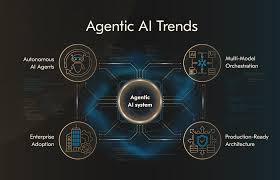
Application modernization requires a robust collection and interpretation of big data. To process and understand the large data sets, agentic AI and machine learning power are essential. Enterprise application services use application modernization to reduce the workload for which automation and agentic AI are crucial.
Big Data, AI, and analytics are at the core of business and digital transformation of application management services, which in turn support predictive strategies and responsive automation.
-
Internet of Things (IoT)
An IoT system enables devices and equipment to connect over the internet and transfer digital information between them. Additionally, machine logs and service reports are examined to improve performance and efficiency. AI-enabled business platforms continuously review this data for trends, patterns, and connections. These findings support predictive upkeep and automated workflows, boosting efficiency and productivity as machine learning systems “learn” from IoT data over time.
-
Robotic Process Automation (RPA)
Enterprise application services use RPA to enable companies with digital transformation through the automation of repetitive or pre-set tasks. Robotic devices have mechanical, moving parts designed to perform specific physical activities. RPA processes operate in the same programmed, automated way—except they exist as software and perform administrative functions rather than physical ones.
Bottom Line
In today’s market, flexibility and innovation are vital for staying ahead. Companies that are tied into outmoded systems are at a disadvantage against those that are using state-of-the-art tech to better their products, services, and customer interactions. Also, legacy platforms may hinder a company’s ability to respond to what customers want today and how the market changes in the future, thus causing a loss of business and lower revenue.
Application modernization gives companies an advantage by enabling rapid adaptation and innovation. These platforms allow access to new features, expanded capabilities, and entry into fresh markets. By moving away from outdated systems, companies can set themselves up for long-term success and growth.
Write and Win: Participate in Creative writing Contest & International Essay Contest and win fabulous prizes.
About the Author