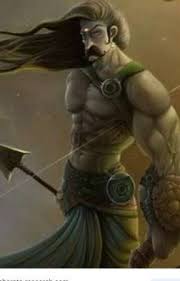
This question which has tormented the readers of Mahabharata for over thousands of years: who was the mightiest warrior in the entire Mahabharata yet he fell on the losing side? He is Karna, the son of the Sun God, the king of Anga, the most generous man that ever lived, and the most heart-breaking character in world literature.
Karna is not just a character but is an embodiment and also a reflection of all that has gone wrong at certain times for those that were once misjudged, overlooked for their talent or torn between being loyal and doing what is right. His saga has stretched across thousands of verses in the Mahabharata – which is one of the longest epic poems of the world; and yet, even centuries after it was composed, his name conjures an emotion that is both profound and bittersweet.
Karna was not a hero in the epic but was something above a hero. He was the tragic heart of the epic.
The Name Itself – An Unknown Fact
Most of us have learnt Karna’s story but very few of us actually know the importance and meaning of his name and where it has derived from. At birth, his loving foster parents, Radha and Adhiratha named him Vasusena (born with wealth).But he became known as ‘Karna’ to the world.
Karna gets its name from a Sanskrit word that means ‘ear’. Hence, the name Karna was bestowed upon him, as he was born with the special boon and divine gift of golden earrings and a celestial body armor which was virtually inseparable from his body right from the moment of his birth and forever after.These were not mere ornaments but a gift from his divine father Surya and Karna was virtually indestructible in war, as long as he wore these two articles.
This particular aspect alone proves how extraordinary Karna was expected to be but, as the unfolding events would prove, no gift, no matter how divine it was, could ward a man against fate, injustice or his own decisions.
The Abandonment – A Story That Started with Misery
The story of Karna does not begin with glory. Rather it begins with a scared young princess drifting in a boat on the sacred Ganges, with a tough decision to make.
Before she was wed, Kunti had received a divine blessing from the ascetic Durvasha, bestowing her with a mantra that could call upon any god she may desire and give birth to a child with the blessing of the said god. Kunti tested this mantra and thereby invoked the celestial Sun God Surya, driven by her curiosity and probably the recklessness of youth.The Sun God shone in brilliant splendor and having been fastened by the powers of the mantra, he was pleased to give birth to a son for Kunti. The kid found a shining light in his body, a celestial armour and gold earrings; the kid was wearing the armour and so was called Karna.For Kunti who was still a young unmarried girl, shock and fear at such a plight was inevitable.Her destiny was to endure shame and social humiliation in a strict social hierarchy of the times. Kunti, in her difficulty made a difficult decision to place her infant in a basket on the river.
Both of these floated in the basket, and also the charioteer Adhiratha, servant of the blind king Dhritarashtra, and his wife Radha were able to save the floating basket.As a couple that were unable to conceive any child of their own, they adopted Karna as their son and gave him immense love. Radha named him Vasusena but they could not offer him a life where the people around him would not look down upon him due to his background — after all, the couple was not high born either.
The Insult at the Tournament – Where Bitterness Bloomed
One of Karna’s fondest dreams was to become the greatest archer of the world. He trained diligently and with Guru Drona together with the Pandavas and Kauravas princes.In a twist of fate, Karna, while desperately in search of training to attain greater proficiency in combat, went to the forest and disguised as a Brahmin, learned various sophisticated weapons — including the Brahmastra — from Parashurama, the sage-warrior who abhorred teaching Kshatriyas.
He learned and absorbed everything that Parashurama taught him, but once again an unfavorable consequence tagged along with his achievement, which we will discuss a little later.In fact, Karna was not even specifically invited to Drona’s prestigious event that presented the royal princes’ skill. He stood in awe as Arjuna, his favorite pupil the prince stood to do the most incredible things in archery. Then Karna thought that he would exhibit his prowess as Arjuna had done and he was amazed everyone.But before he could be officially accredited, a cutting query from the teacher Kripa — “From which family do you come?” — nullified his achievement and prevented his recognition, for by birth, he was an outsider to the kingdom of princes, since he was son to a charioteer.Hence at this stage of the size of public shame when his abilities were vied down a bold Duryodhana declared that Karna was the King of Anga, thereby giving him a title that he had been deprived of due to the rigid social order. That is why Karna’s allegiance with Duryodhana was never wavering and his allegiance to Kaurava side was never questioned. It’s the most significant juncture of the epic, because, Karna did not take the side of the Kauravas by hating them but because of the great insult he suffered, the insult that had been thrown onto his person.
The Curses: A Life Turned Against Him
Karna’s tale is tragic not because of a singular event, but because of a number of curses and abuses that he faced throughout his life. Almost all of these were unwarranted.
An old curse: He realized that Karna was a Kshatriya and that he’d concealed his truth from him; he was a Brahmin, and he wouldn’t have eaten the wound his divine spear had inflicted on him if he’d told the truth. For the most important moment in his life, he would forget the mantra for invoking the Brahmastra, which an enhancer such as Parashurama can decipher.
During training in his archery, once Karna accidentally killed one of the Brahmin’s cows and this became their curse.Furious, the Brahmin cursed him that in his worst battle, his chariot would sink into the ground.
Indra’s Theft: Knowing that Karna was invincible as long as he wore the divine earrings and armor, Indra — who was the father of Arjuna, and whose interests therefore lay with his son’s victory — approached Karna in the guise of an old Brahmin beggar and sought his Kavach (armor) and Kundal (earrings) as charity. His own father Surya had already warned him of such an attempt and pleaded with him not to give away the divine protection, but Karna, unable to refuse a beggar, gifted the divine armor and earrings anyway.
Indra, impressed with Karna’s exceptional generosity — albeit having deceived him to acquire it — granted Karna a single divine weapon: the Vasava Shakti, a spear that could kill anyone but could only be used once. Karna had traded his invincibility for a single arrow. He did not regret it.
The Untaken Path is Krishna’s Mission.
Before the battle of Kurukshetra Krishna had visited the court of the Kauravas for the purpose of settling the peace. After being rejected Krishna went in search of Karna. The exchange that ensued between the two that night has been termed one of the most emotional moments in the Mahabharata. This Krishna told Karna that his mother Kunti was the Pandavas’ mother and that Arjuna was the half-brother of Krishna (brother of fabulous Gandhita Keshi) and that his real name was Kaushal, and because of that he commanded the name Karna. Thereafter he afforded Karna: Go to the Pandavas side.Your true parents will be brought to light. The throne will be yours. Draupadi will garland you. You will have everything that has always eluded you.”
Karna listened and answered: “No.” He told Krishna he had known of his birth from his father Surya long before, but it was too late. He had taken the salt of Duryodhana, and at such a time the others treated him with contempt and accepted a kingdom. In those moments Karna now realized that leaving him when he needed help was the greatest betrayal he could have made.
He told Krishna that he would not tell Pandavas his identity till after the war as he did not want to refrain himself from fighting his brothers. Lastly, he requested Krishna to let him know what he could do for Kunti, after the war was over she would never be without more than five sons,—and also that he would not kill a Pandava other than Arjuna. He would prove to be willing to give his life for this promise.
The End of an Era” is titled “Death and the Gold Tooth.
Karna was a valiant fighter in the epic battle of Kurukshetra but all of his curses came to an end. When it matters most he forgot to recite the Brahmastra mantra–his chariot was caught into the soft soil, as had been foretold by the Brahmin’s curse. He dismounted and asked Arjuna to avoid killing anybody who was not as prepared for battle as Arjuna.After dismounting, he asked Arjuna not to kill anyone who was not armed and was not ready for battle, according to the rules of warfare. But Krishna said Arjuna should not be afraid; he brought back Arjunas recollection of all the misdeeds that Karna had done in the battle and his shameful conduct towards Draupadi. Arjuna shot the arrow and Karna fell to the ground.
However, his magnanimity lived on, embodied in Karna.Both Indra and Surya descended disguised as beggars and asked if there was anything still left that they could receive, given that his generosity knew no bounds. Karna stated he had no possessions left to give. They then pointed to his golden teeth. Without any hesitation, Karna took a stone and broke one of his teeth to give the gold to the beggars. Karna lived and died generous, giving away everything he had till the last hour.
Adaptations: Karna Through the Centuries
The story of Karna has been a great inspiration for writers, filmmakers and artists over the ages. Written in Marathi by Shivaji Sawant in strictly an auto-biographical first person voice, Mrityunjaya (The Death Conqueror) is one of the more remarkable Indian novels, of which it is one, and has been translated into many languages.
Earlier, in the 1988 TV serial Mahabharat, aired on the government-run Doordarshan, Pankaj Dheer’s character of Karna had been inscribed in the hearts of millions with his dignity and pride.
Karna continues to be a relatable figure in today’s generation of fiction books, graphic novels, and even video games as many young people find their social issues and identity crises more akin to his problems than those of adults.
Frequently Asked Questions
Is Karna a villain?
Karna was a scholar who became a traitor to his people-known as a tragic hero who has to bow down to the circumstance and fight against his people. He wasn’t a bad guy, he was a very hurt guy.
Who Karna married?
In the case of Karna his wife, Vrushali and Supriya, Vrushali was hailed for her devotion and affection towards her husband.
Was it that Karna knew that the Pandavas are his brothers?
Yes- He had known this from his divine father Surya very long ago before he was told by Krishna.
How could Karna be best archer, if he was being beaten by Arjuna?
Karna lost his armour in Indra’s trick, his most powerful weapon in a curse to Indra, his mantra to Indra, his chariot to a broken wheel, all at once.It was not a fair battle. This is exactly why readers across generations feel his end was a tragedy rather than a just conclusion.
Conclusion: The Undying Resonance of Karna’s Tale
Karna’s tale continues to capture the imaginations of people because it asks questions which no era has provided complete answers to. Is it enough to be a good person even when the world chooses not to see it as such?Can loyalty ever be a trap? But is generosity always a thing of beauty, when it always does harm to the person who practices it? Is there anyone who can be a hero and the cause of tragedy?
He is an unfairly murdered man, born without a family, publicly reviled, a dupe of the gods and a victim of cursing by his masters. But he remains not so bitter as to forget his pledges or so cruel as to indiscriminately slay.
In any time there are those who are rejected and shamed for their origins, not their talent, and those who would do right by a person they should not, and are late in doing the right thing. To such people, Karna is a reflection of their own lives.
Quite why after all these centuries of becoming part of campfire stories, it’s being read in temples and being argued about in courtrooms, Karna continues to cause arguments and evoking sympathy, remain a mystery to this day. But he did not get a throne, and in all the real meaning of the word, he is—and will remain—a king.
By: Meenakshi Suryavanshi
Write and Win: Participate in Creative writing Contest & International Essay Contest and win fabulous prizes.
About the Author