Creating video content for a global audience has never been more accessible — or more demanding. Whether you’re a YouTuber trying to reach Spanish-speaking viewers, a business localizing training videos for international teams, or a marketer producing personalized campaigns at scale, the challenge of matching spoken audio to on-screen faces has long been a technical and financial barrier. Traditional dubbing required professional studios, voice actors, and hours of post-production work. The result was often stiff, unnatural, and expensive.
That’s changing fast. An AI video lip sync tool can now analyze facial movements, generate synchronized mouth animations, and produce natural-looking dubbed video in a fraction of the time and cost. These tools are no longer experimental novelties. They’re becoming essential infrastructure for content creators, educators, and brands that need to communicate across language barriers without sacrificing quality or authenticity.
This guide breaks down how AI lip sync technology works, who benefits most from it, and how to start using it effectively in your own content workflow.
What Is an AI Video Lip Sync Tool?
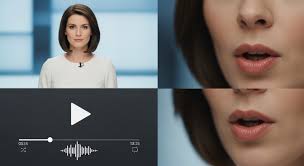
An AI video lip sync tool is software that uses machine learning to synchronize a person’s lip movements in a video with a new audio track. Instead of re-recording footage or relying on manual animation, the AI analyzes the facial geometry of the subject and generates new mouth movements that match the timing, phonemes, and rhythm of the replacement audio.
The core technology draws from several AI disciplines: computer vision to detect and track facial landmarks, natural language processing to understand speech patterns, and generative models to synthesize realistic facial animations. The output is a video where the speaker appears to be naturally saying the words in the new audio — even if that audio is in a completely different language.
Modern lip sync video generators go beyond simple mouth movement. They account for jaw position, tongue visibility, cheek tension, and even subtle expressions that accompany speech. This level of detail is what separates convincing AI dubbing from the uncanny, robotic results that earlier tools produced.
How AI Lip Sync Technology Actually Works
Understanding the mechanics behind AI lip sync helps you use these tools more effectively and set realistic expectations for output quality.
Facial Detection and Landmark Mapping
The first stage involves detecting the face in each video frame and mapping key landmarks — the corners of the mouth, the edges of the lips, the chin, and surrounding facial muscles. This creates a dynamic model of how the face moves throughout the original video. The AI uses this baseline to understand the subject’s natural movement patterns, which informs how the new lip movements will be generated. The more consistent and well-lit the source footage, the more accurate this mapping becomes.
Audio Analysis and Phoneme Matching
The replacement audio is analyzed at the phoneme level — the smallest units of sound in speech. Each phoneme corresponds to a specific mouth shape, called a viseme. The AI maps the sequence of visemes from the new audio onto the facial model, creating a frame-by-frame animation plan. This is where language-specific training data becomes critical: the model needs to understand how different languages shape the mouth differently, even for similar sounds. Tools trained on diverse multilingual datasets consistently outperform those built on narrower corpora.
Video Synthesis and Blending
The final stage generates the new facial animation and blends it seamlessly into the original video. Advanced models use neural rendering techniques to ensure the synthesized lip movements match the lighting, skin texture, and motion blur of the surrounding footage. The goal is a result that looks like it was filmed that way — not composited after the fact. This synthesis step is where the most visible quality differences between platforms emerge, and it’s the area where the technology has improved most dramatically in recent years.
Who Benefits Most from AI Lip Sync Video Generation
The applications for AI talking avatar and lip sync technology span industries and use cases. Here’s where the impact is most significant.
Content Creators and YouTubers
For independent creators, reaching a multilingual audience used to mean either hiring translators and voice actors or accepting that most of your potential viewers would never engage with your content. AI lip sync changes that equation entirely. A creator can record once in their native language, generate dubbed versions in Spanish, French, Portuguese, or Mandarin, and publish localized content without ever stepping back in front of a camera. The result is a consistent on-screen presence across all language versions — the same face, the same expressions, just different words. For creators building international audiences, this is a genuine competitive advantage.
Businesses and Corporate Training
Companies with global workforces face a constant challenge: how do you deliver consistent training, onboarding, and internal communications to employees who speak different languages? Re-recording video content for each market is expensive and time-consuming. AI video dubbing allows a single source video to be localized quickly, maintaining the presenter’s visual presence and authority while adapting the language for each audience. This is particularly valuable for compliance training, product demonstrations, and executive communications where consistency of message and tone matters as much as the content itself.
Marketing and Advertising Teams
Personalization at scale is the defining challenge of modern marketing. AI lip sync enables brands to create video ads where the spokesperson appears to address viewers in their local language — without separate production runs. A campaign filmed once can be adapted for dozens of markets, with the on-screen talent appearing to speak each language naturally. This approach reduces production costs while increasing relevance and engagement for each target audience. For performance marketers running multilingual campaigns, the ability to test localized creative without proportional increases in production spend is a significant operational advantage.
Practical Considerations When Choosing an AI Lip Sync Tool
Not all AI lip sync tools deliver the same quality or flexibility. Before committing to a platform, there are several factors worth evaluating carefully.
Output quality varies significantly based on the underlying model and the quality of the input video. Tools trained on diverse datasets tend to handle different skin tones, facial structures, and lighting conditions more reliably. Look for platforms that offer preview capabilities so you can assess quality before committing to a full render. A tool that looks impressive in demo videos may perform differently on your specific footage.
Language support is another critical variable. Some tools are optimized for a handful of major languages, while others support dozens. If your use case involves less common languages or regional dialects, verify that the platform has specific training data for those languages rather than relying on generic phoneme mapping, which tends to produce less accurate results for languages with distinctive mouth shapes.
Processing speed and workflow integration matter for teams working at volume. A tool that produces excellent results but takes hours to process a single video may not be practical for high-output content operations. Look for platforms that offer batch processing, API access, or direct integration with your existing video production stack. Kling AI’s AI human video platform is built with these production realities in mind, offering a streamlined interface that supports both individual creators and teams working at scale.
How to Get the Best Results from AI Lip Sync Tools
The quality of your output depends heavily on the quality of your input. Following a few best practices can significantly improve results across any platform you use.
Start with clean source video. The AI needs clear, unobstructed views of the speaker’s face to generate accurate lip movements. Avoid footage with heavy shadows across the face, extreme angles, or significant motion blur. A well-lit, front-facing shot with minimal background movement gives the model the best possible data to work with. Even small improvements in source video quality tend to produce noticeable improvements in lip sync accuracy.
Use high-quality audio for the replacement track. Compressed, noisy, or inconsistently paced audio makes phoneme detection less accurate, which directly affects lip sync quality. Professional voice recordings or high-quality text-to-speech outputs tend to produce better results than casual recordings made on a phone. If you’re using AI-generated voice for the replacement audio, choose a voice model that produces clean, well-paced speech rather than one optimized purely for naturalness.
Match the pacing of the replacement audio to the original where possible. Significant differences in speech rate between the original and dubbed audio can create timing mismatches that are difficult for the AI to compensate for. If you’re working with translated scripts, ask your translator to adapt the text to match the approximate duration of the original speech rather than producing a literal word-for-word translation. This single adjustment often makes the difference between a result that looks natural and one that feels slightly off.
Review and iterate. Most AI lip sync platforms allow you to adjust parameters and regenerate results. Take advantage of this to fine-tune the output rather than accepting the first render. Small adjustments to audio timing or model settings can make a meaningful difference in the final quality, and the time invested in iteration is almost always less than the time required to re-record source footage.
The Future of Video Content Is Already Here
AI video lip sync tools have moved from experimental technology to practical production infrastructure in a remarkably short time. For content creators, businesses, and marketers, the ability to produce multilingual video content without re-recording or expensive studio dubbing represents a genuine shift in what’s possible — and what’s affordable. The technical barriers that once made global video content a luxury for well-funded productions are steadily disappearing.
The technology will continue to improve. Models are getting better at handling challenging footage, supporting more languages, and producing results that are increasingly indistinguishable from natively recorded content. The creators and organizations that start building lip sync workflows into their content operations now will be better positioned to scale as the technology matures and new capabilities emerge.
Whether you’re localizing a single explainer video or building a multilingual content library from scratch, the tools available today make it worth starting. The barrier to global video content has never been lower — and it’s only going to drop further.
Write and Win: Participate in Creative writing Contest & International Essay Contest and win fabulous prizes.
About the Author