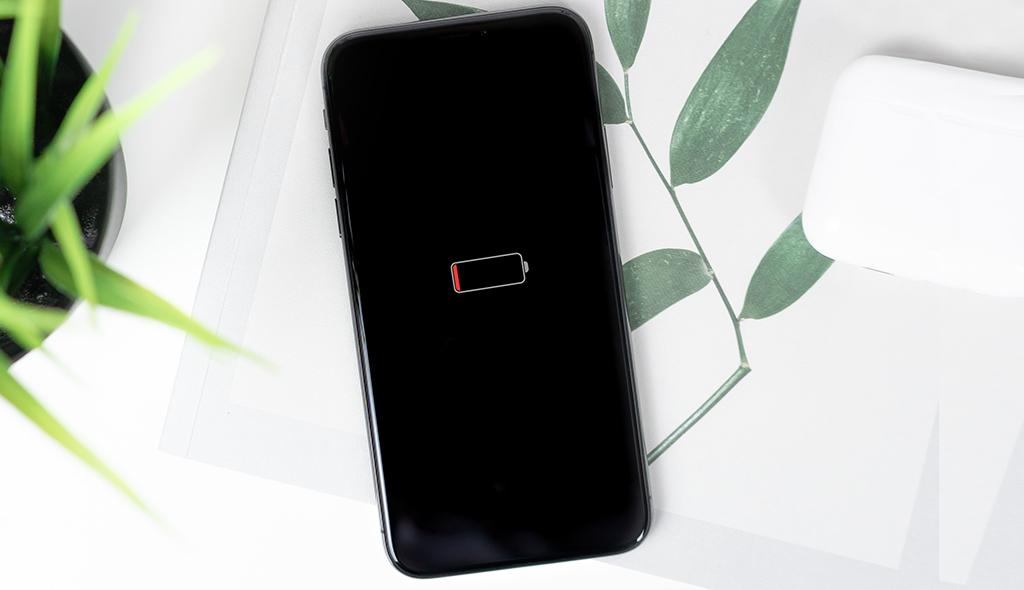
I deleted Instagram last Tuesday at 2:47 AM and put my phone down. Then I reinstalled it at 6:33 AM. Then deleted it again at noon. This isn’t a success story. Not yet, anyway.
I’ve been thinking about Anne Carson’s line: “To live past the end of your myth is a perilous thing.” My myth was that I could scroll endlessly and remain whole. That I could skim surfaces and still touch depth. That I could be everywhere online and still be present anywhere at all.
The myth ended when I realized I couldn’t remember the last book I finished. Or the last time I looked at the stars. Or the last conversation I had where I wasn’t simultaneously checking my phone. Walter Benjamin wrote about the “loss of aura” in the age of mechanical reproduction. I think we’re living through the loss of attention in the age of infinite distraction.
But here’s the thing about breaking up with your phone: you can’t just delete the apps and expect to feel better. You have to replace the online stuff with something else. Ideally, something better. Nature abhors a vacuum, and so does your nervous system. Without intentional replacement, you’ll just feel the absence, the void, the terrible boredom that modern life has trained us to fear more than death itself.
So here’s what I’m trying instead. Ten things to replace the hollow glow of screens with something that might actually fill the space inside.
- Read a book. Any book. All the books.
Start small. I’m serious about this. My first week without constant scrolling, I picked up a collection of fairy tales, the kind I loved as a kid. Twenty pages felt like a marathon. Reading is an endurance sport, and I was deeply out of shape. The sentences felt slow, dense, real in a way that tweets never could.
Reading after years of scrolling is like running after years on the couch. It’s awkward and painful and shorter than you’d hope. But with love and patience, it grows. I wouldn’t recommend a new runner attempt a marathon, and I wouldn’t recommend a new reader pick up War and Peace. Just read. Read anything. Read Calvin and Hobbes. Read instruction manuals if that’s what catches your attention. Read fairy tales. Read what you love until you love to read.
Now I’m working my way through The Count of Monte Cristo, and some nights I read for two hours without noticing time pass. I’ve discovered that long, difficult books offer something the internet never can: sustained attention, complex characterization, the patience to watch a story unfold over hundreds of pages. There’s a particular satisfaction in finishing a book that weighs two pounds. It feels like an accomplishment in a way that finishing a Twitter thread never did.
If you’re already a seasoned reader, try something that stretches you. Don Quixote. War and Peace. The Bible, if you’re feeling adventurous. These books have survived centuries because they contain multitudes. They deserve your attention.
Nabokov said a good reader is a “fondler of the details.” I’m learning to fondle again.
- Make something with your hands.
It can be terrible. Mine usually is. Last month I tried to carve a wooden spoon and it looked like something a beaver abandoned mid-project. But there’s something profound about shaping physical matter. As you shape it, it shapes you back.
Choose something useful and worth doing. Carve a kitchen spoon. Reupholster a chair. Build a bookshelf or a side table. Pick up a dresser off the side of the road and refinish it. These things aren’t that hard, and it’s worth it to try.
I’ve been refinishing that curbside dresser for three weeks now, sanding off decades of paint, watching the grain emerge underneath. My hands have blisters. The dresser still wobbles. But I’m learning about patience, about the satisfaction of slow progress, about the difference between consuming and creating. My therapist would say this is a metaphor for something. She’s probably right.
There’s also something deeply human about making things that serve a purpose. For most of human history, people made what they needed. Now we buy everything and make nothing. We’ve outsourced creation to factories and Amazon warehouses. But when you make something yourself, even badly, you reconnect with a fundamental human impulse. You become less of a consumer and more of a creator. That shift matters more than you’d think.
- Draw what you see.
I tried drawing my coffee cup yesterday. Just a cup. I stared at it for forty minutes and realized I’d never actually seen a coffee cup before. Not really. Drawing forces you to notice that reality contains an almost unbearable amount of detail: the way light catches the rim, the subtle imperfections in the ceramic, the shadow’s gradient, the tiny chip on the handle that tells a story about some long-forgotten morning.
Most of life goes unnoticed. We move through the world half-blind, our attention scattered across a thousand digital fragments. Drawing is practice in paying attention. It forces you to look at one thing for a very long time, until it comes alive. Writing is the same. Living is the same.
You don’t have to be good at it. In fact, being bad at drawing is instructive. It shows you how much you miss, how little you actually see. Start with simple objects. An apple. A shoe. Your own hand. Try to capture what’s really there, not what you think should be there.
By trying to draw something, you realize the world has been waiting patiently for you to notice it.
- Listen to an entire album.
Stretch out on the couch. Close your eyes. Listen to something start to finish without doing anything else. No scrolling. No multitasking. No “optimizing” your time. Just listen.
I chose Sufjan Stevens’ Carrie & Lowell and cried through the whole thing. When’s the last time you let music actually move through you instead of treating it as background noise for productivity? When’s the last time you listened to an album the way the artist intended, as a complete work rather than shuffled fragments?
Music deserves your full attention. It deserves more than being the soundtrack to your email management. Lie down. Let it wash over you. Let it make you feel something.
- Talk to your neighbors.
This one terrifies me. Everyone wants community but no one wants to talk to their neighbor. I started with the Portuguese woman who smokes on the corner every morning. We’ve progressed from nods to discussing her grandson’s upcoming wedding. She showed me photos last week. The old man with the golden retriever is named Frank. The dog is named Susan. These details matter.
“Online community” is an oxymoron. Those smooth, frictionless spaces where everyone agrees with everything you say aren’t communities, they’re echo chambers. They’re performance spaces where we curate versions of ourselves that don’t exist. Real community is rough and messy and requires you to show up as your actual self. It’s the diversity, the friction, the grouchy man and the friendly dog, that makes connection real and true and human.
Get to know the people who live near you. Learn their names. Ask about their lives. Community isn’t something you find online. It’s something you build in the actual physical space you inhabit. It requires the courage to be seen and the patience to see others.
- Be bored. Deliberately. Religiously.
When’s the last time you stared at clouds? Watched them shift from dragons to sailing ships to nothing at all? When’s the last time you looked at the stars, really looked, until you felt small and connected to something vast?
I’ve been practicing deliberate idleness, sitting on my porch, looking at trees, thinking about nothing in particular. This feels transgressive in 2025. Our entire culture is optimized for productivity, for constant stimulation, for filling every moment with content. But creativity doesn’t come from constant input. It comes from this kind of idle, wandering time. It comes from staring at walls for extended periods.
All my best ideas arrive when I’m bored. When my mind is allowed to wander without direction or purpose. When I’m not forcing it to perform. The ancient Greeks knew this. They had a word, schole, which meant “leisure” but also gave us “school.” They understood that real learning, real thinking, requires unstructured time.
So stare off into space. Watch clouds pass and see their shapes. Be bored. Let your mind wander. This isn’t wasting time. It’s creating the conditions for creativity to emerge.
- Touch grass. Literally.
Go outside. I think we’ve grown distant from the divine because we’re so removed from the natural world. Most of my existential crises dissolve when I spend an afternoon in the woods. There’s something about soil under your fingernails, wind on your face, the patient indifference of trees.
Nature doesn’t care about your follower count. It doesn’t care about your productivity or your brand or your carefully curated persona. It just exists, in all its messy, complicated, beautiful reality. And when you spend time in it, you remember that you’re an animal, that you’re part of something larger, that your problems are both very real and very small.
Most of my problems are solved, or start to solve themselves, when I touch grass. When I remember that there’s a world beyond screens, beyond notifications, beyond the constant hum of digital anxiety.
Walk in parks. Hike in forests. Sit by rivers. Garden. Lie in the grass and watch the sky. Your body knows it belongs to the earth. Let it remember.
- Write letters by hand.
I read that Victorians spent one to three hours nightly reading and replying to correspondence. Can you imagine? Three hours every night, writing to friends and family, maintaining connections through the slow, deliberate act of putting pen to paper.
I’ve started writing letters to friends, actual letters, with stamps. There’s a particular intimacy to writing at length, structuring thoughts across pages, articulating feelings that texts can’t hold. When you write a letter, you can’t delete and revise instantly. You have to commit to your words. You have to think before you write. And there’s something about that commitment that makes the words matter more.
Plus, receiving something handwritten in the mail feels like a small miracle now. In a world of instant messages and email, a letter arrives like a visitor from another century. It says: you matter enough for me to spend time on you. You’re worth the price of a stamp. Our connection deserves more than a text.
There is a certain feeling to writing at length, where you can structure your thoughts and articulate feelings and develop a level of detail, that is hard to replace. Try it.
- Host dinners.
Everyone is busy. Everyone also eats dinner. Last Friday I invited six people over, cooked pasta, and we talked until midnight. No phones on the table. Just faces, stories, laughter that filled my chest.
Joan Didion wrote: “We tell ourselves stories in order to live.” Around dinner tables, we tell them together. We create shared narratives. We witness each other’s lives. We break bread, which humans have been doing since we figured out how to make fire.
Hosting doesn’t have to be fancy. Make spaghetti. Order pizza. The point isn’t the food, it’s the gathering. It’s the radical act of being present with other humans, of sharing space and time and attention. Everyone is as busy as they’ve ever been, but everyone eats dinner. So invite people over. Make it a practice. Once a month. Once a week if you can manage it.
Community happens around tables.
- Sleep before 9 PM.
I tried this last week and woke feeling like royalty. Absolute royalty. Our entire culture is sleep deprived and pretending it’s a virtue. It’s not. Exhaustion isn’t a badge of honor. Going to bed early is a revolutionary act of self-care.
A full night’s rest makes you feel like royalty because it is a luxury in our grinding, hustling, always-on culture. But it shouldn’t be a luxury. It should be normal. Your body needs sleep. Your brain needs sleep. Your creativity needs sleep.
Go to bed before 9 PM and see what happens. See how it feels to wake naturally, rested, ready. See how much better your days are when you’re not running on fumes and caffeine.
I’m not claiming I’ve figured this out. Most nights I still reach for my phone reflexively, muscle memory overriding intention. But I’m trying. Some days are better than others. Yesterday I read for three hours, carved another mediocre spoon, and talked to Frank about his tomatoes. Today I’ve already checked my email seventeen times.
But here’s what I know: the emptiness I was trying to fill with scrolling can’t be filled that way. It requires slower, more difficult things. Books that challenge you. Objects you shape with your hands. Neighbors whose names you learn. Stars you actually look at.
Calvino wrote: “The more enlightened our houses are, the more their walls ooze ghosts.” Maybe that’s what we’ve become: ghosts in our own lives, haunting our screens instead of inhabiting our bodies.
I’m learning to be solid again. To take up space. To exist in three dimensions.
You can too.
The ten things I’ve listed aren’t rules. They’re invitations. Experiments. Ways of remembering what it feels like to be fully human in a world that increasingly treats us as data points and attention spans.
Try one. Try all of them. Find what works for you. The point isn’t to be perfect. The point is to remember that there’s more to life than the glow of a screen. That your attention is valuable. That your presence matters.
Start small. Read one page. Carve one spoon. Talk to one neighbor. Sleep one full night.
And then do it again tomorrow.
With gratitude and solidarity,
Someone who’s trying
P.S. If you put your phone down right now and go look at the sky, I’ll consider this essay a success.
By: Maciej Wlazly
Write and Win: Participate in Creative writing Contest & International Essay Contest and win fabulous prizes.
About the Author