AI
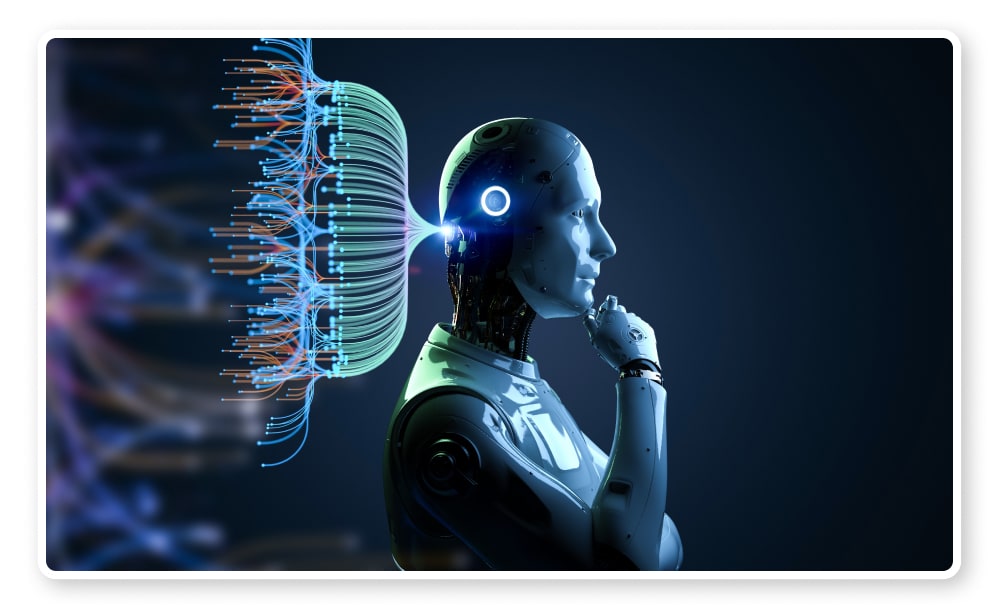
In the current digitalized and AI era, the lines between the real and the virtual are quite thin. AI (Artificial Intelligence) is no longer just a tool but more of a performer, a helpful critic, a business analyst, and a co-creator—all rolled into one. It started from predictive analytics and storytelling, and now, going deep with hyper-personalized content feeds in day-to-day algorithms, AI is redefining what entertainment is.
The classical entertainment industry was driven by qualities like intuition, creativity, and experience. The directors would follow the passion, singers chased the vision, and studios would race amongst themselves to what might be the next blockbuster. But the times have changed now.
AI enables the creators to harness large amounts of data, simulate the outcomes to understand the sentiment of the general public, and now even create content in real-time using Generative AI. The current era allows the computational and the creative minds to work in sync and deliver what no one has witnessed so far. In this article, we will look closely into how AI transforms the entertainment world, one script at a time.
The Rise of Algorithmic Creativity
Recently, one of the most wonderful developments of the 21st century is the sync-up of machine learning and creative expressions. Little back then people used to complain that machines are not “creative”, but with the advent of AI models like GPT, and DALL, MusicLM has shown unexpected creative skills to generate prose/poetry, artwork, and music that sometimes act as a rival to the human creators in terms of quality, but few times matches the emotional depth.
The OTT platforms like Netflix, Amazon Prime, and Zee5 use AI extensively to analyze the customers, shows’ views, preferences, etc. There are even reports that claim that AI is now being used in the early stages of content creation. By analyzing years of user data, the models can help entertainment companies identify themes, particularly interesting characters, and plot devices that have a higher statistical chance of succeeding in the market.
For example, certain AI algorithms can suggest alternative endings to movies or web shows based on audience engagement metrics. Another tool, ScriptAI used by Hollywood scriptwriters to analyze the screenplay structures. It further helps to get feedback based on the pace of the story, character development, and changes in the dialogue tones. The AI industry is also running at the forefront of creating digital doubles, which help the actors recreate digital doubles for de-aging, posthumous performance, and dangerous stunts.
The generative adversarial networks power deepfake technology that helps to recreate the expected facial expressions and voices with high accuracy. A few examples of AI-assisted transformation are the de-aged Robert De Niro in The Irishman and later Peter Cushing’s appearance in Rogue One. It is quite a possibility in the future that one day we, as viewers, can insert ourselves into movie scenes to watch the film with a different cast, a vague idea, but thanks to real-time AI-generated personalization that makes these ideas turn into reality.
AI in Indian Entertainment
The Bollywood industry, which is known for its vibrancy, diversity, and scale, is also experiencing a technological revolution. Most of the Indian entertainment industry remains the flagship, belonging more to the regional cinemas and digital platforms like Sony and JioHotstar. They are rapidly adopting the AI-driven tool to reshape the landscape.
A fascinating part of our country is that we have a diverse multilingual population that presents a unique challenge, specifically for movie and content creators. The current AI tools help them to auto-dub and lip-sync the original content across diverse languages. It is mainly done by neural speech synthesis and visual translations.
There are a few tools like Respeecher and Papercup that allow filmmakers to retain the original voices and emotions to convert into diverse languages by adjusting the inflection, tone, and mouth movement with stunning accuracy. A Tamil film dubbed in Hindi or Telugu can not only maintain linguistic integrity but also help to keep the cultural nuance.
All thanks to contextual language models that have been trained on diverse and regional datasets. Further, we can use AI to analyze the social media trends to help the directors in casting decisions. The automatic tools can now mine cultural datasets quickly to answer deep-rooted questions. It can help the costume designers to propose costume variations to match the setting, mood, and historical accuracy.
The song composition is now seeing experimentation that is AI-driven. Indian Classical music with complex rhythms and rage is being studied by AI that will help compose a fusion that mixes tradition with modernity. There are some Indigenous AI musicians and Google’s Magenta that train models on massive datasets to produce hybrid genres that honor musical heritage while being liked by many. In a country like India, we have to be careful concerning political and cultural sensitivity, which also dictates the clearance.
The AI tools can assist film certification boards by reducing their workload through automatic flag detection for relevant content that might be deemed offensive or inappropriate. Once the software has been flagged, it can be reviewed by a human-in-the-loop process. Further, these tools can be trained to analyze scripts and visual content to detect hate speech, drug references, extreme violence, and religious sensitivity.
AR and VR: A New Frontier of Immersion
As discussed how AI is causing transformation in the cinematic and music industry in the previous sections. There are certain fields like animation, character development, shooting in unknown locations, etc, in the entertainment industry that have some resemblance with the gaming industry. This section will introduce the readers to the basics of the gaming industry and its sync with the AI revolution.
The gaming, character immersion, and unexpected plot development are being taken over by virtual reality (VR) and augmented reality (AR), providing experiences that act as a testbed for real-time response environments. These days, AI models give non-playable characters and provide evolving dialogues, unique personalities, and contextual memory. Certain games like The Elder Scrolls VI and Cyberpunk 2077 have AI-driven characters that remember their choices, have opinions about the environment, and react to the reactions organically.
In this metaverse of entertainment evolution, AI acts as a silent architect. It evolves, adapts, and builds 3D worlds. They can collectively guide interactions, heavily optimize user engagement, and review performance automatically. AI-powered emotion detection tools can seamlessly improve the virtual experience. They cover a huge range from making a sad user encounter cheerful music to adventurous ones while getting a surprise quest. Most gaming companies like Meta, Epic Games, and NVIDIA are hugely invested in AI-driven development to make sure that the metaverse is vividly alive.
Conclusion
Though AI is continuously on its march across the entertainment world, we know one thing for sure: that it is not being used to replace human creativity, but, on the contrary, it helps to apply it. The artist will always continue to imagine, the writers will always dream into their wonderlands, and the singers will always compose, but with AI as a collaborator, the boundaries of what can be imagined or composed will keep on expanding at an exponential rate. There are ethical concerns regarding this evolution.
It is completely true that with great power comes significant responsibility. There have been cases of deepfake content, misguiding the general masses, job displacement rumors, cultural homogenization, algorithmic bias, etc, that have to be immediately addressed to avoid such issues and concerns in the long run. Transparency in the system and regulation from the higher authority are crucial to ensure that AI enhances entertainment without compromising its integral values, artistic ethics, or public trust.
Today, we stand on the edge of a new paradigm, where films respond to our moods, stories reshape themselves based on the characters’ personalities, and virtual performers never age. The question is not whether AI will change entertainment; the real question is how far we are willing to sync with it.
By: Puneet
Write and Win: Participate in Creative writing Contest & International Essay Contest and win fabulous prizes.
About the Author