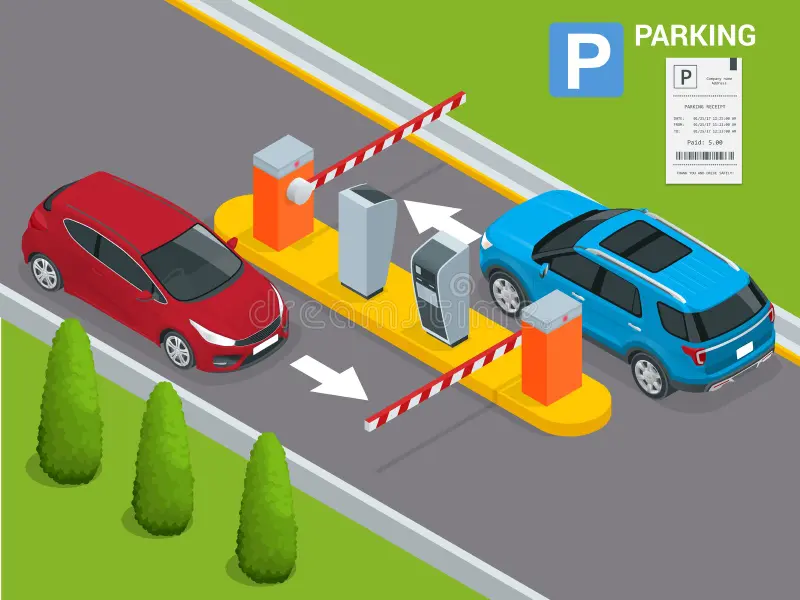
Tight urban driveways and storefront curb cuts leave little room for traditional gate systems. Swing paths, sliding tracks, and overhead arms require clear operating space that small service alleys, shared access drives, and building corners cannot provide. At the same time, vehicle entry points still need to support delivery schedules, fire-lane compliance, and steady pedestrian activity without blocking sidewalks, bike lanes, or street traffic.
Because of these constraints, facility teams are rethinking how vehicle access works at the property edge. Ground-level control options such as collapsible bollards, better placement of service lanes, and consistent hardware across entrances can manage vehicle entry without large moving structures. When access solutions match the physical layout of the site, properties can maintain controlled access while keeping daily traffic and pedestrian circulation moving smoothly.
Collapsible Bollards for Gate Alternatives
Collapsible bollards provide controlled vehicle entry in locations where traditional gate systems lack operating clearance. Installed flush with the pavement, the posts rise to block unauthorized vehicles and retract to allow approved traffic. Their compact footprint fits narrow service drives, alley entrances, and loading approaches without requiring swing clearance or overhead structures. Standard spacing supports predictable operation.
Ground level hardware also reduces conflicts with delivery patterns that repeat throughout the day. Drivers approach, stop briefly, activate the control, and continue forward without waiting for large mechanical panels to move. Maintenance crews inspect hinges, locking pins, and sleeves at pavement height during routine inspections and scheduled site visits.
High-Frequency Access Lanes
Service areas with frequent vendor traffic benefit from a dedicated controlled lane separated from customer arrivals. A clearly marked approach guides delivery trucks directly toward loading docks or waste enclosures. Positioning the access control point along that natural approach keeps drivers from stopping in travel lanes or searching for space near storefront drives during busy periods.
Direct alignment between the entry lane and internal circulation reduces turning conflicts inside the property. Trucks move forward toward docks instead of crossing parking rows or pedestrian routes. Predictable routing lowers backing maneuvers, shortens dwell time near the entrance, and keeps the primary customer driveway clear during delivery peaks and routine service schedules each day.
Sites With Limited Clearance
Low soffits, narrow alleys, and building corners leave little room for swing panels, slide tracks, or gate arms. Older properties may also include retaining walls, utility poles, or angled curb lines that restrict turning space at the entry. Hardware requiring a wide sweep or overhead reach can collide with nearby structures or force awkward vehicle approaches. In these conditions, access control must fit entirely within the lane footprint.
Ground-level systems avoid overhead conflicts and keep lanes usable for tall vehicles. Box trucks, shuttle vans, and municipal service vehicles can pass without contacting raised arms or frames. Keeping the control device at pavement height preserves vertical clearance even when routes vary by vendor or season. Measure approach angles and turning radii before installation so the access point accommodates the vehicles that use it most.
Security Without Queue Buildup
Peak arrival periods reveal how gate cycle times affect vehicle flow. Each swing, slide, or lift movement adds delay and reduces space for vehicles to clear through traffic. On compact sites, even short waits can push cars toward the street, block turns into parking rows, reduce crosswalk visibility, or force delivery vehicles to stop in unsuitable locations.
Access points without large moving panels allow vehicles to pass through more quickly while still restricting entry to approved users. Faster operation and compact footprints let drivers clear the control point with minimal pause, reducing honking, unsafe lane changes, and sudden backing. A short internal stacking area provides space for vehicles to queue off the street while the main customer arrival lane remains clear.
Property Access Standardization
Multiple driveways, back-of-house entrances, and shared service lanes can create a patchwork of access devices and layouts. Consistent hardware and placement standards across the property keep entries familiar and reduce operator errors. Matching locking methods prevents staff from carrying extra keys, remotes, or override tools for routine tasks. Consistent spacing between control points also protects fire lanes and prevents service corridors from narrowing.
Maintenance becomes simpler when every access point operates the same way and sits in a predictable location. Teams can follow one inspection routine for hinges, locks, posts, and pavement conditions while stocking fewer replacement parts. Standard placement also simplifies verification of sightlines, signage, and emergency access while supporting smoother coordination with fire, waste, and service schedules.
Vehicle access control works best when it aligns with the physical layout and daily activity of a site. Driveway width, curb placement, turning radii, and nearby pedestrian movement all influence how vehicles approach and move through an entry point. Ground-level control systems and well-positioned access lanes can regulate entry without adding large moving structures that slow traffic. A close look at who enters the property, when vehicles arrive, and where queues tend to form helps identify practical adjustments. With access points placed where vehicles naturally approach, properties can maintain controlled entry while keeping circulation smooth for visitors, vendors, and routine service operations.
About the Author