You woke up late one Monday morning for work, and there’s no cereal in the kitchen, so instead of walking up to the grocery store that’ll take 10-15 minutes you decided to pick up your phone and place an order in delivery apps that deliver everything in under 10 minutes! Your cereal gets delivered at your place at time and you have already done the payment through the app. It’s pretty convenient. Another scenario where you get a project at school to present but you forget your art supplies, then late at night those stationary gets delivered under a few minutes and you don’t have to stress about your project. Again, pretty convenient right? Since it saved our commute time from home to store and store to home.
When we look closely, these small situations show how common these instant delivery apps have become in our day to day life. Earlier, if we ran out of something at home, we would be planning a quick visit to the nearest shop, adjusting our schedule, or sometimes even waiting till the next morning. But now every craving, every missing ingredient, color pencils or even basic as cold drink are a reason to open the app and get it delivered instantly. And as the apps continue to grow our dependency grows silently too. This convenience creates a mindset where we start expecting things to be available all the time, without delay. We treat urgency and non-urgency almost the same. But with these extreme conveniences there’s extreme risks too, risk to that exact delivery person that rushed to deliver your order, risks that we may not notice because everything looks smooth on our side of the screen.
With time, many innovations, ideas, new technologies and advancement emerged making our life much less hectic and supporting urban lifestyle. One of these innovations are delivery apps. Years back from now, when we used to place an order there was a standard delivery time ranging from 30 minutes to even an hour. But now we have a 10 minute delivery app promising the delivery of our order within 10 minutes. These apps have advanced AI real time tracking so customers can see the real time location of their order.
At first glance, this sounds like a great deal. It’s really convenient. It’ll save a lot of time for students, where they can order stationary or some groceries without being late for their classes and are really useful for working professionals doing full time jobs, shift work, night duties. More than convenience it’s accessibility for elderly people, home bound individuals and for people with disabilities. In scenarios where, it helps parents with infants at home or when someone gets sudden fever, then these instant delivery apps can be a huge relief by delivering medicines, ORS, bandages, diapers within minutes. Overall this saves a lot of the commute time when we need something urgent and the store is not close to our house.
Since most of the delivery apps require people to pay digitally, it also pushes the habit of online transactions, making people more comfortable and confident with digital payments. So yes, they do have real advantages and a number of ways through which they are making our life easier. But we can’t ignore the other side of these delivery apps which are really concerning . In the midst of these convenient features, have we ever stopped and asked ourselves, is this mere convenience or dependency? Are we using these for our convenience whenever we feel like it or are we just becoming completely dependent on it.
When you have a facility that you can order anything within a few minutes then it increases impulsive buying. The difference between how many things do people actually need versus how many things they buy, can be huge because of impulsive buying. Impulsive buying doesn’t only harm the customers it also impacts the environment with increasing amounts of packaging wastes. These apps constantly use psychological triggers through advertisements like ’10 minutes deal ends soon’ or ‘buy before stocks run out’. So even though we are buying simple items like eggs, breads, and tomatoes, these apps create fear of missing out, making people spend more just to avoid missing the deal. Through specific marketing, they create an illusion that we need everything fast and people become used to instant consumption and can’t go back.
Now when we realise our role in these fastest delivery apps, we might even notice other individuals roles too and how their life is at the great stake of either losing their jobs or even getting fatally injured. A dark store is a small warehouse and is used only for online orders, when a customer places an order, the worker of that dark Store gets the notification and now that worker has to pack those items as quickly as possible roughly in under 40 Seconds to 90 seconds. He will run through the shelf to shelf to fulfill the orders and even if one item is missing that worker will get penalized, which will reduce his daily earnings. These things repeat everyday with repeated orders, and the workers work in the same exhausting cycle. Now after the order gets packed, the next individual’s role in this is, as a delivery rider.
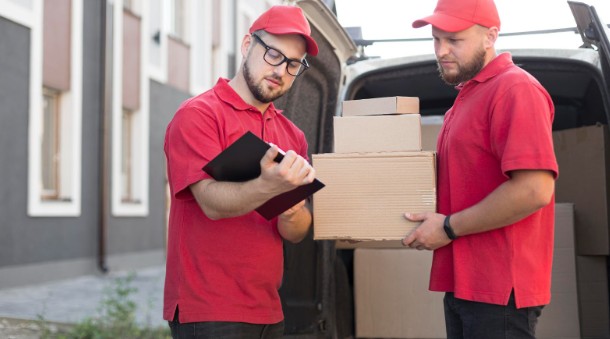
Even back in the days delivery riders were a thing, they used to deliver the pizza, or other items. But in these particular instant delivery apps, these delivery riders are bound by strict times. Times like under 10 minutes, 15 minutes. These times are not same as before when our orders used to get delivered within 40 minutes or so, and even when some pizza companies announced delivery offers like ‘free pizza if not delivered under 30 minutes’ that was still almost 30 minutes, which is nothing compared to this rushed 10-minute timing. But apparently that’s the purpose of these fastest delivery apps. So here the delivery rider speed drives through throughout the area rushing constantly to deliver the order under the time limit. Riders face huge stress trying to reach in such a short span of time.
Every week 43% riders experience near-miss accidents. Many riders die or get heavily injured to meet these unrealistic timings. If they complain, then their ratings will drop making them lose orders. Their paycheck isn’t satisfactory either. Companies hire thousands of people per week providing delivery jobs, warehouse jobs, customer service jobs, packing and supply chain jobs. In a way, this boosts employment but they fire a huge percentage every month too. Gig workers don’t get minimum wage, insurance, job security, safety net, and after deducting expenses from petrol, data, bike repair, their income becomes nearly equal to unskilled labour basic wage, despite double hours. These delivery riders earn less than the equivalent of a few cents per delivery at times. Even those who work 14-16 hours daily with zero holidays, yet end up earning barely enough to get by each month. This extreme speed delivery even in lanes, festive crowds, remote areas, wasn’t something people asked for, it’s more like something artificially created.
People never demanded 10 minutes delivery but marketers invented this need by making speed feel normal and encouraging a kind of addiction to instant consumption. These apps also raises important privacy concerns, which many of us overlook. They collect a large amount of personal date including name, phone numbers, browsing behaviour, past orders, location data. Although some data is necessary for the service to function but companies collect far more information than needed. This data may be used to track users habits, predict buying behaviour, and push targeted advertisements. Another concern is the quality and freshness of the product customers receive. Items picked in a hurry from dark stores may not maintain the same standards as regular supermarkets. Fruits, vegetables, bread and dairy products may not always be fresh and since you can’t physically inspect items before buying, there is always a risk of receiving something substandard.
We cannot deny that these instant delivery apps truly bring a level of convenience. But these conveniences are at the cost of life of delivery riders, encouraging impulsive buying and increasing environmental strain. Changing the way we use this feature can be the only solution. If we use this feature mindfully without being dependent on it, and for actual emergencies and places where it can be used at its best possible way. By doing so, we will reduce these issues and concerns altogether. People may not need chips, cookies, or colour pencils urgently but they do need medicines urgently. So keeping our buying choices very mindful and using fast delivery options only for things that are genuinely time-sensitive is the best approach.
At the same time companies can rethink their models. They could still offer delivery but without dangerous time limits. They could ensure realistic deadlines, proper wages, insurance, and safety guidelines so the drivers don’t feel pressured to risk their lives on the road. With responsible customers and responsible companies, these apps can continue being helpful without having harmful consequences.
By: ANJALI KUMARI
Write and Win: Participate in Creative writing Contest & International Essay Contest and win fabulous prizes.
About the Author