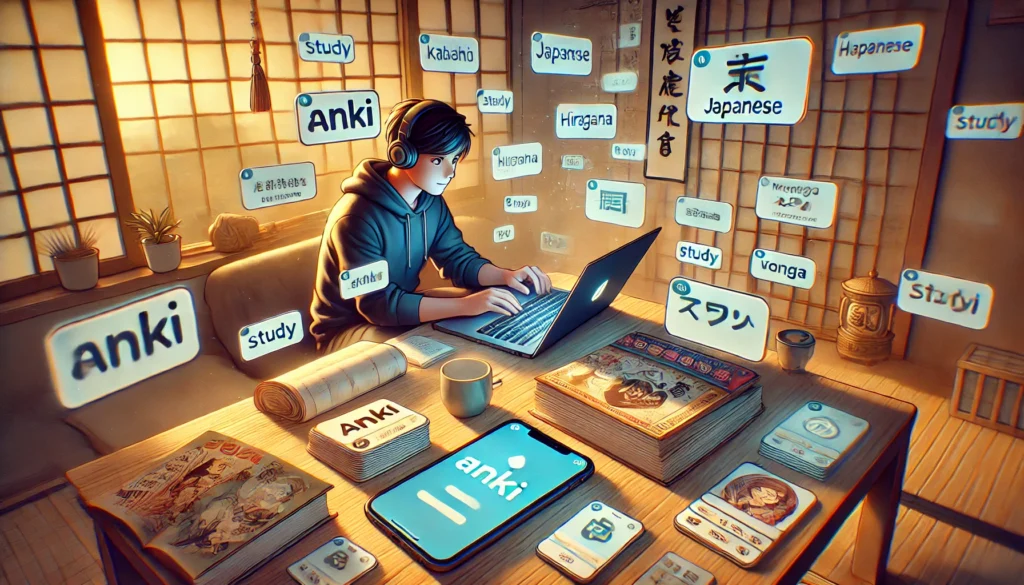
Social media, like other forms of technology, is not perfect. It has a duality. In terms of benefits, social media fosters self-expression. It also provides connection and access to knowledge, and encourages collaborative activities throughout the world. In terms of drawbacks, social media poses risks as it can disrupt focus, undermine academic performance, and expose users to misinformation. In this essay, we will examine both sides of the issue to assess the overall impact of social media on modern day individuals.
Social media provides a major opportunity in terms of education. A student can learn from tutorials and lectures at a low cost and in less time than required in a traditional class environment. For instance, during exams, I learned complex Biology concepts from a YouTube channel named Amoeba Sisters after school. Watching videos and trying to solve questions posted on social media pages helped me to grasp concepts more easily. The benefits of such opportunities have been discussed in detail in a study from 2021 in which researchers observed social media usage among university students and concluded that “SM platforms allow for social interaction and communication between users by exchanging knowledge and transforming monologues into dialogues between consumers” (Ashraf et al). These words indicate that social media can facilitate knowledge sharing through its vast platform. The fact that knowledge can be exchanged and dialogue can continue across geographical and social boundaries indicates social media’s capacity to enhance collaborative learning.
Moreover, engaging in dialogue on social media in an educational environment proves effective in developing academic, critical thinking skills. What makes the medium of online communication unique is that it ensures access to a wealth of knowledge for a large number of people. Being able to acquire knowledge with the help of various media, including video, images, and audio is a major benefit. Thus, in comparing face-to-face interaction to social media dialogue, although face-to-face conversation allows for rich and effective feedback mechanisms, social media dialogue allows for large numbers to work in concert with regard to constructing knowledge with the help of various resources.
The above-said benefit is evident in an international study on students’ learning through the aid of social media, which found that structured use of platforms such as Facebook groups and discussion forums “encouraged peer-to-peer explanation, collaborative problem solving, and ongoing exchange of resources beyond class hours” (Shabur and Siddiki). The statement clearly shows that social media is not just an instrument of unofficial communication; rather, it is one that can encourage and hence enhance learning and engagement in general. Naturally, when students are encouraged to explain their line of reasoning and engage in collaborative problems-solving, they are likely to better understand the subject matter on a deeper level rather than simply recalling it on their own. In this respect, social media can be an extension of the class when teachers can orchestrate online interactions, which leverages social media as an instrument that encourages students to think about ideas more frequently from multiple perspectives.
Another crucial benefit of social media is how it can foster authentic self-expression. A study conducted on authentic self-expression showed how Facebook found that users “who are more authentic in their self-expression also report greater life satisfaction” (Bailey et al), and in a follow-up experiment, participants reported “significantly higher levels of well-being after the week in which they posted authentically” (Bailey et al). Thus, authentic self-rexpression is a crucial factor for one’s well-being since it is one of those aspects at the core of an individual’s need to be seen and heard, to feel understood and validated.
What does it mean to be recognized and accepted for our uniqueness? It means the freedom to be ourselves, which can mean the world to many people. Thus, social media’s ability to facilitate an individual’s authentic self-expression can fill that person’s life with great meaning and purpose given the key human needs it is capable of meeting. On the other hand, things like stories, profiles, or any other innovative features allow users to convey more complex information about themselves to their desired audience. This creates opportunities for users to explore their potential on a wide scale. In this respect, social media bridges our needs by helping us become the person we feel we are meant to be. Can we gain the acknowledgement we seek? Can we connect with anyone in the world, transcending national and geographical boundaries? Yes to both because of social media.
Yet the very same platforms that facilitate learning and connection also produce downsides. It’s true that social media also can undermine focus and harm the mental health of users. What are the downsides that emerge in students’ daily lives? Perhaps the most insidious effect of social media is how it can greatly distract students from focusing on their studies. Imagine students initially trying to watch an instructive video. You might visualize them having an online discussion with classmates. However, that focused attention can be derailed when recommended algorithms divert them. To what you might ask? Short videos on Youtube, Instagram, and TikTik that have nothing to do with the material the students are studying.
Amidst several app notifications that compete for students’ attention, students’ abilities to engage in challenging cognitive work or to read critically may be compromised; hence, study sessions can become fragmented, leading to poor comprehension. This concern is also backed by a study that asserts a negative correlation between media multi-tasking during homework hours and academic achievement. Junco’s study involved 1,839 college students that revealed that using Facebook to a certain level, as well as texting during homework, significantly predicted lower GPA, a phenomenon that “may tax students’ capacity for cognitive processing and preclude deeper learning”(Junco and Cotten). Junco’s findings are profound because they show that social media is not merely a harmless habit but can quietly undermine the core skills students need to develop. If multitasking with social media reduces comprehension and GPA, then constant notifications and app use are the primary factors undermining the long-term goals of deeper understanding, critical thinking, and good grades, which lie at the core of education. The fact that social media runs counter to the essence of education is concerning, as it replaces sustained focus and critical engagement with fragmented attention and superficial interaction, thereby eroding students’ ability to develop deep learning habits.
Another disadvantage of social media is the spread of misinformation and the oversimplification of general information. Since social media posts tend to be brief for the purpose of grabbing people’s attention, complex topics and subjects are reduced to simplistic slogans and half-baked pieces of advice that don’t address all the nuanced, relevant details of a given issue. Students who only read social media posts and don’t crosscheck them with the relevant fields of knowledge will be at a disadvantage because they may be unwittingly exposed to misinformation. The following study proves a point about problems associated with oversimplification. An experiment on physics explanation videos carried out by Kulgemeyer and Wittwer showed a group of pupils who learned from a YouTube video on physics. The results? They were misinformed about key concepts and had an inaccurate understanding of the subject matter. A different group of pupils who also viewed YouTube videos on the same subject ended up having an accurate understanding. What can be observed here is that not all content creators are created equal. YouTubers’ knowledge can vary in terms of accuracy. What’s more, is that both sets of pupils ended up acquiring a sense of understanding of the material. This is what has come to be termed a “potential illusion of understanding after learners watched an explainer video that includes misconceptions” (Kulgemeyer & Wittwer).
What this study actually highlights is that there can be pupils who have great confidence in what they learned but are not aware that their “knowledge” may be inaccurate.
If learners are exposed to misinformation that is presented convincingly, students will have little incentive to check the information again in the textbooks or with their teachers, which will reinforce these misconceptions. In this sense, students who make use of social media-based learning may have difficulties learning a given concept accurately because of the impression they are left with as a result of being exposed to videos that may have gotten their attention but did not provide accurate knowledge, leaving them with the illusion they mastered key concepts.
As examined, social media thus emerges as a genuinely double-edged force in our lives. On one hand, it extends the availability of knowledge, letting students learn via online tutorials, dialogue, and authentic expression, thus reinforcing engagement in a way that using this online tool can enhance conceptual learning and extend the classroom into a space that contributes to impactful learning. Social media can motivate students to explore ideas independently, engage with multiple perspectives, while making connections between academic knowledge and the real world. The fact that these benefits can be enjoyed while not being confined to geographical barriers is indeed a gift that social media provides. On the other hand, this technology can also fragment attention, normalize multitasking, and circulate oversimplified or misleading explanations that create the illusion of understanding and weaken our ability to sustain focus.
As we account for both sides of the argument, the question we must ask is not whether the technology is inherently good or bad. We must ask how people can use it to shape their beneficial digital habits and learning environments that contribute to genuine intellectual and social enrichment. As with any technology, the ability to reap its reward comes with a caveat. Can we develop the discipline to navigate the digital realm in ways that facilitate meaningful learning? Can we use it purposely so that it functions as a tool that stimulates true intellectual growth rather than contributes to distraction? It is up to individuals to shoulder the responsibility of using social media intentionally and with critical awareness for their betterment and that of society. That is the duty of this generation.
By: Eunseo Kang
Write and Win: Participate in Creative writing Contest & International Essay Contest and win fabulous prizes.
About the Author