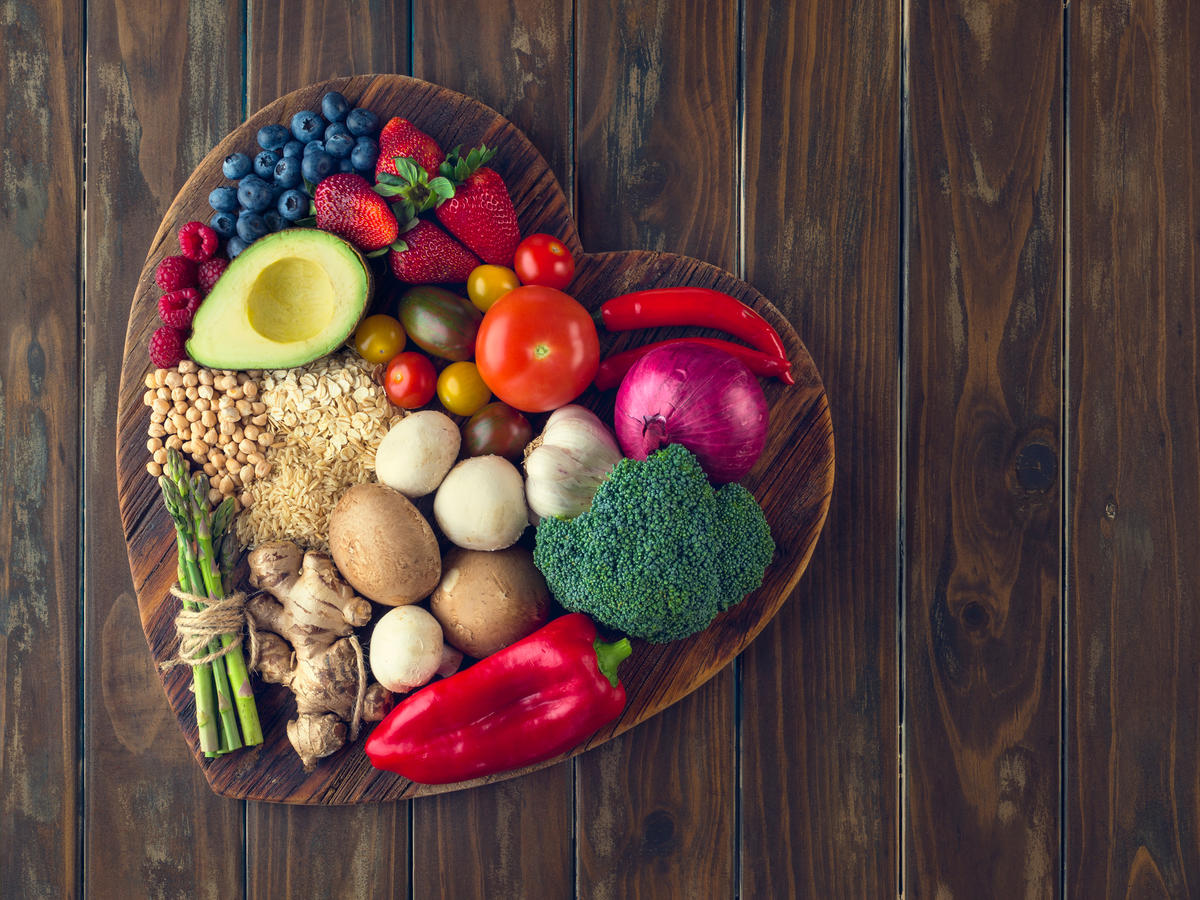
One’s body likes the taste of the rainbow. How is that so? Well, it likes consuming healthy food, and in order to be considered healthy, food needs to include a variety of nutrients, chemical compounds that the human body consumes in order to work properly (Hiza, H. A., Koegel, K. L., & Pannucci, T. E., 2018). Moreover, in healthy eating habits there is no place for obsessions (Scarff J. R., 2017). It will be argued that by adding more colors to meals, both intuitive and nourishing nutrition can be provided.
First of all, what is healthy eating exactly? Fundamentally, it is not a diet, but rather a lifestyle. Mostly, diets don’t work if they are not prescribed by a licensed doctor for medical reasons. In a case with a self-prescribed diet, it will just end in a vicious cycle of losing weight, relapsing, and gaining it again, or even developing eating disorders (Spear, B. A., 2006). It has been found and proven that the duration of weight loss maintenance is directly proportional to the lowest effort and less attention requirements in an eating strategy (Kwasnicka, Dominika & Dombrowski, Stephan & White, Martin & Sniehotta, Falko, 2019).
Furthermore, this relation can be applied to every new habit, as it has been established that our brain seeks ways that it knows well because choosing automatic options require as little mental work as possible (Gardner, B., Lally, P., & Wardle, J., 2012). This is what a habit looks like inside out. The evidence presented shows that it is necessary to have a habitual healthy eating lifestyle in order to feel good and prevent perilous illnesses like obesity, diabetes or eating disorders.
More than that, in a research paper that studied the theory of “eating the rainbow”, it was found that participants subconsciously were adding more vegetables and decreasing the amount of added sugar in their food (König, Laura & Renner, Britta, 2017). It is worth mentioning that vegetables provide phytonutrients, molecules which are not vital, but provide health benefits as well as prevent diseases (Monjotin, N., Amiot, M. J., Fleurentin, J., Morel, J. M., & Raynal, S., 2022). As for sugar, cutting it can prevent not only obesity but also diabetes (Stanhope, K. L., 2015). This leads to the conclusion that by focusing on adding more colours, one can intuitively eat healthier in general.
Last but not least, by increasing color diversity, we also increase nutrient diversity. For example, phytonutrients anthocyanins are red pigments found in red raspberries as well as strawberries. Not only that, they can be found in blueberries as blue pigments. It has been proven that anthocyanins not only provide significant anti-carcinogenic effects on our body, but also play a huge role in cancer prevention (Yazhen, S., Wenju, W., Panpan, Z., Yuanyuan, Y., Panpan, D., Wusen, Z., & Yanling, W., 2020). It is worth mentioning that these berries include vitamin C, iron, potassium, fibre and many more vital nutrients. Another example is carrots: their orange pigment, beta carotene, is a phytonutrient that converts during the metabolic processes into essential vitamin A (Behera, Swagat & Pandey, Riya & Bhatt, Madhuri, 2023). Summarizing, color diversity not only plays a key role in getting different types of nutrients, but also provides overall health benefits by increasing amounts of phytonutrients as well.
At this point in time, it is clear that only by doing small steps like adding more colour variety in food can one maintain new eating habits and slowly intertwine them in one’s life permanently in order to improve lifestyle. Ultimately, to simplify healthy eating, it is significant to work with one’s mind and habits in the first place, and only then can a food choice that is nutritionally diverse, pleasing and effortless at the same time be made.
By: Aryna Karankova
Write and Win: Participate in Creative writing Contest & International Essay Contest and win fabulous prizes.
About the Author